
Loading, please wait...
LOT 1974
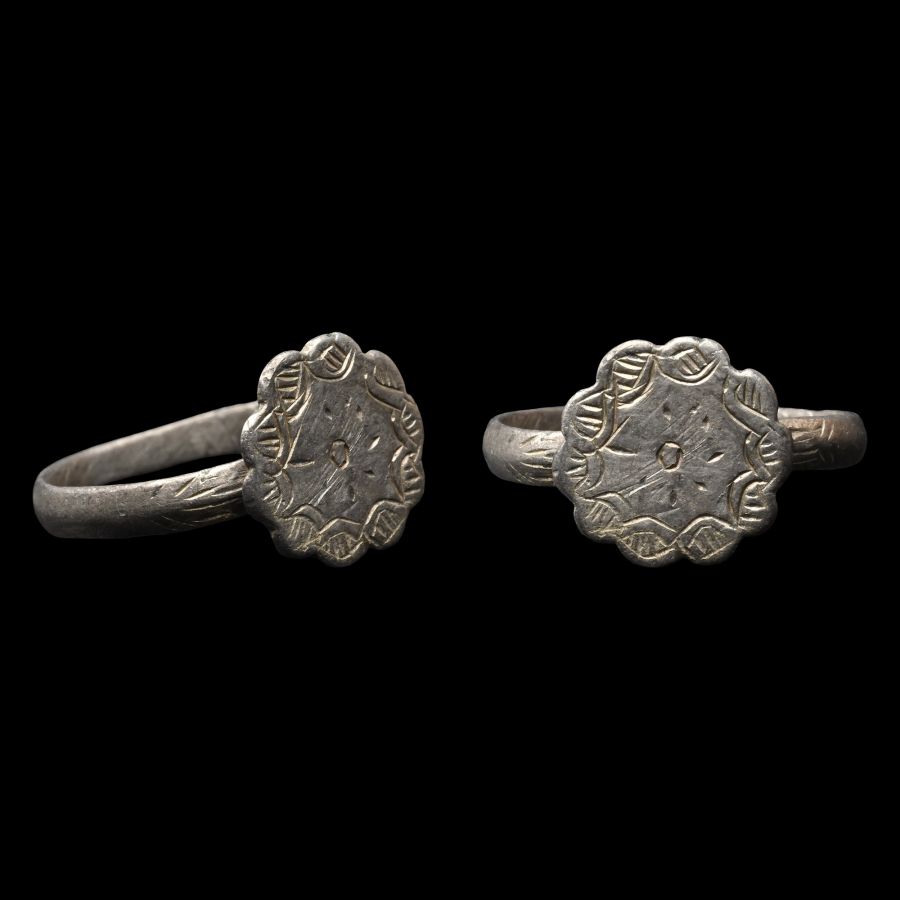
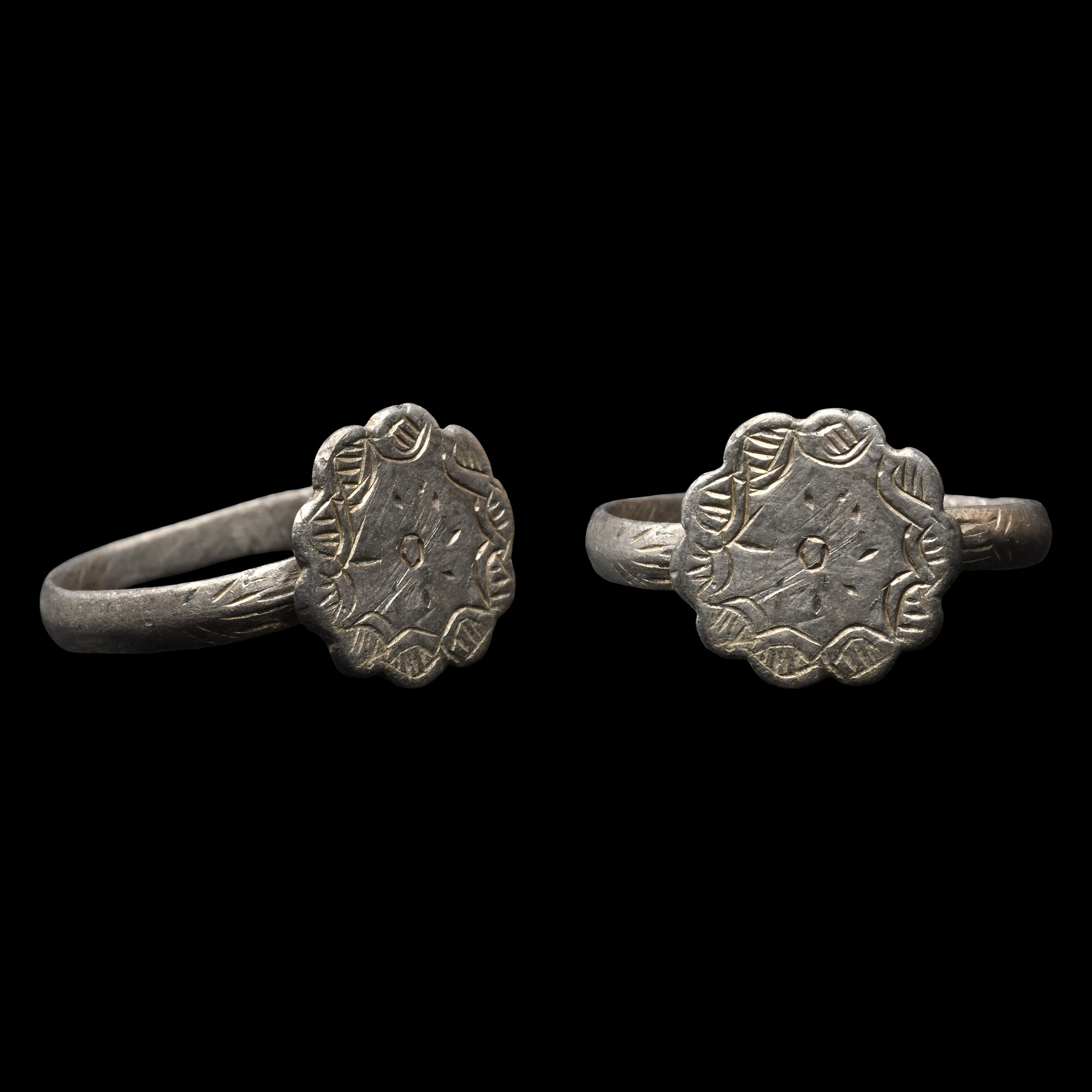
Post Medieval Silver Ring
CIRCA 17TH-18TH CENTURY A.D.
3/4 in. (1.40 grams, 18.17 mm overall, 16.13 mm internal diameter (approximate size British I 1/2, USA 4 1/2, Europe 8.07, Japan 7)).
Comprising a slender hoop with applied bezel with scalloped edge and an annulet to the centre. [No Reserve]
ProvenanceEx German art market, 2000s.
Acquired from an EU collector living in London.
From the collection of a Surrey, UK, gentleman.
TimeLine Auctions follows a vetting process to ensure the authenticity and legality of all items, reinforcing our commitment to integrity and responsible trading. Each antiquity, antique, and coin lot undergoes thorough examination by a vetting committee of at least ten external specialists, professional trade association members, scientists, and archaeologists: Our Vetting Process
AUCTIONS:
TimeLine is a leading auction house specialising in antiquities, ancient art, collectables, natural history, coins, medals, and books. Our auctions offer museums, collectors, historians, and enthusiasts the opportunity to acquire unique and historically significant pieces.
-
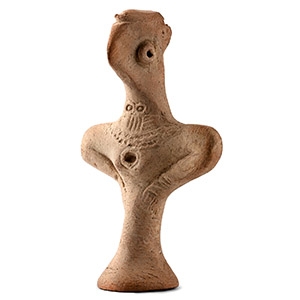
Indus Valley Style Fertility Idol
20th century A.D. or earlierSold for (Inc. bp): £20
With flat discoid base, arms bent with hands on hips, body decorated with incised necklace; face with prominent pinched nose, applied discoid eyes. 53 grams, 96 mm
Fine condition.
Ex Swiss collection; acquired 1980s. From the private collection of John Meredith, acquired since the 1990s; thence by descent. -
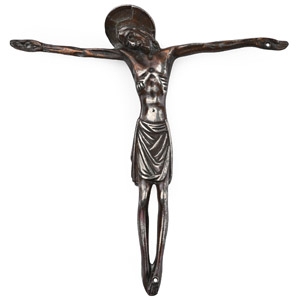
Post Medieval Silvered Bronze Corpus Christi
Circa 19th century A.D.Sold for (Inc. bp): £33
Modelled in the round with draped knee-length loincloth and discoid nimbus with cruciform design; attachment holes at hands and crossed feet; copying 17th century style. 99 grams, 13.2 cm high
Property of a Berkshire, UK, gentleman collector. -
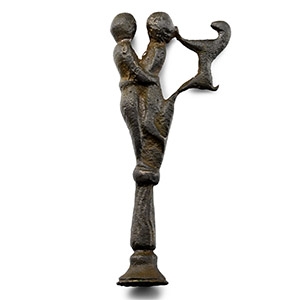
Georgian Bronze Bawdy Pipe Tamper
Circa 18th century A.D.Sold for (Inc. bp): £65
Formed as a copulating couple with a dog standing on the head and buttocks of the female; bell-shaped finial with hatched underside. 20.2 grams, 65 mm
Found Lincolnshire, UK.
