
Loading, please wait...
LOT 1845
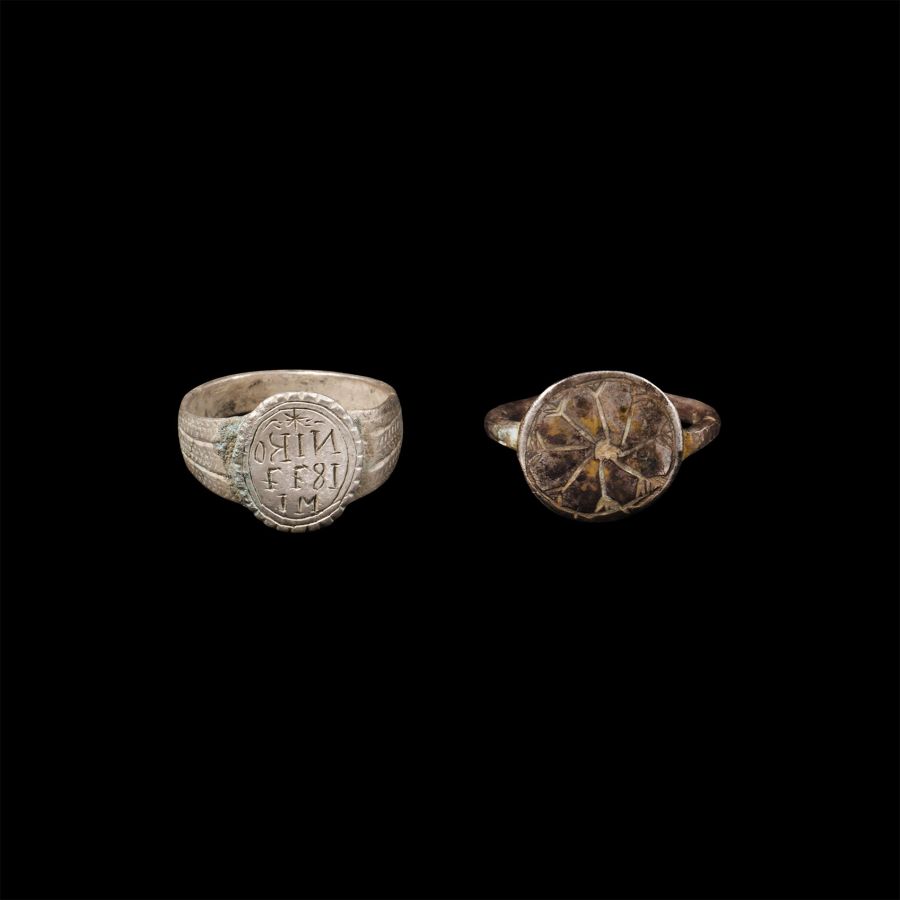
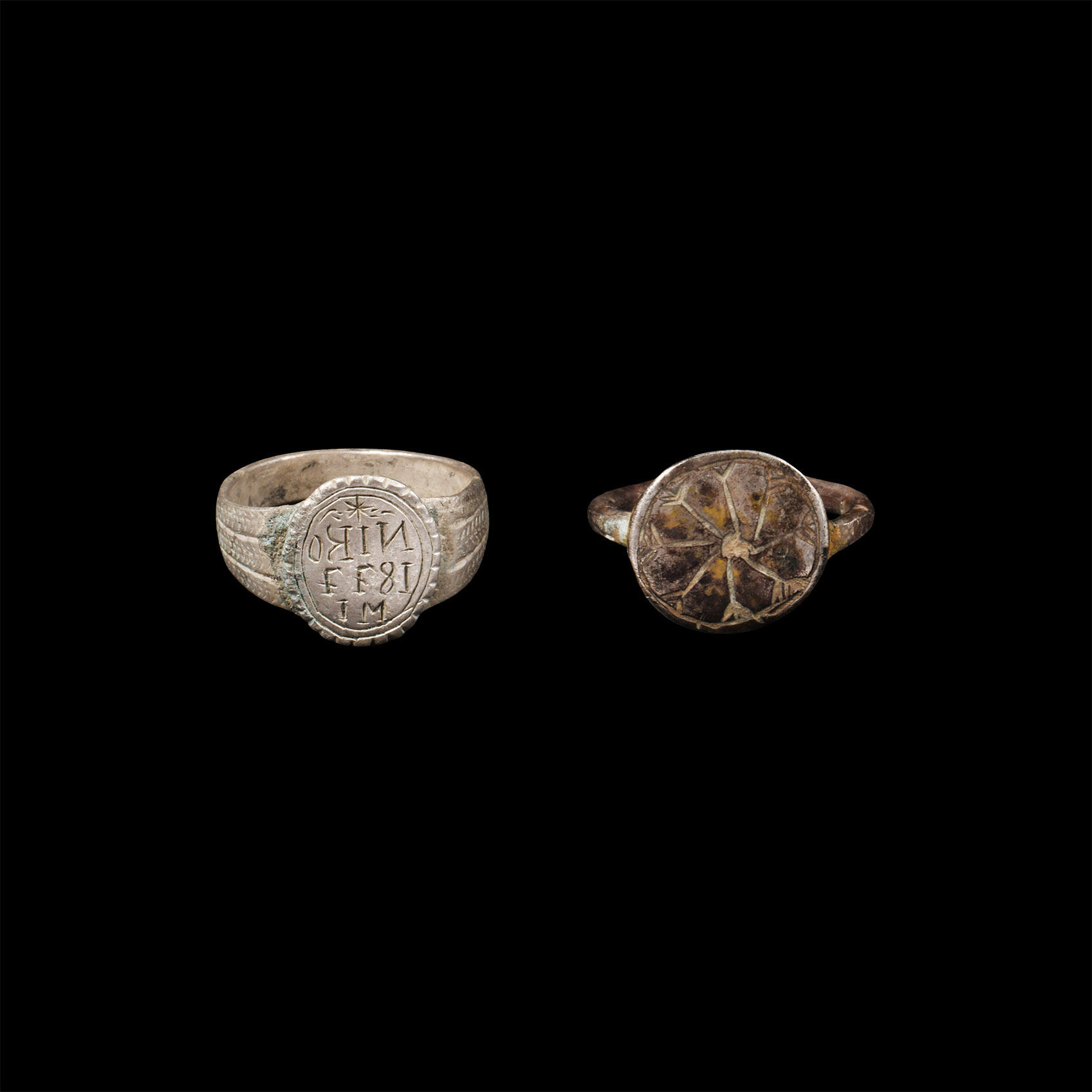
Post Medieval Silver Ring Group
16TH-18TH CENTURY A.D.
3/4 in. (7.13 grams total, 21 mm each).
One with reversed legend 'NIKO / 1877 / MI'; one with served octofoil. [2, No Reserve]
ProvenanceFrom the collection of an EU gentleman formed in the early 2000s.
Acquired on the UK market.
TimeLine Auctions follows a vetting process to ensure the authenticity and legality of all items, reinforcing our commitment to integrity and responsible trading. Each antiquity, antique, and coin lot undergoes thorough examination by a vetting committee of at least ten external specialists, professional trade association members, scientists, and archaeologists: Our Vetting Process
AUCTIONS:
TimeLine is a leading auction house specialising in antiquities, ancient art, collectables, natural history, coins, medals, and books. Our auctions offer museums, collectors, historians, and enthusiasts the opportunity to acquire unique and historically significant pieces.
-
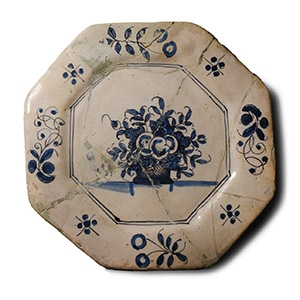
Post Medieval Delft Tin-Glazed Ceramic Plate
17th century A.D.Sold for (Inc. bp): £39
Of octagonal form, basket of flowers at centre with linear and foliate borders; repaired. 283 grams, 19 cm wide
Acquired 1960s-1990s. Late Alison Barker collection, a retired London barrister. -
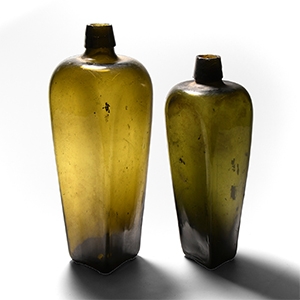
Post Medieval Glass Gin Bottle Group
Circa 18th century A.D.Sold for (Inc. bp): £26
Both with tapering square-section profiles, rounded shoulders, shallow kick-ups. 985 grams total, 24-27 cm high
Acquired 1990s-early 2000s. East Anglian private collection. -
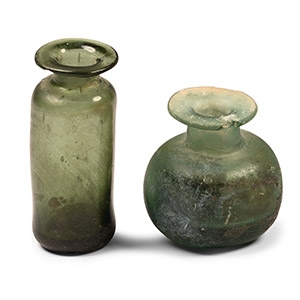
Post Medieval 'Thames' Glass Poison Bottle Group
16th-17th century A.D.Sold for (Inc. bp): £156
Comprising two glass bottles: one with a rounded cuboid-shaped body, slender neck, everted rim and remains of iridescent surfaces; one cylindrical bottle with short neck and broad everted rim. 58 grams total, 41-58 mm
Found Thames foreshore spoil, 1980s.
