
Loading, please wait...
LOT 1832
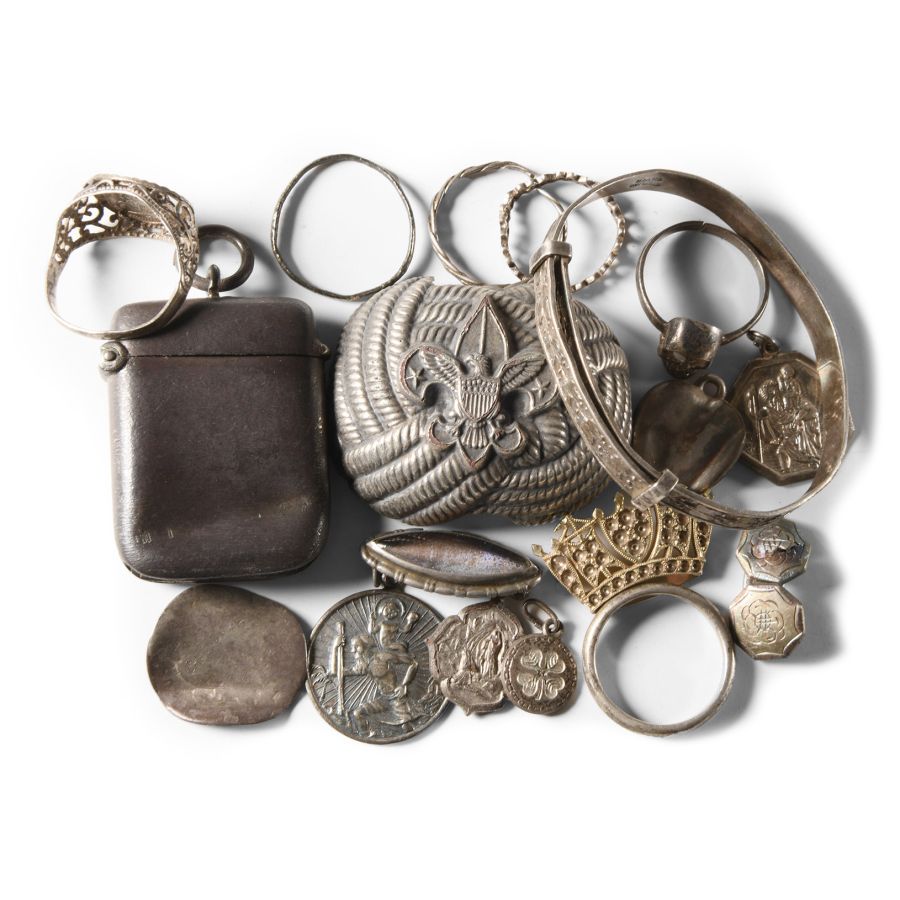
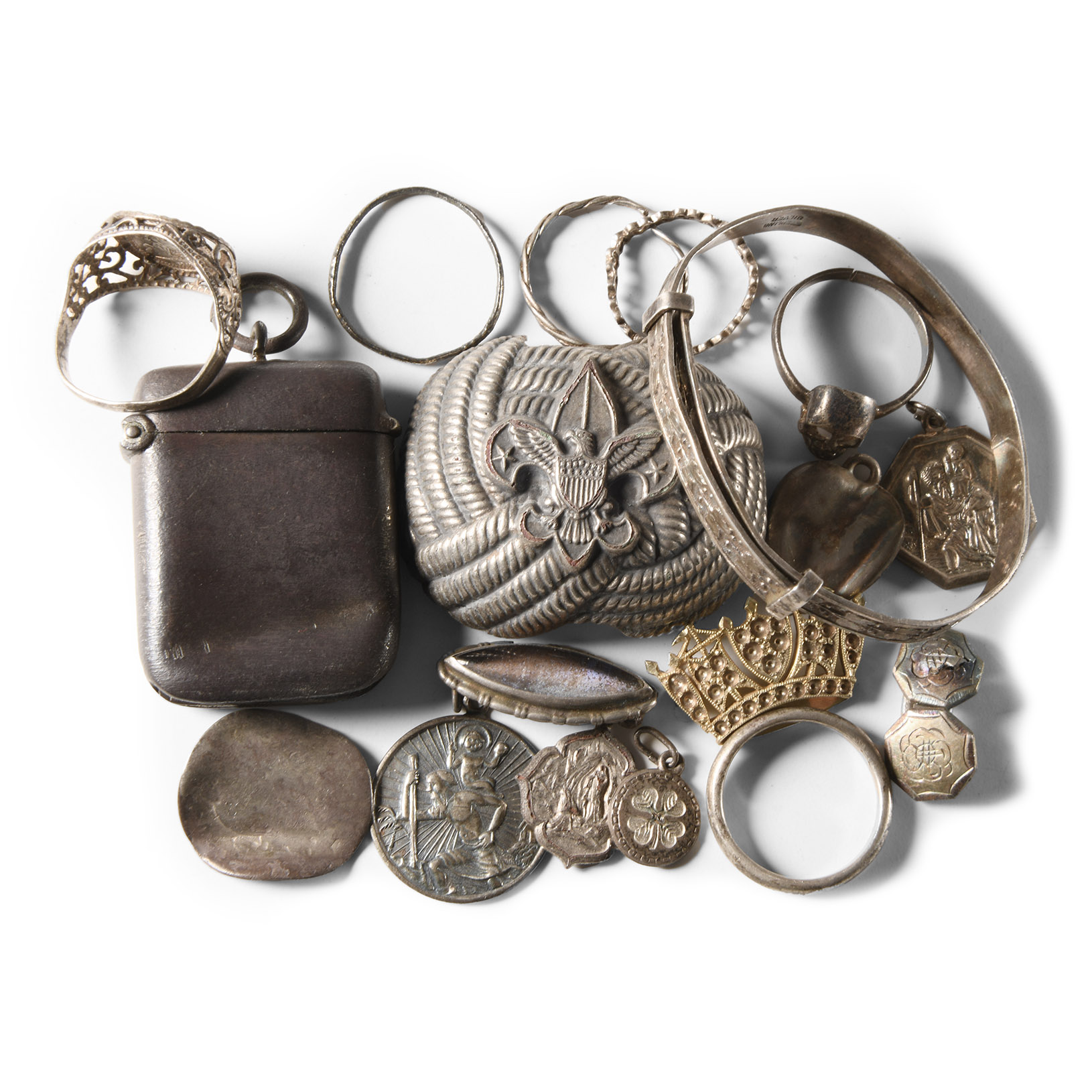
Post Medieval Silver Jewellery and Other Item Group
19TH-20TH CENTURY A.D.
5/8 - 2 1/8 in. (65 grams total, 15-54 mm).
Including a gold coronet badge, match case with hinged lid, heart-shaped pendant and other items. [18, No Reserve]
ProvenanceAcquired since the 1970s.
From the private collection of a Surrey, UK, gentleman.
TimeLine Auctions follows a vetting process to ensure the authenticity and legality of all items, reinforcing our commitment to integrity and responsible trading. Each antiquity, antique, and coin lot undergoes thorough examination by a vetting committee of at least ten external specialists, professional trade association members, scientists, and archaeologists: Our Vetting Process
AUCTIONS:
TimeLine is a leading auction house specialising in antiquities, ancient art, collectables, natural history, coins, medals, and books. Our auctions offer museums, collectors, historians, and enthusiasts the opportunity to acquire unique and historically significant pieces.
-
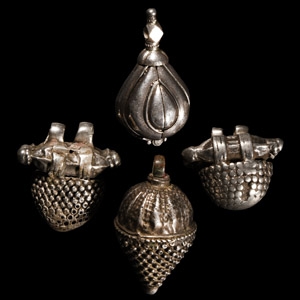
Mixed Pendant Group
20th century A.D.Sold for (Inc. bp): £7
Mixed group of silver-coloured metal granulated pendants. 81 grams total, 32-47 mm
Property of a South West London gentleman. -
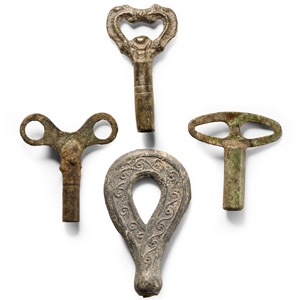
Post Medieval Bronze Key Group
Circa 19th century A.D.Sold for (Inc. bp): £13
Including a key-bow with running scroll ornament. 61.4 grams, 35-53 mm
Acquired between the 1960s-early 1990s. From an old UK private collector from Worthing, West Sussex, UK. Property of K.P., a Cornish lady collector, UK. -
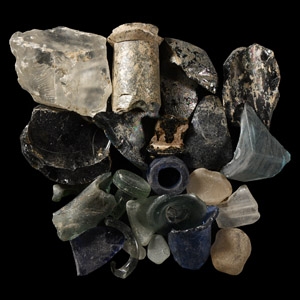
Tudor and Later Glass Fragment Collection
16th-18th century A.D.Sold for (Inc. bp): £7
Mixed group including aqua, chocolate-brown, deep blue and other colours, some with iridescence; bottle-necks, pontil bases and other fragments. 570 grams total, 17-66 mm
UK gallery, early 2000s.
