
Loading, please wait...
LOT 1977
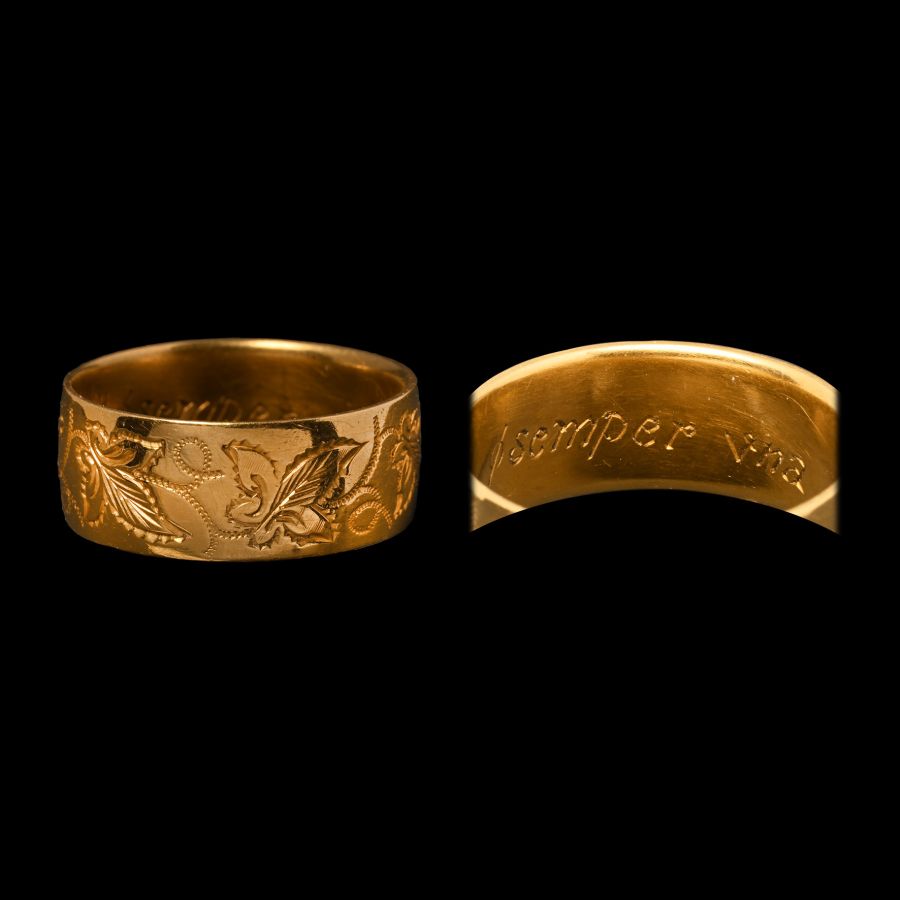
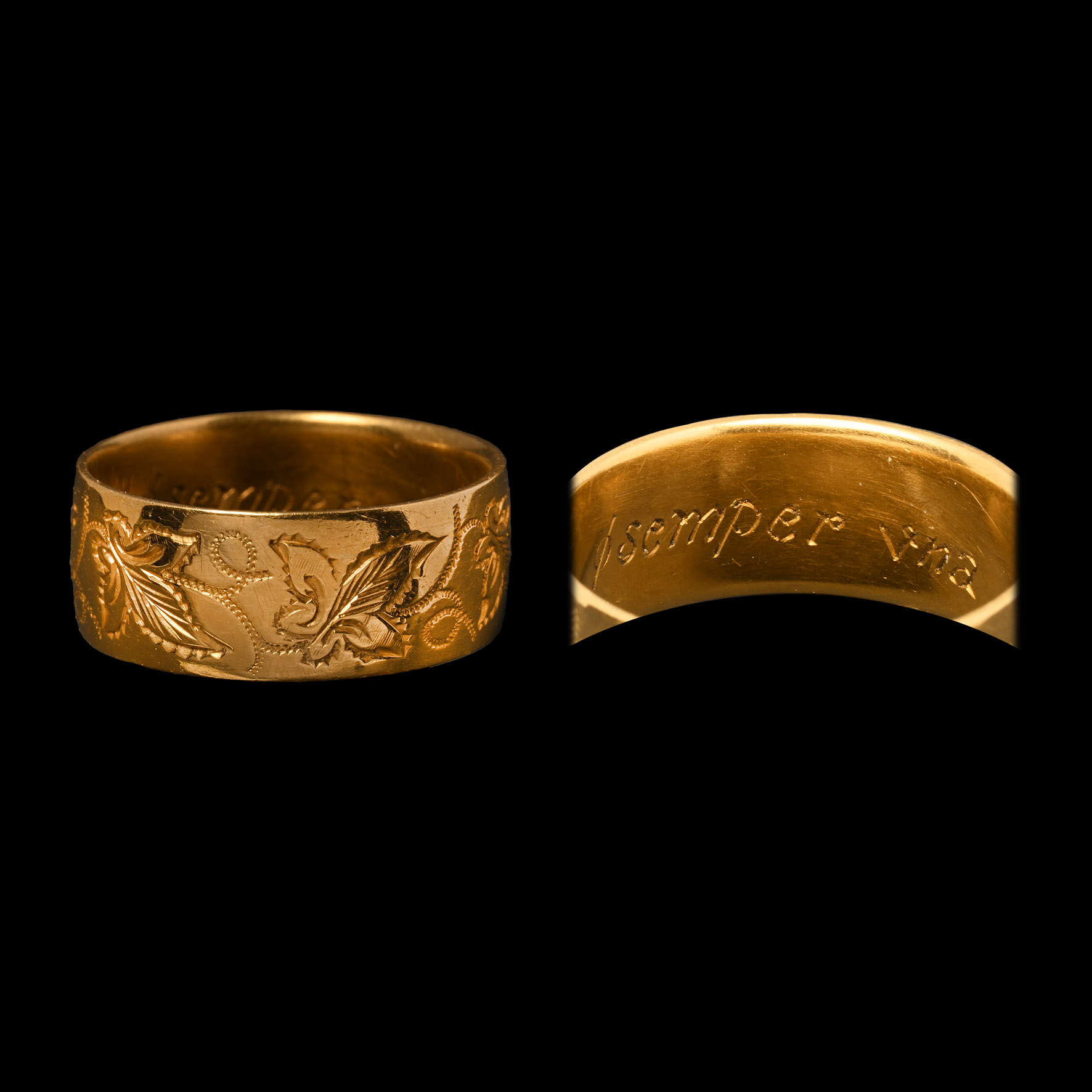
Post Medieval 'Semper Una' Gold Posy Ring
19TH CENTURY A.D.
1 in. (9.33 grams, 21.04 mm overall, 18.27 mm internal diameter (approximate size British Q, USA 8, Europe 17.49, Japan 16)).
Engraved with leaf and tendril detailing to the outer face, inscribed to the inner face 'Φ semper vna' (Φ forever one). [No Reserve]
ProvenanceProperty of a Jersey gentleman; by inheritance from his father.
CONDITIONTimeLine Auctions follows a vetting process to ensure the authenticity and legality of all items, reinforcing our commitment to integrity and responsible trading. Each antiquity, antique, and coin lot undergoes thorough examination by a vetting committee of at least ten external specialists, professional trade association members, scientists, and archaeologists: Our Vetting Process
AUCTIONS:
TimeLine is a leading auction house specialising in antiquities, ancient art, collectables, natural history, coins, medals, and books. Our auctions offer museums, collectors, historians, and enthusiasts the opportunity to acquire unique and historically significant pieces.
-
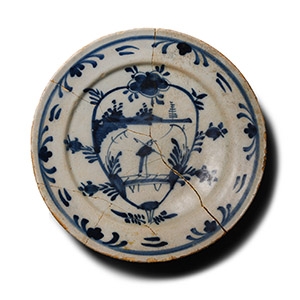
Post Medieval Delft Tin-Glazed Ceramic Plate
17th century A.D.Sold for (Inc. bp): £39
Displaying a figure crossing a bridge within a cartouche, embellished with flowering foliage; repaired. 417 grams, 22.2 cm wide
Acquired 1960s-1990s. Late Alison Barker collection, a retired London barrister. -
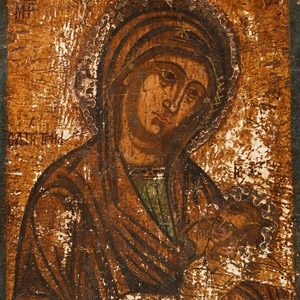
Painted Wooden Icon of Virgin and Child
19th-20th century A.D.Estimate: £200 - 300 (+bp*)
Opening Bid: £65
Mary cradling the infant Christ, Greek text in the field with inscription 'ΜΡ ΘΥ' for 'Mother of God' flanking the Virgin's halo, 'IC XC' for 'Jesus Christ' over the Child's head; to the right a Greek inscription 'ΟΔΙΓΗΤΡΙΑ' (Odighitria); some restoration; a handwritten inscription and a cross to the reverse in Greek, reading 'Eufemia Papadimitriou - born on March, 30, 1932, on Thursday, at the 5.00 p.m.; Vasilios Papadimitriou - born on March, 15, 1934, on Thursday, at the 3.00 p.m.' 614 grams, 29 cm
The timber shows some old insect flight holes and we are advised that this piece has been recently treated with Permthrin, as a precaution.
Ex French gallery, Paris.
The icon belongs to the category of Virgin 'Galaktotrophousa' (Γαλακτοτροφουσα, meaning “the Milk-Giver”) celebrated on third July, and showing Mary breast-feeding Jesus. The ancient typology dates from the 6th century A.D. and resided in St. Sabbas’ lavra (a type of monastic community). -
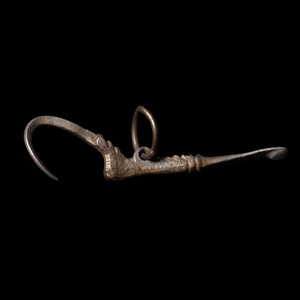
Tudor Silver Cosmetic Tool
16th century A.D.Estimate: £150 - 200 (+bp*)
Opening Bid: £80
Comprising a hooked toothpick and a miniature spoon used as an ear scoop, serrated surface between used as a file; suspension ring. 2.3 grams, 51 mm
Fine condition.
Acquired in London in 1985. Property of a Kent gentleman.
