
Loading, please wait...
LOT 0768
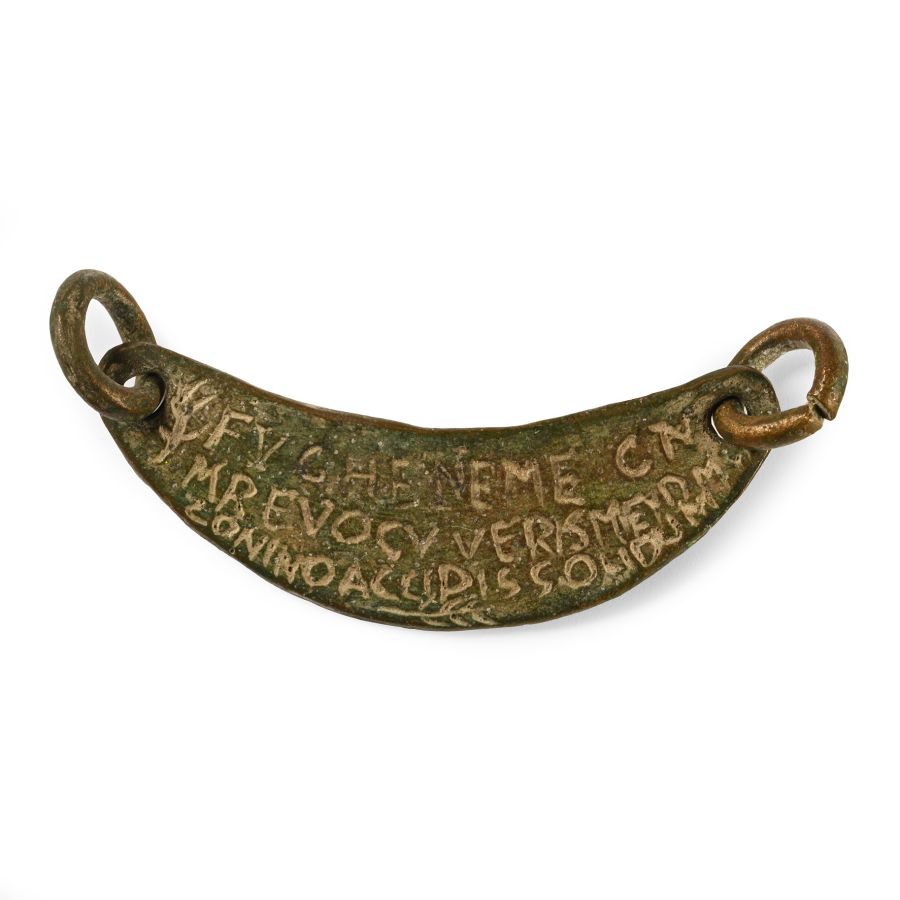
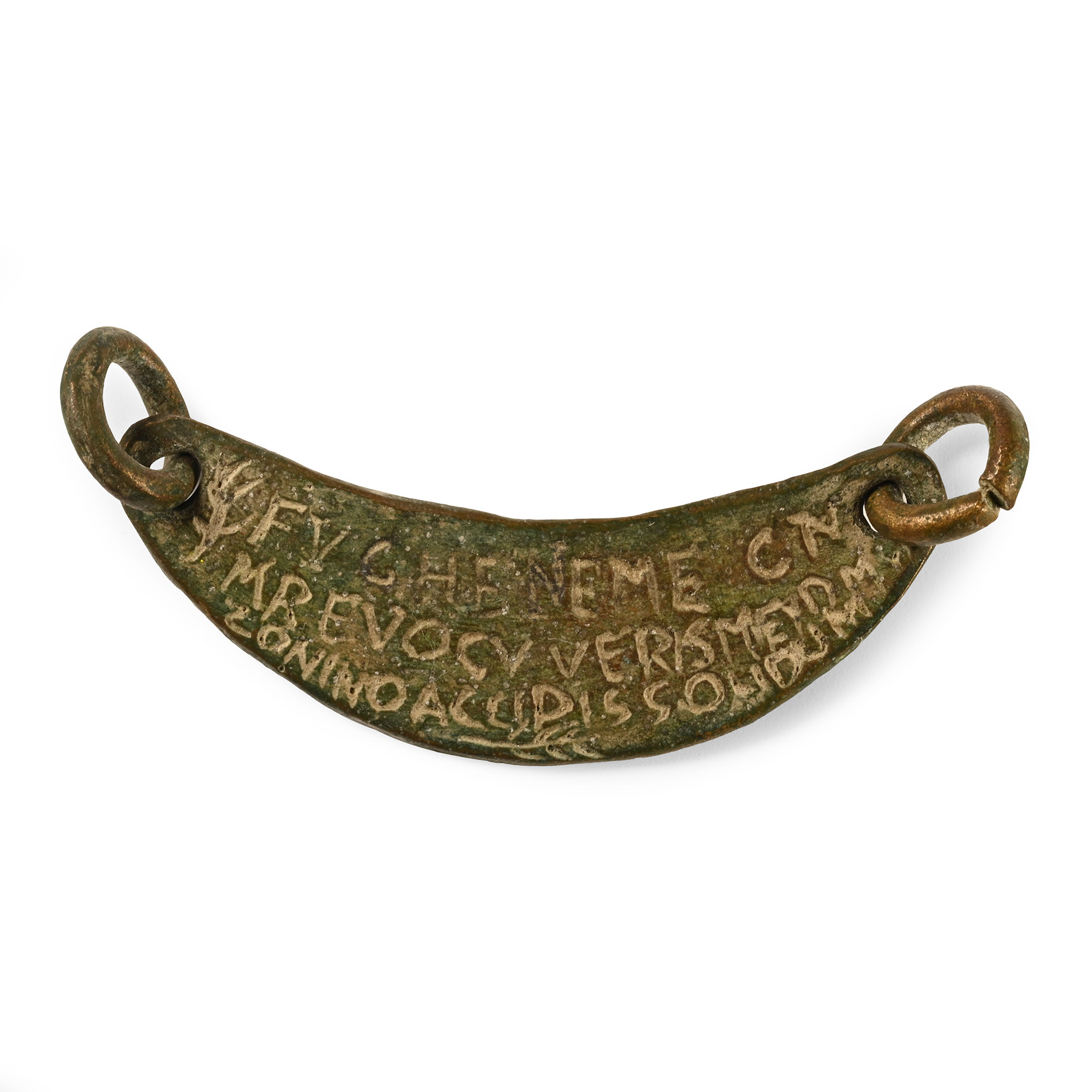
Post Medieval Roman Style Bronze Dedicatory Plaque
20TH CENTURY A.D.
2 1/8 in. (12.4 grams, 54 mm).
Crescent-shaped plaque pierced at each end to accept a mounting ring: enigmatic inscription in three lines following the curve of the edges, in capitals: 'fvcheme cn / mrevocv verismeidm / zonino accidis solidunt'. [No Reserve]
ProvenanceFrom a collection acquired on the UK art market from various auction houses and collections mostly before 2000.
From an important Cambridgeshire estate; thence by descent.
TimeLine Auctions follows a vetting process to ensure the authenticity and legality of all items, reinforcing our commitment to integrity and responsible trading. Each antiquity, antique, and coin lot undergoes thorough examination by a vetting committee of at least ten external specialists, professional trade association members, scientists, and archaeologists: Our Vetting Process
AUCTIONS:
TimeLine is a leading auction house specialising in antiquities, ancient art, collectables, natural history, coins, medals, and books. Our auctions offer museums, collectors, historians, and enthusiasts the opportunity to acquire unique and historically significant pieces.
LOT 0768
Post Medieval Roman Style Bronze Dedicatory Plaque
Estimate £40 - 60€46 - 70 (for guidance only)$54 - 81 (for guidance only)
-

Ethiopian Manuscript Page with The Miracle of the Lame Man
17th century A.D.Sold for (Inc. bp): £715
Rectangular vellum leaf with hand-coloured composite scene: top left, Mary in blue mantle holding infant Jesus on her knee, addressing a standing robed figure, red Coptic text above 'How the man with a club foot prayed to Our Lady Mary that she might heal him when he saw the bishop's chastisement'; below left, six standing male figures in colourful robes looking left and a seventh turned to the right with an oversized shoe, red Coptic text above the group 'these are the congregation and this is how he hid his foot with his clothing' and the rightmost figure 'this also is the man with the club foot'; right, seated cleric wearing a mitre beneath a canopy, addressing a group of five followers and pointing to a standing man raising his robe to show his leg, red Coptic text in three panels 'Here is the bishop who asked the Frank that his foot might be healed', 'These are the congregation' and 'How he was healed and how the stone fell from his foot'; mounted in a glazed wooden frame with reveal. 1.88 kg total, 47.2 x 44 cm
Collection of David Buxton (1913-2003), author of 'Travels in Ethiopia', 1949.
The image refers to the 'Miracle of the Lame Man' in which a man, who had been born lame, prayed before the shrine of the Virgin Mary and was healed. Here, the lame man shows the Archbishop his leg, and explains how he had been healed. -
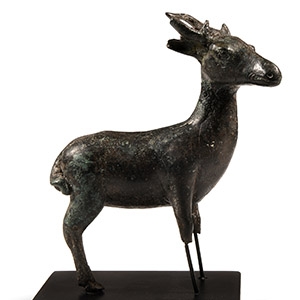
Post Medieval Bronze Deer Statuette
19th century A.D.Sold for (Inc. bp): £182
Modelled standing with head slightly turned, with long ears and small antlers; tail curled against the rump; mounted on a custom-made display stand. 610 grams total, 15.5 cm including stand
From a collection acquired on the UK art market from various auction houses and collections mostly before 2000. From an important Cambridgeshire estate; thence by descent.
Many deposits of Gallo-Roman statuettes contain votive statuettes not particularly linked to the classical artistic style. The temple deposits in which these animalistic statuettes (series of stags or boars) were discovered were certainly Roman, but the animals could have belonged to cults of Celtic origin. -

Ethiopian Triptych Icon with the Virgin and Child
16th century A.D.Sold for (Inc. bp): £1,820
Wooden triptych with recessed panels to inner face, twine hinges; central image of Mary and infant Jesus flanked by nimbate angels; left panel with baptism scene and triumphant horseman; right panel with crucifixion and two nimbate saints; painted knotwork to obverse, 663 grams, 26.5 x 21 cm
Acquired from Owen Hargreaves, London, UK, March 2004. Property of an important West London collector, inventory no.355.
