
Loading, please wait...
LOT 2137
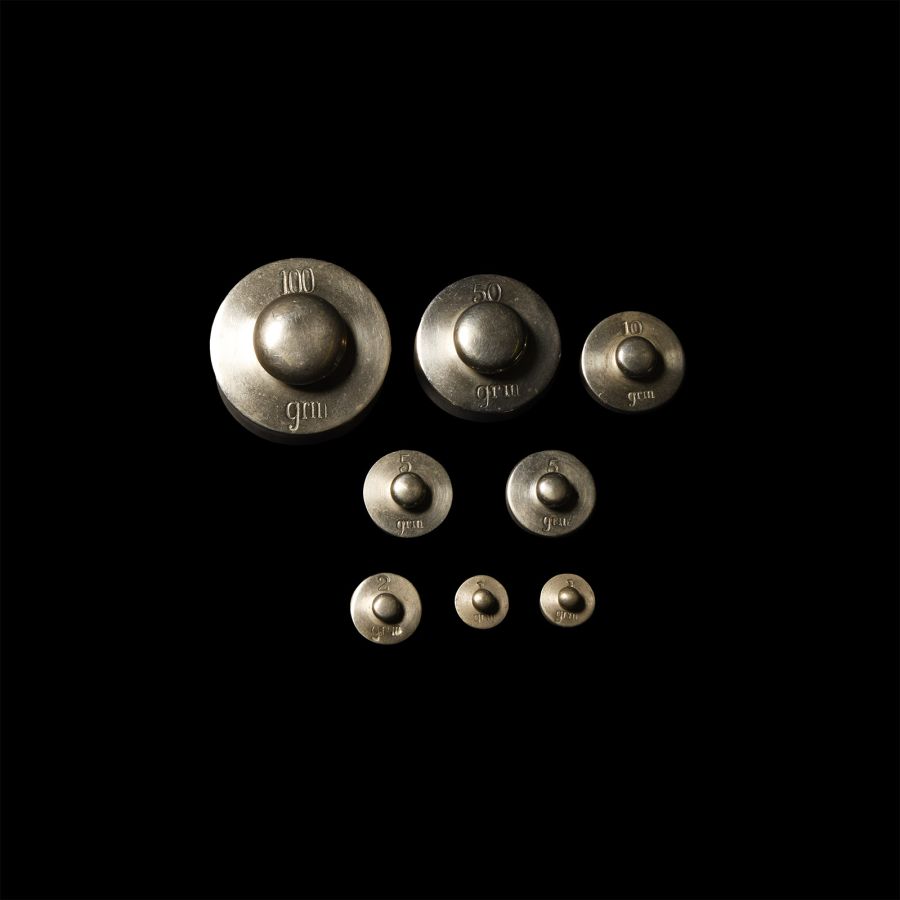
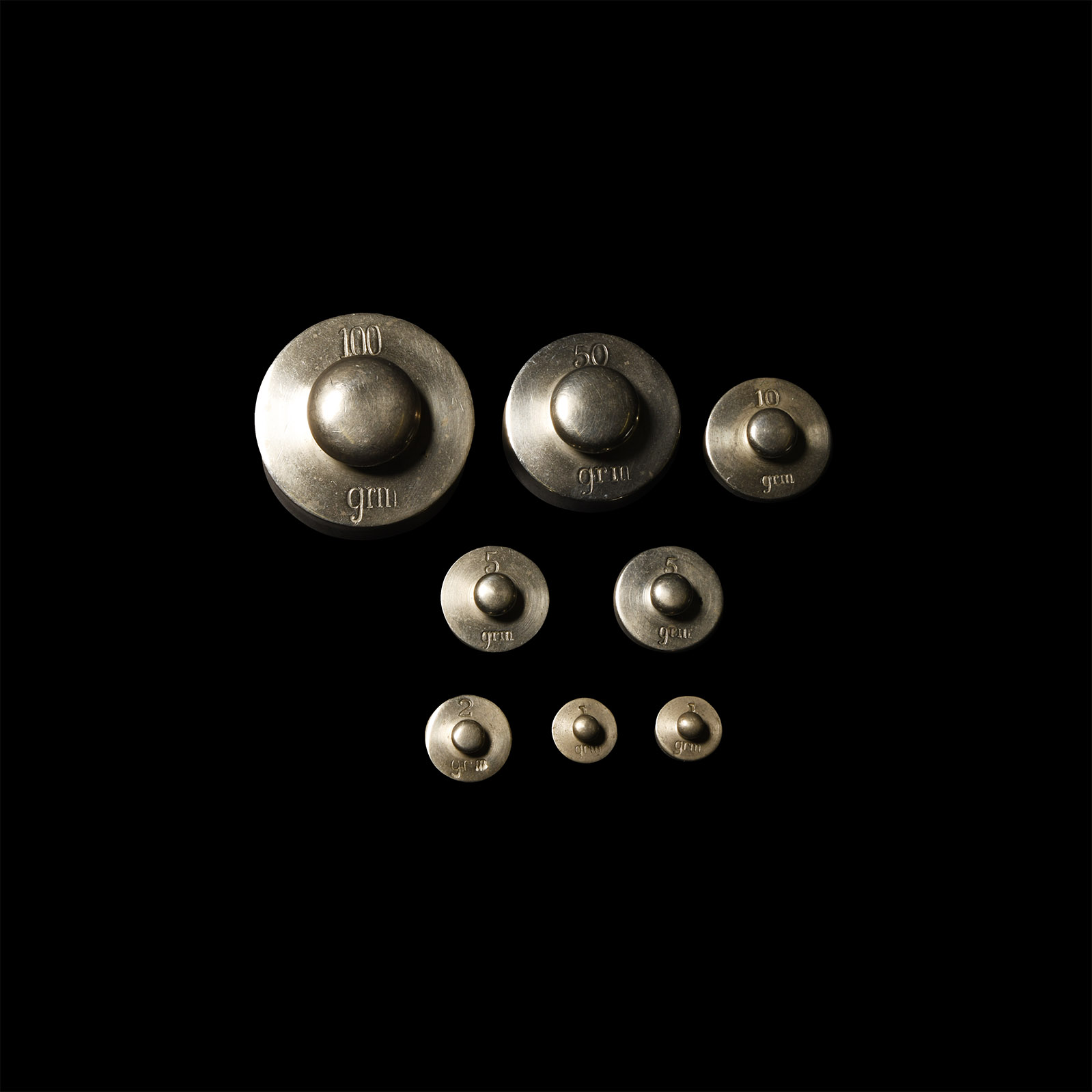
Post Medieval Precision Weight Set
21ST CENTURY A.D.
3/8 - 1 1/4 in. (177 grams total, 10-31 mm).
Comprising eight weights of 100, 50, 10, 5(2), 2 and 1(2) grams circular weights with knob lifters. [8, No Reserve]
ProvenanceThe Kusmirek Collection, UK.
CONDITIONTimeLine Auctions follows a vetting process to ensure the authenticity and legality of all items, reinforcing our commitment to integrity and responsible trading. Each antiquity, antique, and coin lot undergoes thorough examination by a vetting committee of at least ten external specialists, professional trade association members, scientists, and archaeologists: Our Vetting Process
AUCTIONS:
TimeLine is a leading auction house specialising in antiquities, ancient art, collectables, natural history, coins, medals, and books. Our auctions offer museums, collectors, historians, and enthusiasts the opportunity to acquire unique and historically significant pieces.
-
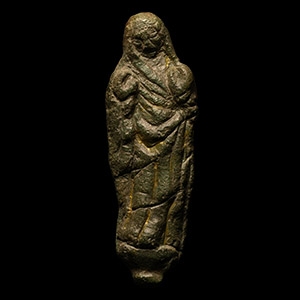
Tudor Period Bronze Figural Mount
16th century A.D.Sold for (Inc. bp): £104
Or finial depicting a well-modelled figure of the Virgin Mary in relief to one face. 19.5 grams, 51 mm
From an old English collection before 2010. From the collection of a North American gentleman. -
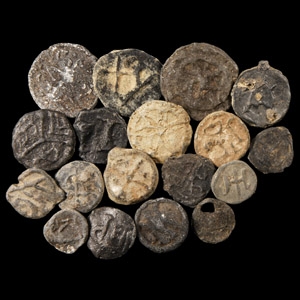
Post Medieval 'Thames' Lead Token Collection
17th-18th century A.D.Sold for (Inc. bp): £26
Composed of mainly discoid-shaped tokens displaying letters, symbols and geometric motifs. 88 grams total, 14-26 mm
Found Thames foreshore spoil, 1980s. -
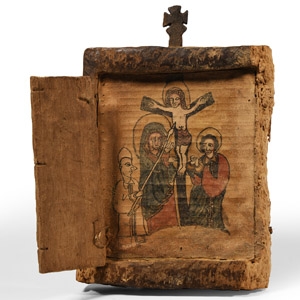
Ethiopian Wooden Bifacial Icon
Late 17th century A.D.Sold for (Inc. bp): £208
One side with the Crucifixion scene, Virgin Mary and Saint John weeping at the foot of the cross, the soldier Longinus piercing the side of Jesus; the other side with a diptych painted on paper representing a crowned Saint George (Bet Gorgis) and his servant Seqrates dressed like a priest, watching the miracle of the transformation of water into wine; lines of Ge'ez text in black ink on the reverse; wooden frame with closure on both sides, surmounted by a small cross. 455 grams, 25.7 cm
The timber shows some old insect flight holes and we are advised that this piece has been recently treated with Permthrin, as a precaution.
Ex Cy Lester, an antiquarian bookseller, London, UK, circa 1990. Ex central London gallery.
Among the imagery of Ethiopian equestrian saints, three main representational categories can be distinguished: 1) simple portrait of the saint armed with spear or lance and holding the reins of a horse; 2) the saint spearing an enemy; 3) the saint according to one of the aforementioned types placed in a narrative scene.
