
Loading, please wait...

LOT 1861
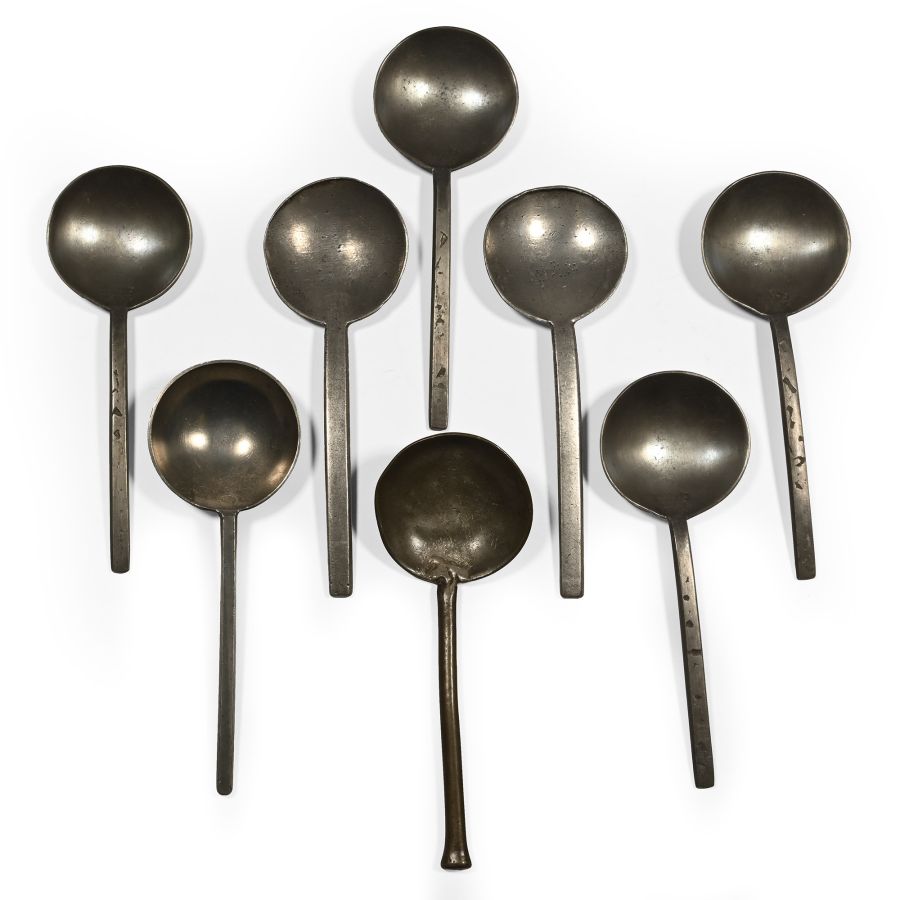
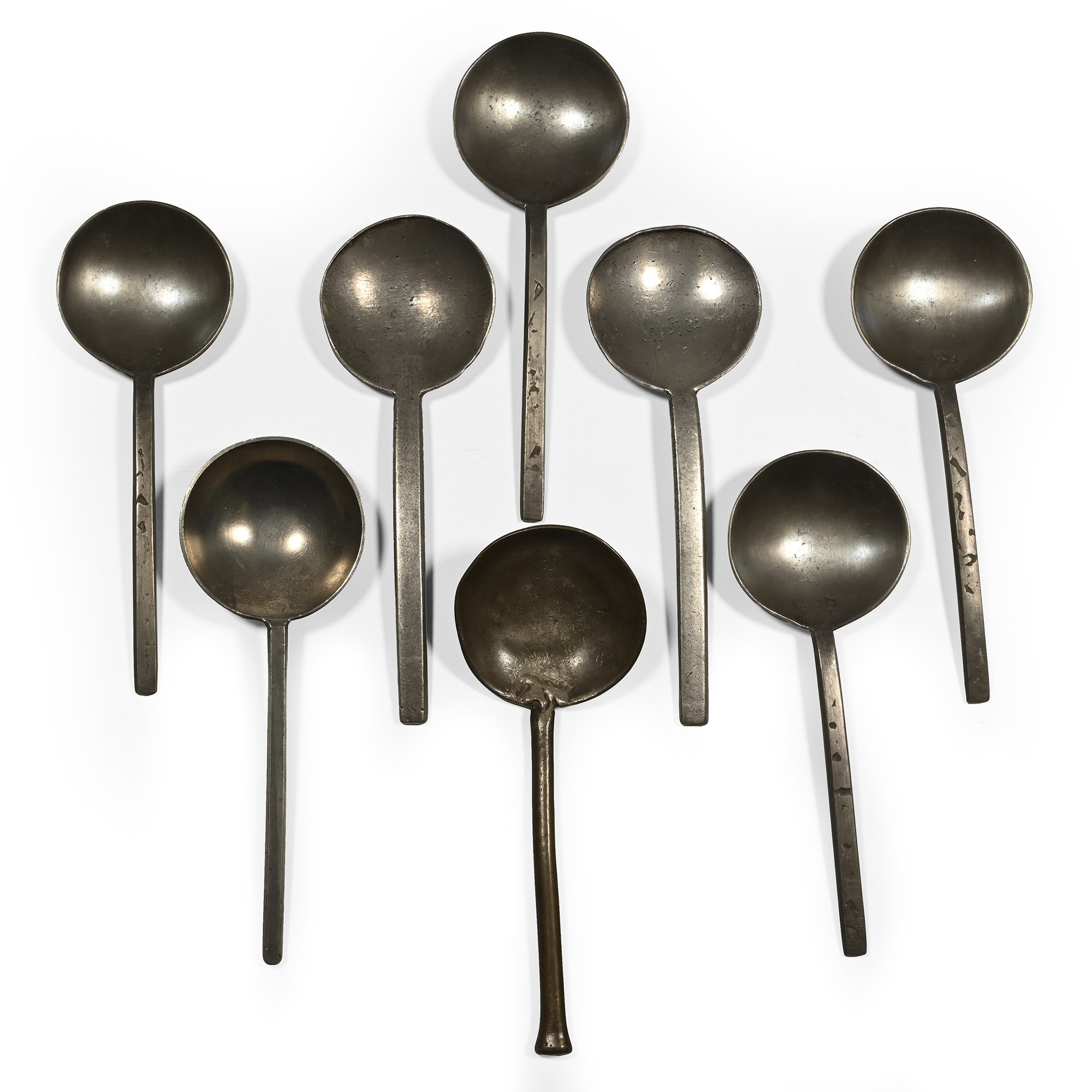
Post Medieval Pewter Spoon Collection
20TH CENTURY A.D.
6 1/2 - 6 3/4 in. (539 grams total, 16.5-17.2 cm).
Mainly with a broad shallow bowl and flat-section handle. [8, No Reserve]
ProvenanceFrom a London, UK, collection, 1990s.
This lot is accompanied by an illustrated lot declaration signed by the Head of the Antiquities Department, Dr Raffaele D’Amato.
This lot is accompanied by an illustrated lot declaration signed by the Head of the Antiquities Department, Dr Raffaele D'Amato.
TimeLine Auctions follows a vetting process to ensure the authenticity and legality of all items, reinforcing our commitment to integrity and responsible trading. Each antiquity, antique, and coin lot undergoes thorough examination by a vetting committee of at least ten external specialists, professional trade association members, scientists, and archaeologists: Our Vetting Process
AUCTIONS:
TimeLine is a leading auction house specialising in antiquities, ancient art, collectables, natural history, coins, medals, and books. Our auctions offer museums, collectors, historians, and enthusiasts the opportunity to acquire unique and historically significant pieces.
-

Stained Glass Panel with the Mocking of Jesus
Flemish, 19th century A.D. or earlierSold for (Inc. bp): £910
In late 15th century style, showing seated Jesus in the centre, wearing a purple robe and a crown of thorns on his head; surrounded by four armoured men dressed in long tunics, breeches and leggings, two wearing a skullcap; architectural background and Flemish inscription ‘DE KROONING VAN JESUS’ (the coronation of Jesus) in uncial letters; some restoration. 4.5 kg, 65 x 53.5 cm
Some restoration.
From a war-damaged church in Belgium. Ex property of a late Northumberland collector. From a private collection, Derbyshire, UK. This lot is accompanied by an illustrated lot declaration signed by the Head of the Antiquities Department, Dr Raffaele D'Amato.
The scene represents the ‘Mocking of Christ’ from the Gospel of Matthew (27,27.31): ‘Then the governor’s soldiers took Jesus into the Praetorium and gathered the whole company of soldiers around him. They stripped him and put a scarlet robe on him, and then twisted together a crown of thorns and set it on his head. They put a staff in his right hand. Then they knelt in front of him and mocked him. “Hail, king of the Jews!” they said’. -
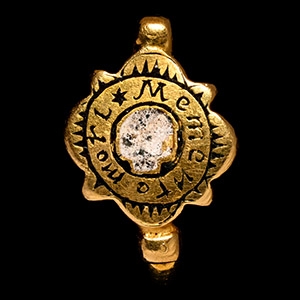
Tudor Period Enamelled Gold Memento Mori Ring with Skull
16th-17th century A.D.Sold for (Inc. bp): £6,500
Comprising a plain D-section hoop, discoid bezel with radiating spurs, central enamelled skull motif surrounded by a ring with legend '*MEMENTO*mori'. 3.84 grams, 19.30 mm overall, 16.87 mm internal diameter (approximate size British M, USA 6, Europe 12.46, Japan 12)
Private collection, UK. This lot has been checked against the Interpol Database of stolen works of art and is accompanied by a search certificate number no.12740-235714. This lot has been cleared against the Art Loss Register database, and is accompanied by an illustrated lot declaration signed by the Head of the Antiquities Department, Dr Raffaele D'Amato. -

Stained Glass Panel with the Annunciation
Flemish, 19th century A.D. or earlierSold for (Inc. bp): £1,820
In late 15th century style, showing youthful nimbate Mary on the foreground dressed in red-and-blue cloak and holding her hands crossed at her chest, Archangel Gabriel hovering in the air and pointing a finger, dressed in a decorated white cassock; rich architectural background with columns and arches, a red vase of lilies on the green and black marble floor, Flemish inscription below 'DE BOODSCHAP DES ENGELS’ (the angel’s message) in uncial letters; some restoration. 4.5 kg, 65 x 53.5 cm
Some restoration.
From a war-damaged church in Belgium. Ex property of a late Northumberland collector. From a private collection, Derbyshire, UK. This lot is accompanied by an illustrated lot declaration signed by the Head of the Antiquities Department, Dr Raffaele D'Amato.
The scene represents the announcement made by the angel Gabriel to Mary, that she would conceive and bear a son through the Holy Spirit (according to the Gospel of Luke, I, 26-38). In some regional contexts it is called Conceptio Domini or Conceptio Christi.
