
Loading, please wait...
LOT 1922
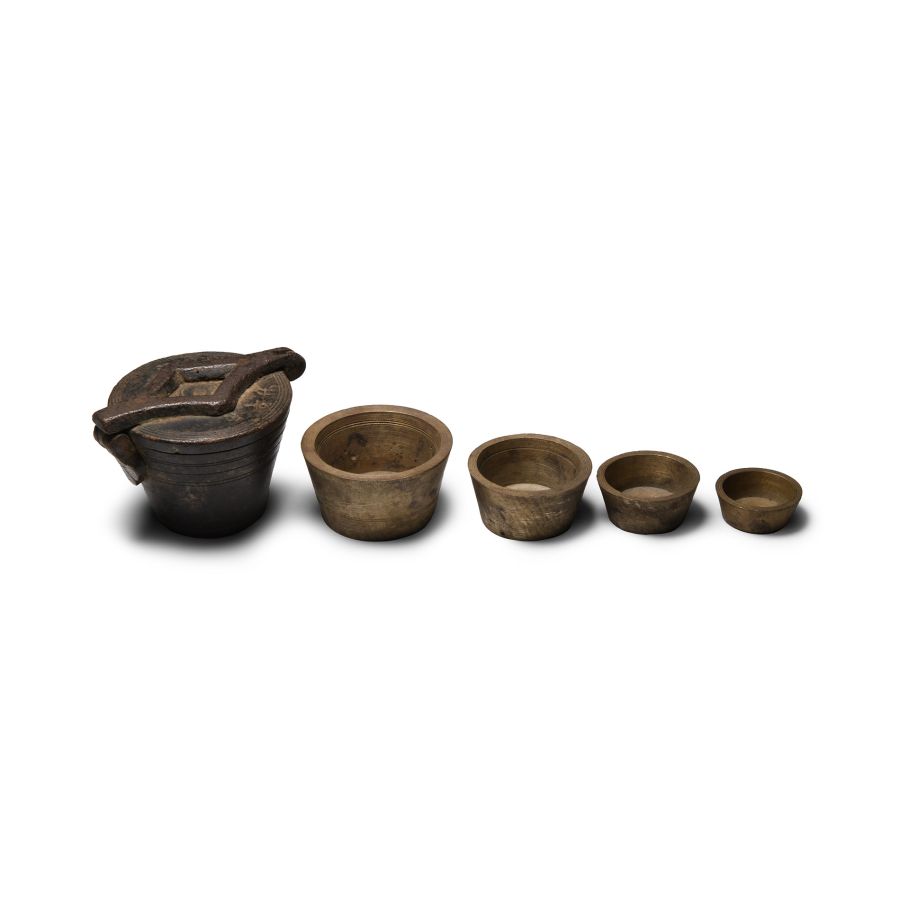
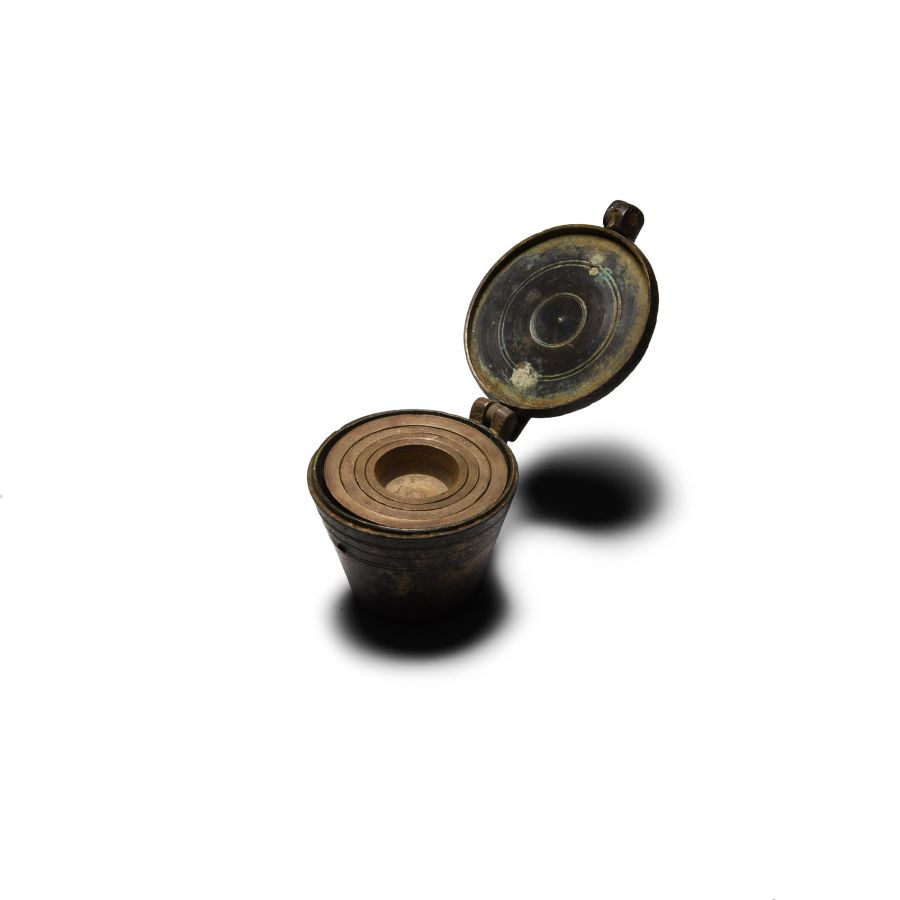
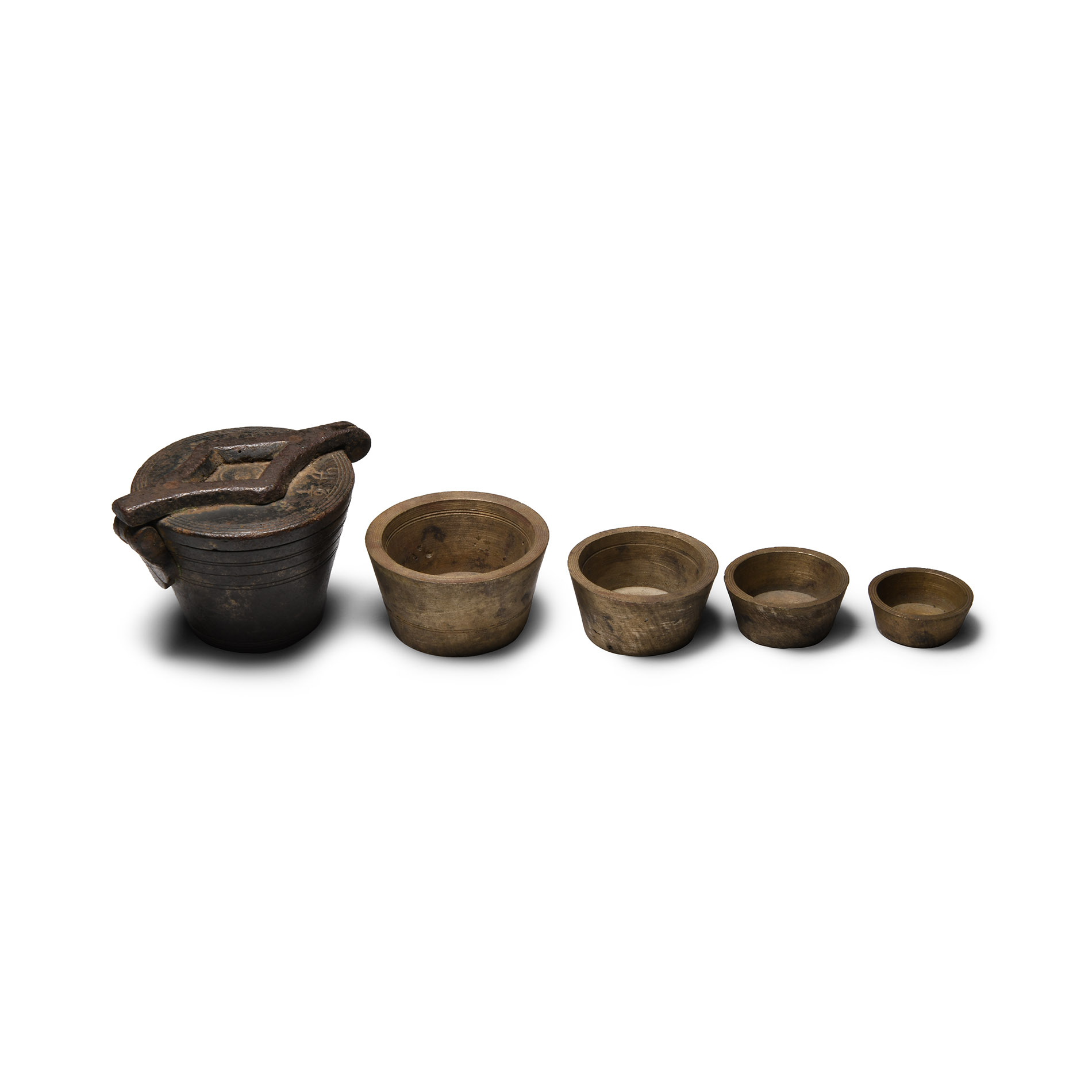
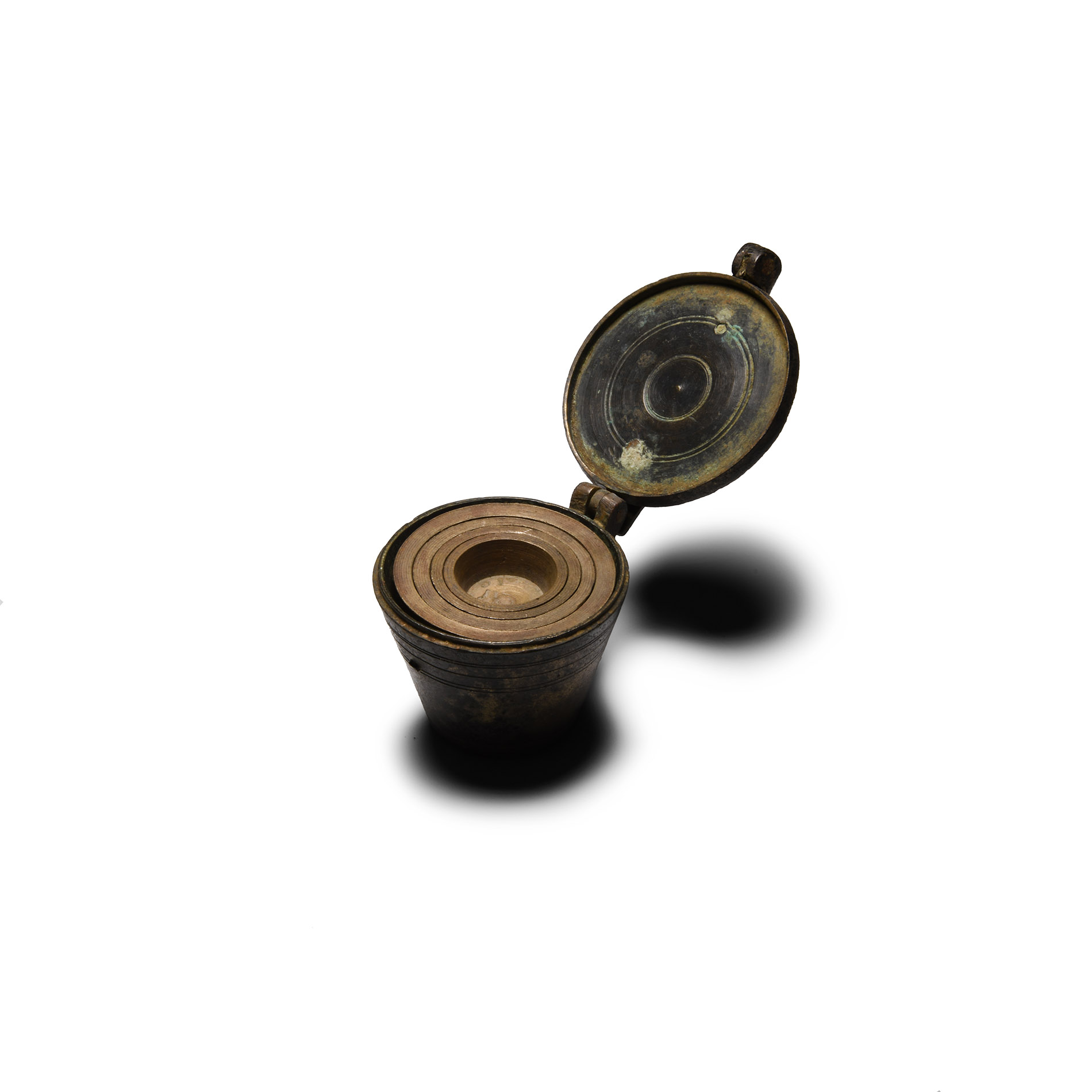
Post Medieval Nest of Bronze Cup Weights
17TH CENTURY A.D.
2 1/8 in. (222 grams, 54 mm).
Composed of a hinged container bearing multiple stamps to the upper face and interior; four graduated 'cup' weights stored within. [No Reserve]
ProvenanceAcquired 1990s-early 2000s.
East Anglian private collection.
TimeLine Auctions follows a vetting process to ensure the authenticity and legality of all items, reinforcing our commitment to integrity and responsible trading. Each antiquity, antique, and coin lot undergoes thorough examination by a vetting committee of at least ten external specialists, professional trade association members, scientists, and archaeologists: Our Vetting Process
AUCTIONS:
TimeLine is a leading auction house specialising in antiquities, ancient art, collectables, natural history, coins, medals, and books. Our auctions offer museums, collectors, historians, and enthusiasts the opportunity to acquire unique and historically significant pieces.
-

Post Medieval 'Thames' Bronze Watch Key Group
18th-19th century A.D.Sold for (Inc. bp): £59
Comprising examples from a range of time periods, including examples accompanied by chains, with raised decorative motifs and facetted 'jewels'. 30.1 grams total, 2-19.5 cm
Found Thames foreshore spoil, 1980s. -
White Metal Shoe Buckle Group
18th-early 19th century A.D.Sold for (Inc. bp): £29
Each with an arched profile and retaining articulate fitting elements; one decorated with a border of studs; one displaying openwork crescents over discs and concentric squares; one set with imitation jewels. 197 grams total, 65-88 mm
Acquired 1960s-1990s. From the late Alison Barker collection, a retired London barrister. -
Ethiopian Magic Scroll
Early-mid 19th century A.D.Sold for (Inc. bp): £416
Produced using parchment; rectangular with inked geometric borders; leading edge with panel of nimbate winged cherubim; two panels of Coptic text divided by a series of saltire motifs, facing masks and quatrefoils, traces of red and green pigment; old seam repair; linen binding tape. 114 grams, 2.20 m long
Ex Adalberto Frezza, 2004. Ex central London gallery.
