
Loading, please wait...
LOT 1807
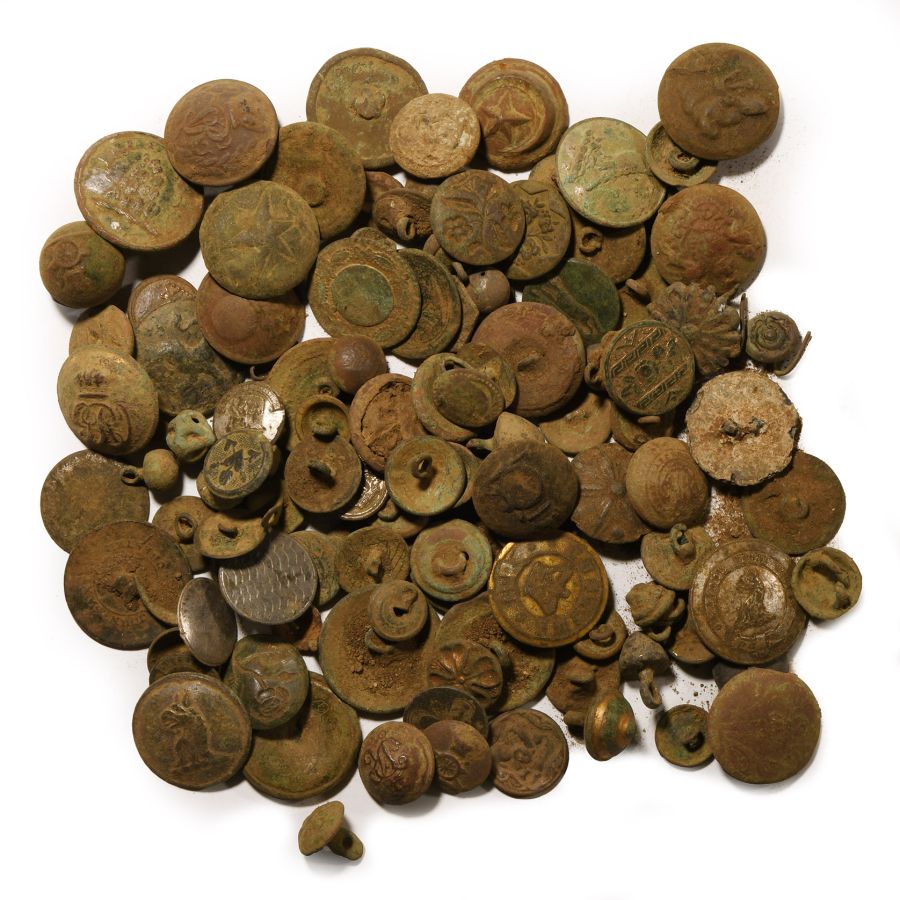
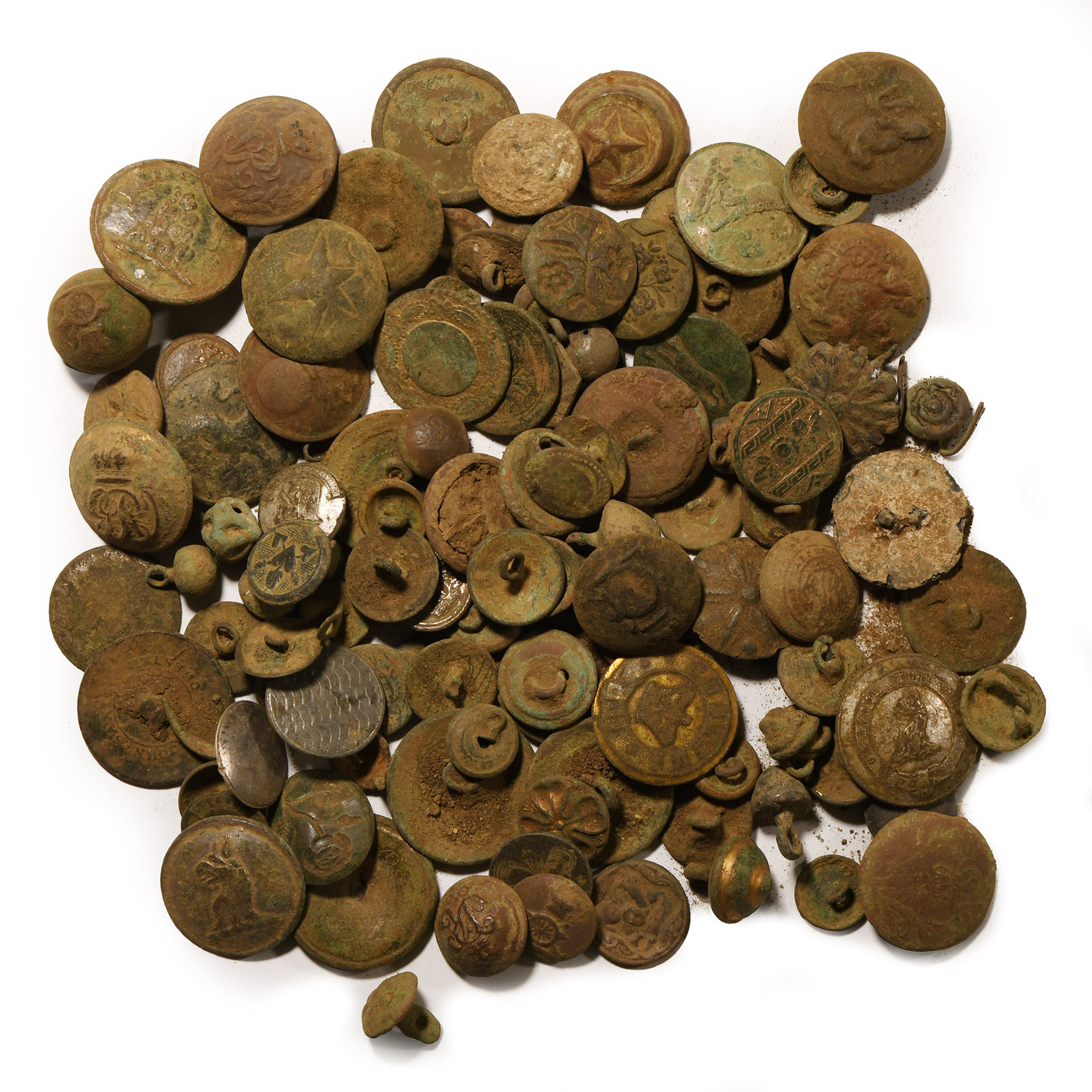
Post Medieval Military and Other Bronze Button Group
18TH-20TH CENTURY A.D.
3/8 - 1 in. (376 grams total, 11-27 mm).
Including regimental and decorative types. [114, No Reserve]
ProvenanceFound Suffolk, UK.
LiteraturePAU/01144/24
CONDITIONTimeLine Auctions follows a vetting process to ensure the authenticity and legality of all items, reinforcing our commitment to integrity and responsible trading. Each antiquity, antique, and coin lot undergoes thorough examination by a vetting committee of at least ten external specialists, professional trade association members, scientists, and archaeologists: Our Vetting Process
AUCTIONS:
TimeLine is a leading auction house specialising in antiquities, ancient art, collectables, natural history, coins, medals, and books. Our auctions offer museums, collectors, historians, and enthusiasts the opportunity to acquire unique and historically significant pieces.
-
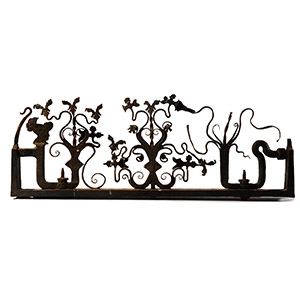
Wrought Iron Panel from a Ceremonial Wedding Cart
Sicily, Italy, early 19th century A.D.Sold for (Inc. bp): £468
Rectangular-section bar with wrought-iron decorative scrolled trees and foliage, profile female bust to one end and hook above; adjustable mounting bolts to the lower edge. 4.85 kg, 62.5 cm
Acquired Bonhams, Edinburgh, Scotland, UK, 13 September 2021, lot 333 (part). Property of a Kent collector. -
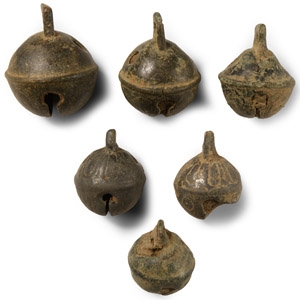
Post Medieval Bronze Crotal Bell Collection
17th-18th century A.D.Sold for (Inc. bp): £13
Including types with split underside and pierced shoulders. 220 grams total, 26-43 mm
Found Cambridgeshire, UK. -
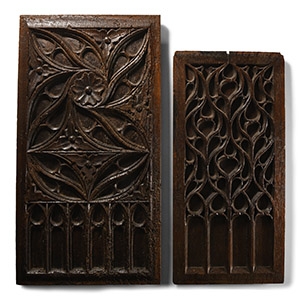
English Carved Oak Panel Group
Circa 16th century A.D.Sold for (Inc. bp): £546
Two rectangular carved panels, the larger with an arcade of lancet arches beneath a two leaf-shaped voids and four similar features radiating from a cinquefoil centre; the smaller with four lancet arches below a tracery; each with lips and raised panel to the reverse. 1.6 kg total, 38-43.2 cm
Acquired from various UK auction houses. Property of a Kent collector.
