
Loading, please wait...
LOT 1867
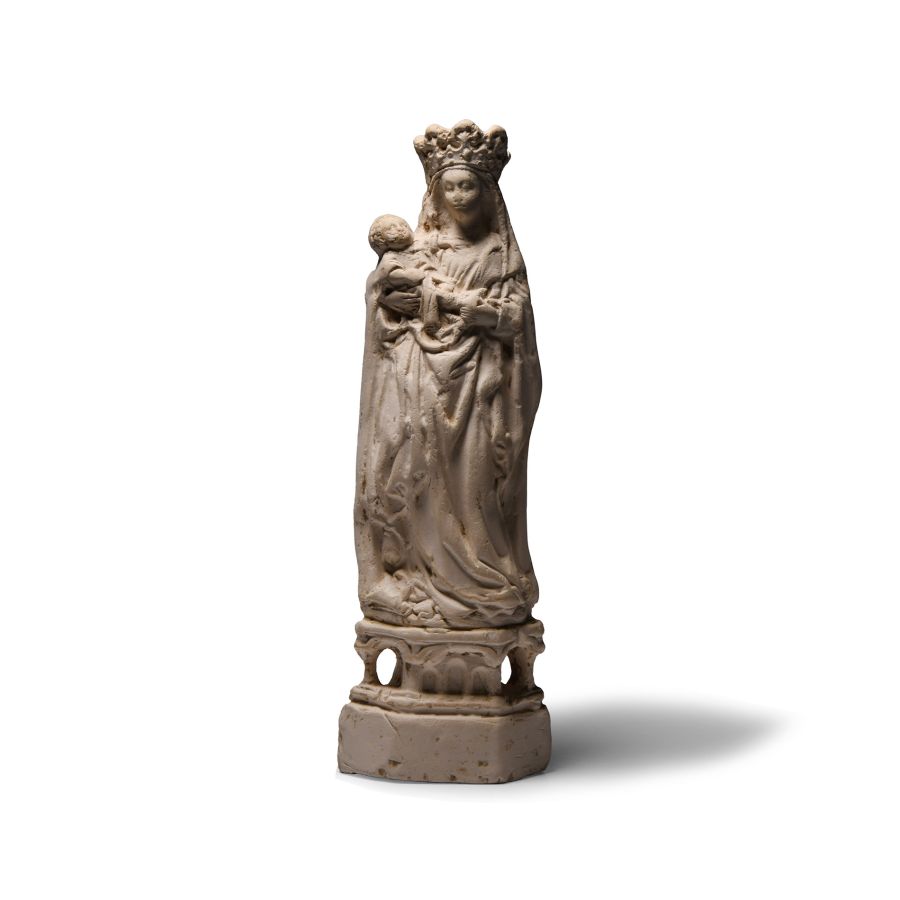
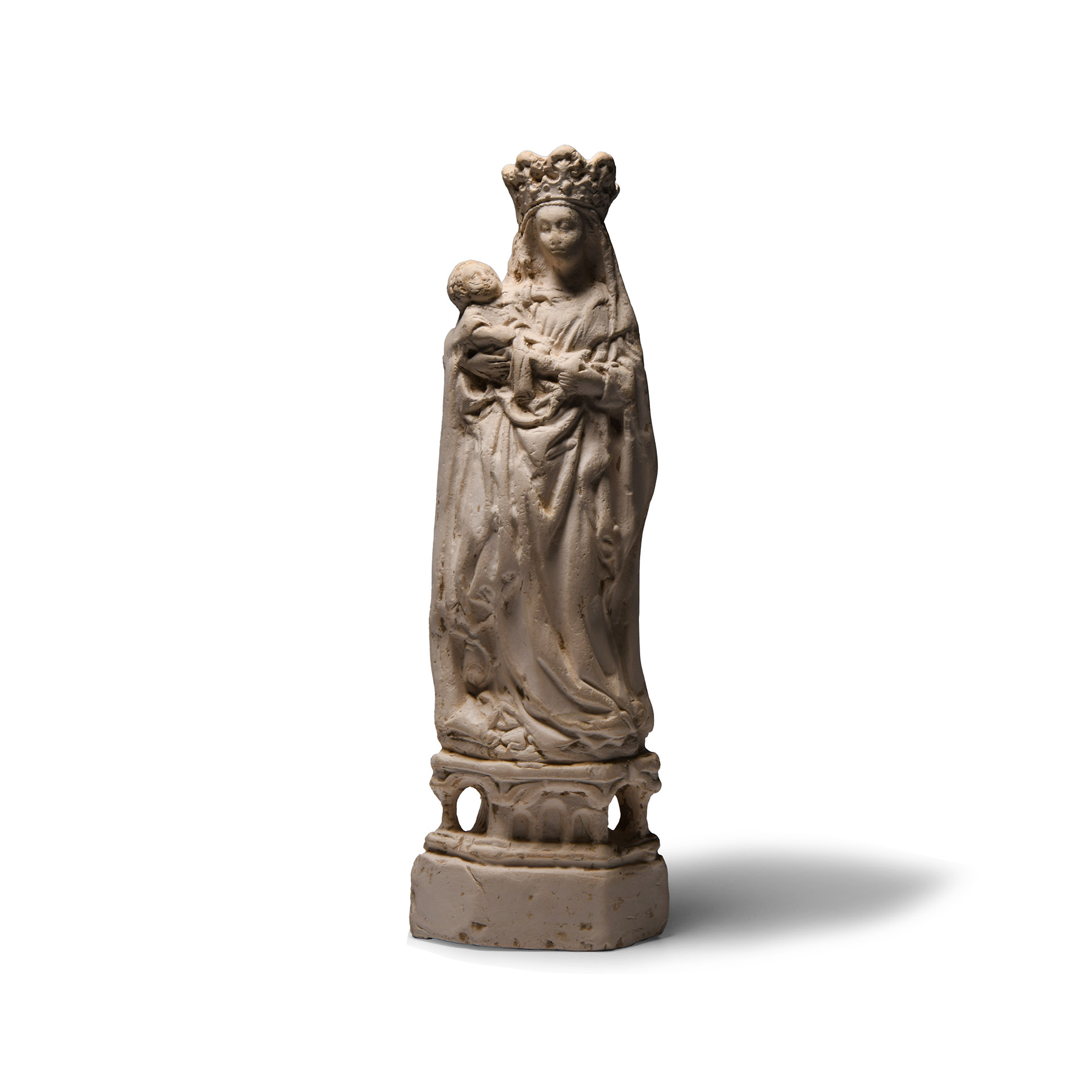
Post Medieval Madonna Pipe Clay Figure
18TH CENTURY A.D.
9 3/4 in. (665 grams, 24.7 cm high).
Shown standing on a free-standing openwork hexagonal base.
ProvenanceAcquired 1960s-1990s.
Late Alison Barker collection, a retired London barrister.
TimeLine Auctions follows a vetting process to ensure the authenticity and legality of all items, reinforcing our commitment to integrity and responsible trading. Each antiquity, antique, and coin lot undergoes thorough examination by a vetting committee of at least ten external specialists, professional trade association members, scientists, and archaeologists: Our Vetting Process
AUCTIONS:
TimeLine is a leading auction house specialising in antiquities, ancient art, collectables, natural history, coins, medals, and books. Our auctions offer museums, collectors, historians, and enthusiasts the opportunity to acquire unique and historically significant pieces.
-
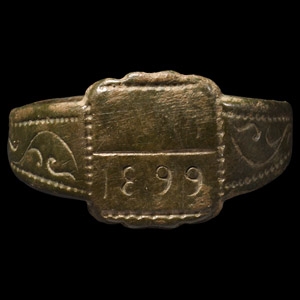
Post Medieval Bronze Ring with Date
Late 19th century A.D.Sold for (Inc. bp): £20
Scroll detailing to the shoulders, shield-shaped bezel with stamped date '1899' in lower panel. 4.63 grams, 25.33 mm overall, 23.29 mm internal diameter (approximate size British Z+1, USA 12 3/4 , Europe 29.99, Japan 28)
Acquired on the London art market, 1980s-1990s. -
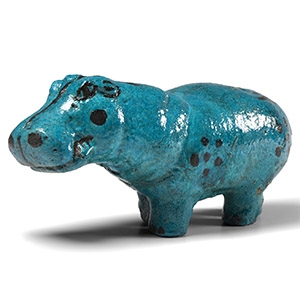
Egyptian Style Blue Glazed Hippopotamus
20th century A.D.Sold for (Inc. bp): £20
Likely after a known Middle Kingdom example; modelled in the round and painted with lotus flower details. 399 grams, 15.5 cm
Prof. Horace Abram Rigg (1909-1978), Cleveland, 1960s. Ex American collection, 2001. with Chiswick Auctions, London, 11 December 2017. -
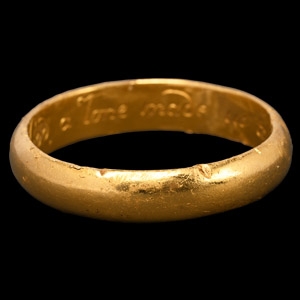
Large Post Medieval 'God a Lone Made us to One' Gold Posy Ring
18th century A.D.Sold for (Inc. bp): £650
Inscribed 'God a lone made us to One WME' around the interior, the initials being M for family name with W for male forename and E for female forename, with maker's mark stamped 'NL' in rectangular cartouche, possibly for the northern goldsmith Nicholas Lee. 5.59 grams, 22.23 mm overall, 19.15 mm internal diameter (approximate size British R, USA 8 1/2, Europe 18 3/4, Japan 18)
From the collection of a North American gentleman, formed in the 1990s.
In the medieval period many rings bore posy inscriptions in Latin or French, the languages frequently spoken by the affluent elites. Later, inscriptions in English became more usual, although the lack of standardisation in spelling might surprise the modern reader. The inscription is generally found on the interior of the ring, hidden to everyone except the wearer and most of the sentimental mottoes were taken from the popular literature of the time. In fact, love inscriptions often repeat each other, which suggests that goldsmiths used stock phrases. In the later 16th century, ‘posy’ specifically meant a short inscription. A posy is described in contemporary literature as a short ‘epigram’ of less than one verse. George Puttenham (1589) explained that these phrases were not only inscribed on finger rings, but also applied to arms and trenchers. The practice of giving rings engraved with mottoes at betrothals or weddings was common in England from the 16th century onwards, and continued until the late 18th century. Sources suggest that rings could be acquired ready- engraved, or alternatively engraved sometime after their initial production, by a hand other than the goldsmith’s. Joan Evans assumed that posy rings were principally used by/between lovers and distinguished four contexts for the giving of posy rings by one lover to another: betrothals, weddings, St Valentine’s Day and occasions of mourning. Samuel Pepys’ diary makes clear that posy rings might also mark the marriage of a family member, when bearers could even commission their own rings and chose their own mottoes from books. The rings could also function as tokens of friendship or loyalty.
