
Loading, please wait...
LOT 1824
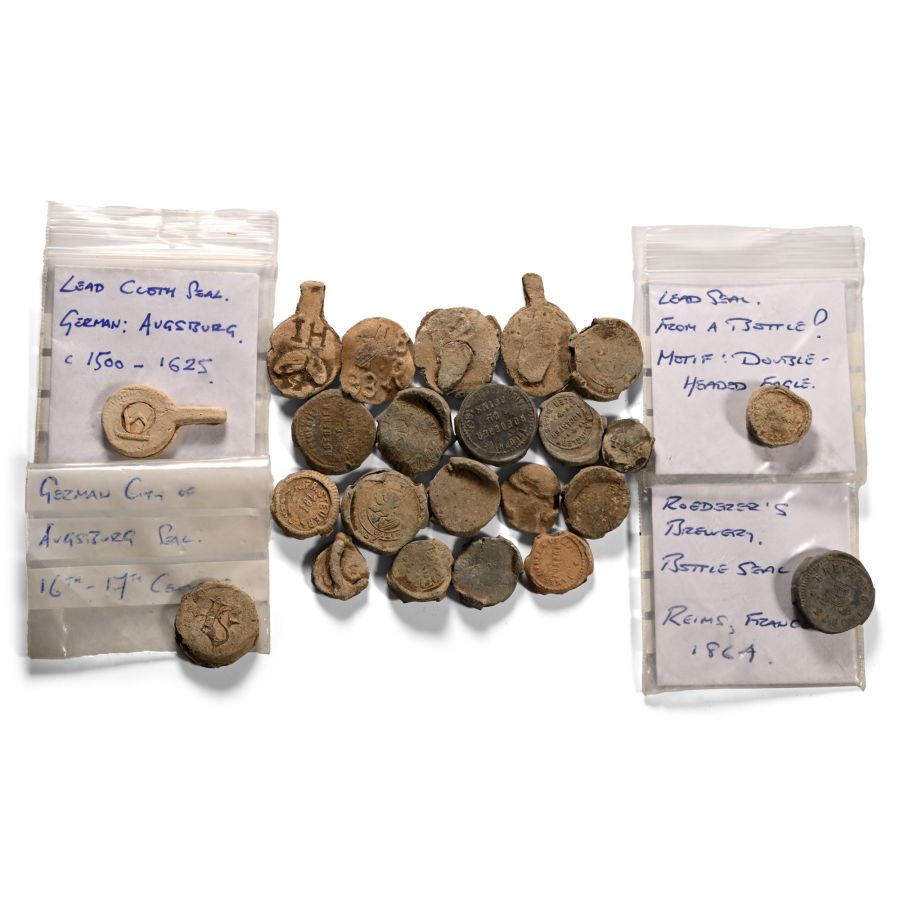
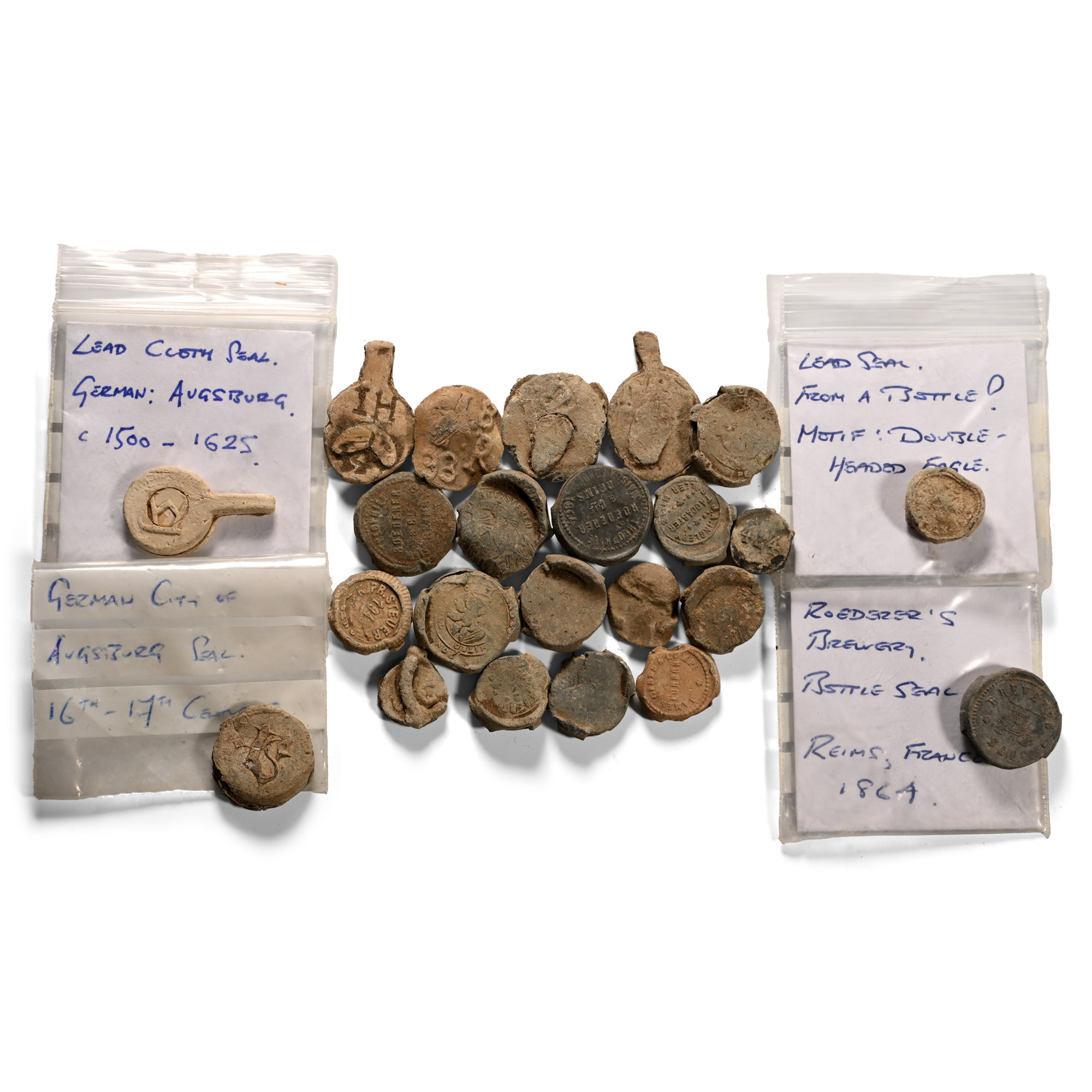
Post Medieval Lead Bag Seal Collection
CIRCA 16TH-20TH CENTURY A.D.
(204 grams total, 13-32 mm).
Including mainly discoid in plan with impressions, some German cities and other types. [23, No Reserve]
ProvenanceFound Yorkshire, UK.
From the private collection of Robin Sykes, Yorkshire, UK, formed since the late 1990s.
This lot is accompanied by an illustrated lot declaration signed by the Head of the Antiquities Department, Dr Raffaele D'Amato.
TimeLine Auctions follows a vetting process to ensure the authenticity and legality of all items, reinforcing our commitment to integrity and responsible trading. Each antiquity, antique, and coin lot undergoes thorough examination by a vetting committee of at least ten external specialists, professional trade association members, scientists, and archaeologists: Our Vetting Process
AUCTIONS:
TimeLine is a leading auction house specialising in antiquities, ancient art, collectables, natural history, coins, medals, and books. Our auctions offer museums, collectors, historians, and enthusiasts the opportunity to acquire unique and historically significant pieces.
-
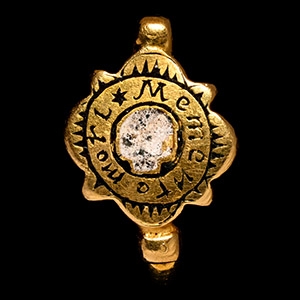
Tudor Period Enamelled Gold Memento Mori Ring with Skull
16th-17th century A.D.Sold for (Inc. bp): £6,500
Comprising a plain D-section hoop, discoid bezel with radiating spurs, central enamelled skull motif surrounded by a ring with legend '*MEMENTO*mori'. 3.84 grams, 19.30 mm overall, 16.87 mm internal diameter (approximate size British M, USA 6, Europe 12.46, Japan 12)
Private collection, UK. This lot has been checked against the Interpol Database of stolen works of art and is accompanied by a search certificate number no.12740-235714. This lot has been cleared against the Art Loss Register database, and is accompanied by an illustrated lot declaration signed by the Head of the Antiquities Department, Dr Raffaele D'Amato. -
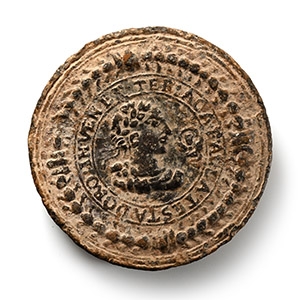
Theriaca 'Venice Triacle' Lead Box Lid
Italy, Venice, 17th century A.D.Estimate: £300 - 400 (+bp*)
Opening Bid: £150
Discoid in plan with lip to underside, central low-relief motif of a laureate and draped Roman-style bust with a nimbate lion of St. Mark, within a band inscribed 'TERIACA F ALLA TESTA DORO IN VENET'; all within outer band containing laurel wreath. 31 grams, 45 mm
From the collection of a gentleman, acquired on the London art market in the 1990s. This lot is accompanied by an illustrated lot declaration signed by the Head of the Antiquities Department, Dr Raffaele D'Amato.
Theriaca or ‘Venice treacle’ was a medicinal compound used since the time of Mithradates VI of Pontus as an antidote against any poisonous bite. -
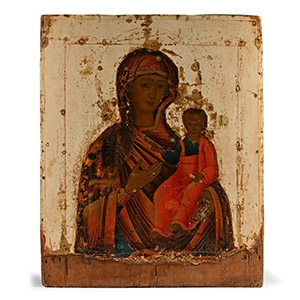
Russian Icon with Mother of God and Christ
Smolenskaya, early 19th century A.D.Sold for (Inc. bp): £351
Depicting nimbate Mary Theotokos with veiled head and wearing a red maphorion mantle over a dark blue robe with gold cuffs, inclined towards the infant Jesus supported by her left hand, wearing a bright red mantle and a blue tunic highlighted with gold, his left arm holding a roll and the right hand in a gesture of blessing; white field, tempera on wood, Smolenskaya type. 1.12 kg, 32 x 26 cm
Acquired from Portobello Road, London, circa 2000. Property of a London, UK, gentleman collector. This lot is accompanied by an illustrated lot declaration signed by the Head of the Antiquities Department, Dr Raffaele D’Amato. This lot is accompanied by an illustrated lot declaration signed by the Head of the Antiquities Department, Dr Raffaele D'Amato.
The model for the icon, painted in a 16th century style, is the Mother of God of Smolensk, associated with the Byzantine icon of the Hodegetria ('She who shows the ways’). According to the legend, the icon of Smolensk received the name after healing two blind men. The original icon of Smolensk was a gift of the Roman Emperor Constantine Monomachus to his daughter Anna when she married the Russian Prince Vsevolod. Later Anna presented the icon to her son Vladimir who displayed it in the Vladimir Cathedral.
