
Loading, please wait...
LOT 2054
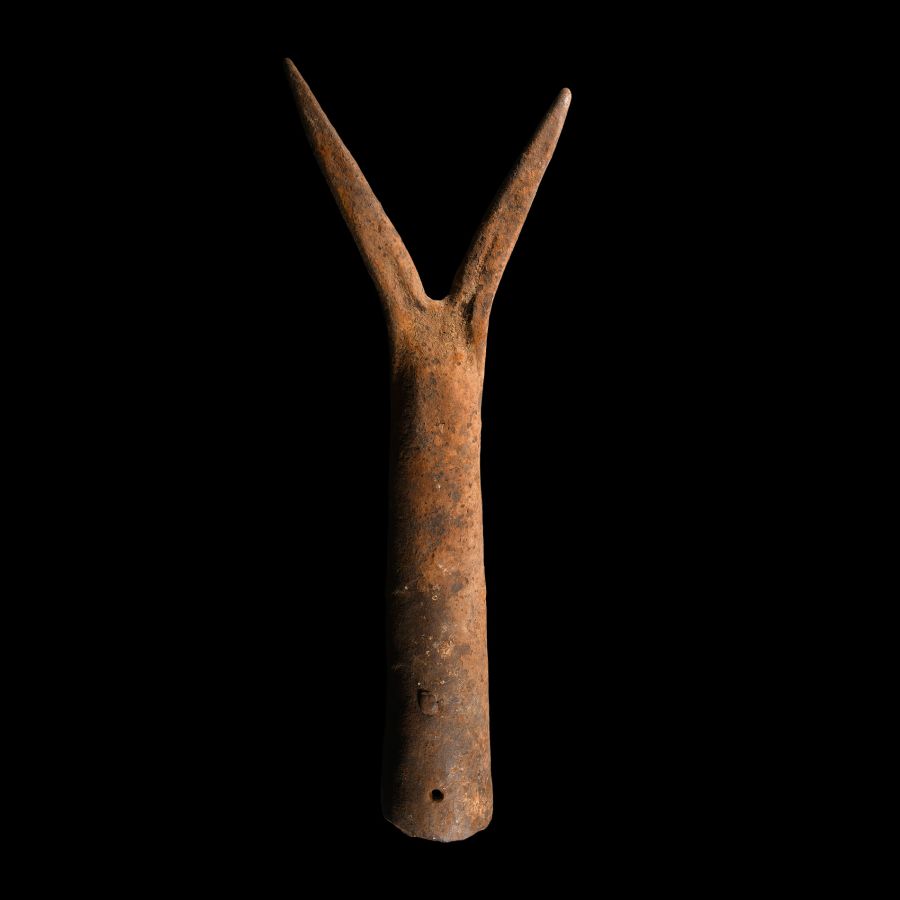
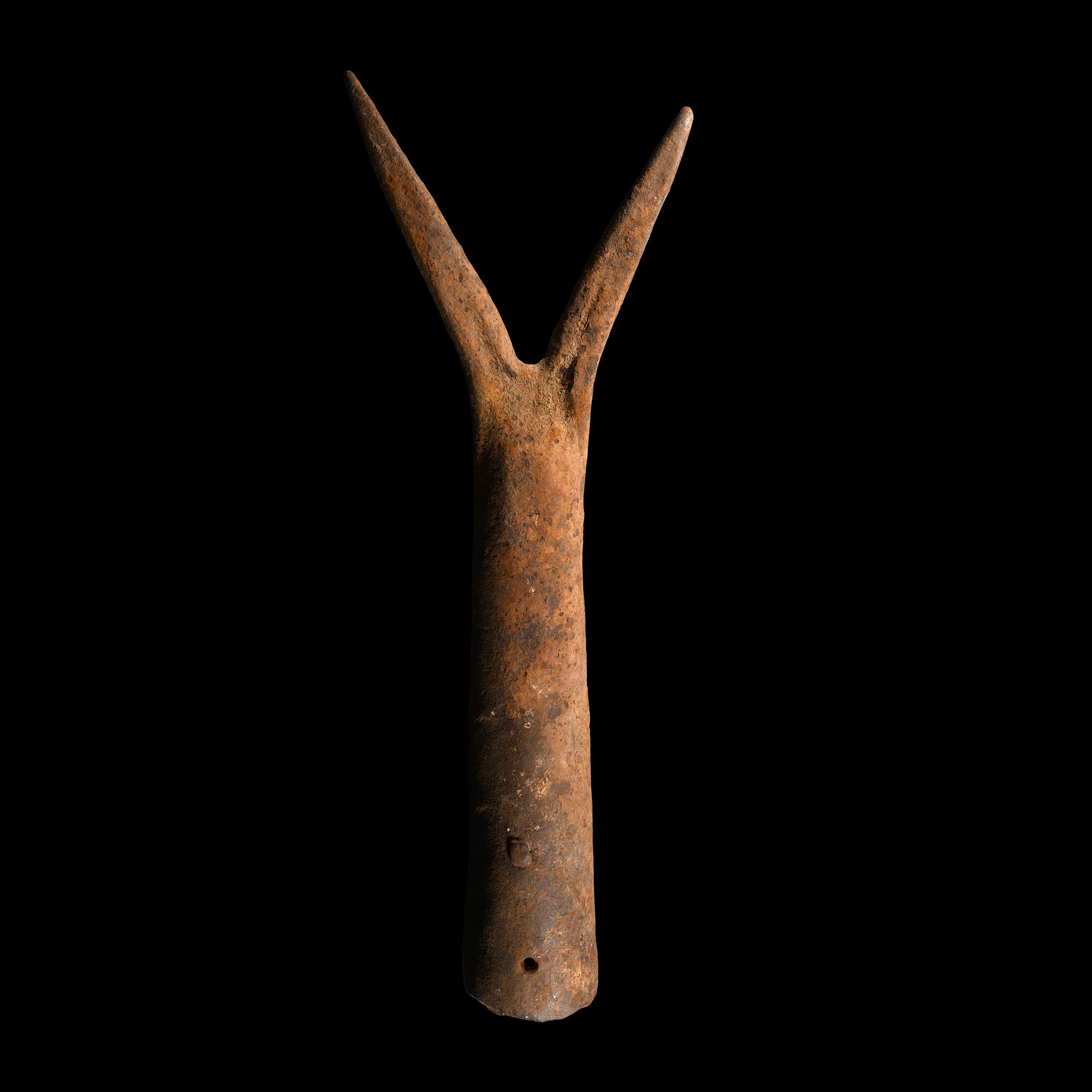
Post Medieval Iron Thames Barge Tender Finial
CIRCA 16TH-18TH CENTURY A.D.
21 1/4 in. (3.66 kg total, 54 cm).
Hollow-formed D-section body tapering towards a forked terminal. [No Reserve]
ProvenanceAcquired 1990s-early 2000s.
East Anglian private collection.
TimeLine Auctions follows a vetting process to ensure the authenticity and legality of all items, reinforcing our commitment to integrity and responsible trading. Each antiquity, antique, and coin lot undergoes thorough examination by a vetting committee of at least ten external specialists, professional trade association members, scientists, and archaeologists: Our Vetting Process
AUCTIONS:
TimeLine is a leading auction house specialising in antiquities, ancient art, collectables, natural history, coins, medals, and books. Our auctions offer museums, collectors, historians, and enthusiasts the opportunity to acquire unique and historically significant pieces.
-
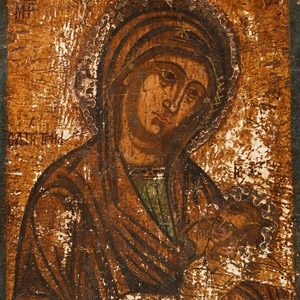
Painted Wooden Icon of Virgin and Child
19th-20th century A.D.Estimate: £200 - 300 (+bp*)
Opening Bid: £65
Mary cradling the infant Christ, Greek text in the field with inscription 'ΜΡ ΘΥ' for 'Mother of God' flanking the Virgin's halo, 'IC XC' for 'Jesus Christ' over the Child's head; to the right a Greek inscription 'ΟΔΙΓΗΤΡΙΑ' (Odighitria); some restoration; a handwritten inscription and a cross to the reverse in Greek, reading 'Eufemia Papadimitriou - born on March, 30, 1932, on Thursday, at the 5.00 p.m.; Vasilios Papadimitriou - born on March, 15, 1934, on Thursday, at the 3.00 p.m.' 614 grams, 29 cm
The timber shows some old insect flight holes and we are advised that this piece has been recently treated with Permthrin, as a precaution.
Ex French gallery, Paris.
The icon belongs to the category of Virgin 'Galaktotrophousa' (Γαλακτοτροφουσα, meaning “the Milk-Giver”) celebrated on third July, and showing Mary breast-feeding Jesus. The ancient typology dates from the 6th century A.D. and resided in St. Sabbas’ lavra (a type of monastic community). -
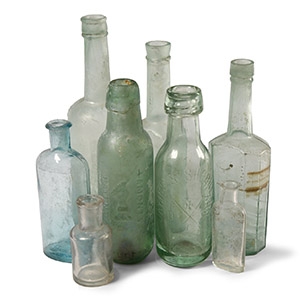
Post Medieval Mixed Glass Bottle Group
19th-early 20th century A.D.Sold for (Inc. bp): £1
In blue, clear and aqua glass including 'Davies & Shepheard, Chester', 'Cramptons Aerated Waters' and other types. 1.8 kg total, 8.1-23 cm high
Acquired UK market. Ian Roper collection. -
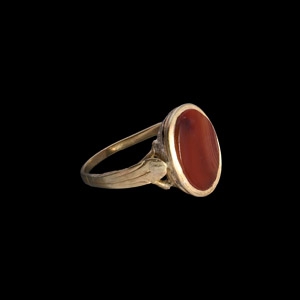
Early Georgian Gold Ring with Gemstone
Early 18th century A.D.Estimate: £550 - 750 (+bp*)
Opening Bid: £300
Composed of a slender hoop expanding at the arms, oval-shaped cushion bezel set with a cut and polished carnelian gemstone, fluting to the reverse of the bezel, saltires and crescents to the hoop. 5.20 grams, 23.18 mm overall, 19.36 mm internal diameter (approximate size British P 1/2, USA 7 3/4, Europe 16.86, Japan 16)
Fine condition.
Acquired 1960s-1990s. Late Alison Barker collection, a retired London barrister.
