
Loading, please wait...
LOT 1976
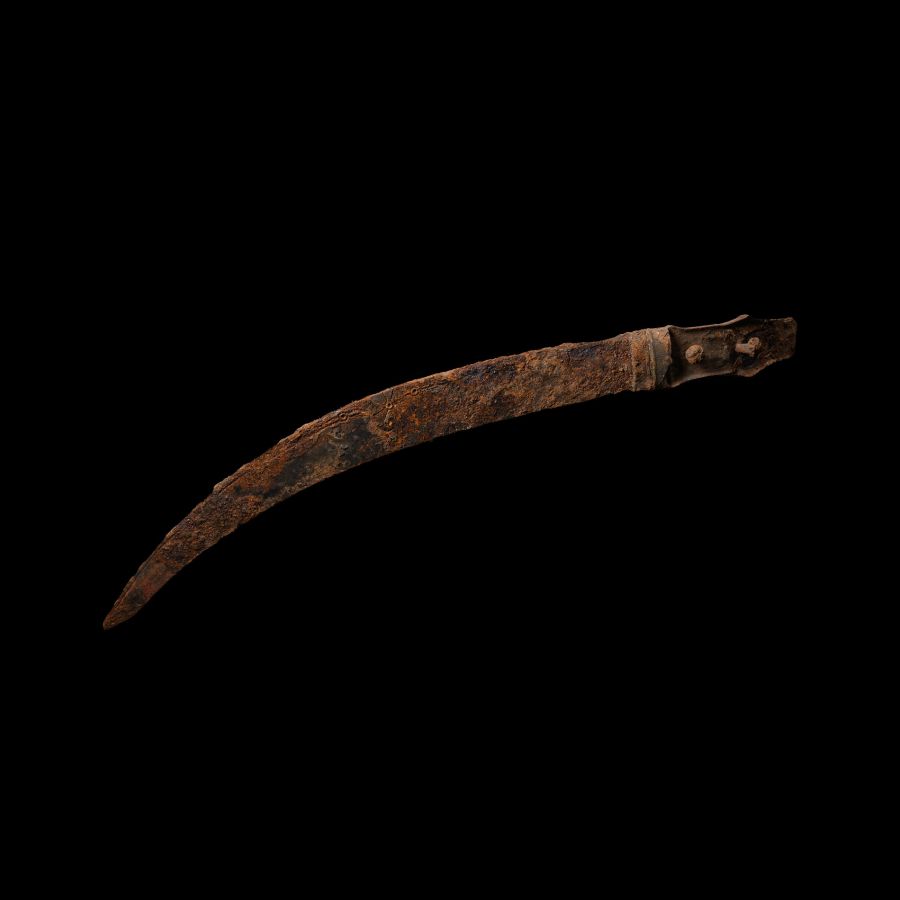
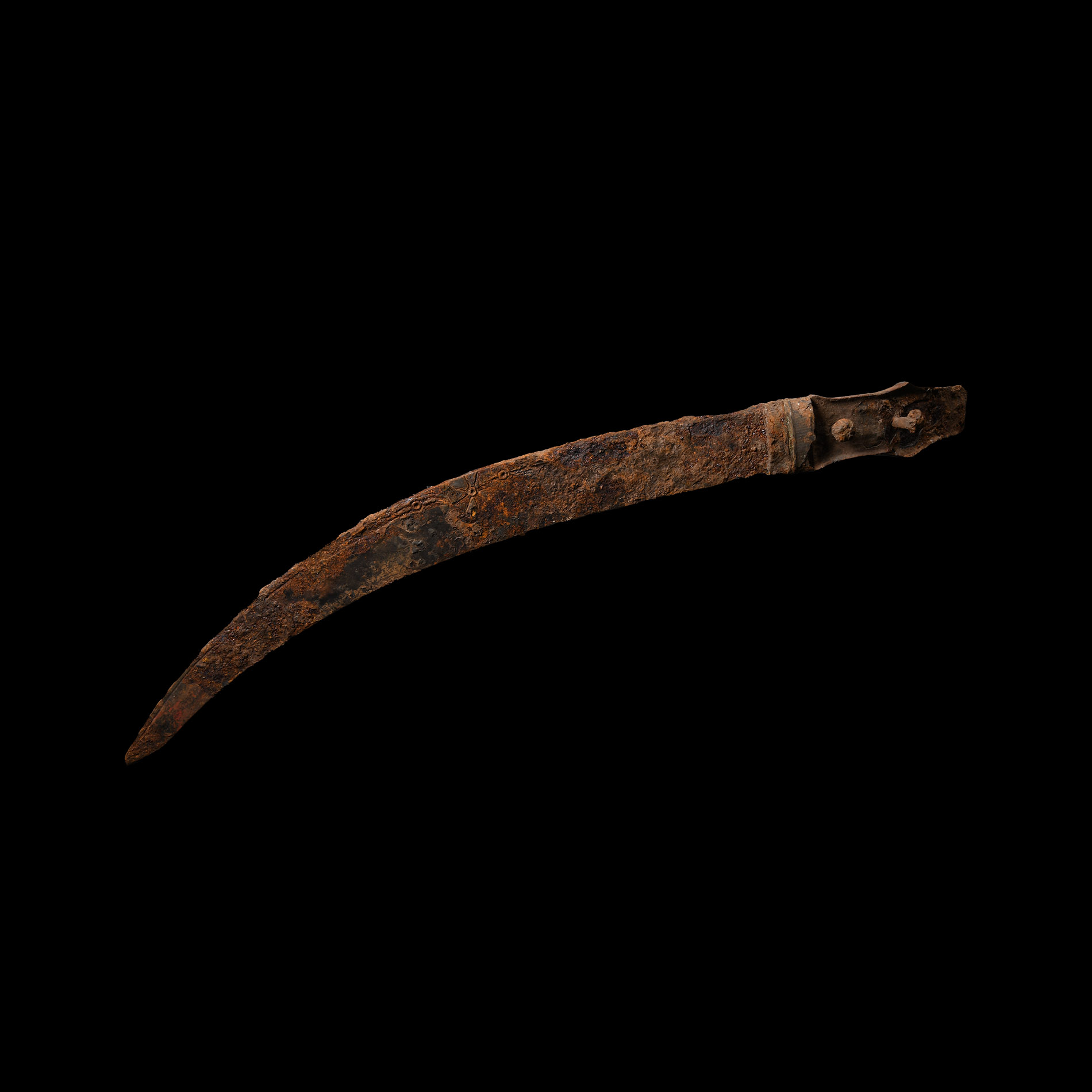
Post Medieval Iron Dagger
CIRCA 17TH CENTURY A.D.
13 3/4 in. (165 grams, 35 cm).
Of curved form and with remaining rivets for attachment of the tang-scales; single-edged blade with sunburst and ring-and-dot motifs to the lower edge on one face, joined by plain bands. [No Reserve]
ProvenanceAcquired 1990s-early 2000s.
East Anglian private collection.
See Capwell, Dr. T., Knives, Daggers and Bayonets, London, 2009, p.32, for type.
CONDITIONTimeLine Auctions follows a vetting process to ensure the authenticity and legality of all items, reinforcing our commitment to integrity and responsible trading. Each antiquity, antique, and coin lot undergoes thorough examination by a vetting committee of at least ten external specialists, professional trade association members, scientists, and archaeologists: Our Vetting Process
AUCTIONS:
TimeLine is a leading auction house specialising in antiquities, ancient art, collectables, natural history, coins, medals, and books. Our auctions offer museums, collectors, historians, and enthusiasts the opportunity to acquire unique and historically significant pieces.
-
.jpg)
Egyptian Temple of Abu Simbel by J. W. Cox
Dated 1932 A.D.Sold for (Inc. bp): £52
Signed in the bottom right corner of the watercolour; framed and glazed with loops for suspension to the reverse. 1.65 kgs, 40.4 cm
Ex Albert Ward collection, Essex, UK.
J.W.S. Cox (1911-1982) was an American watercolourist renowned for developing the wet-on-wet painting technique. He grew up in New York, where he avidly sketched landscapes from an early age. The artist graduated from Pratt Institute NYC in 1933 and worked various jobs through the Great Depression. In 1936, he studied at the Acadamie Colarossie in Paris, and with Fauvist Othon Friesz for a short time, although later dismissed the Fauvist style as 'sloppy'. He went on to teach watercolour painting to students at Boston University, founding a studio on Bearskin Neck, Rockport, where he developed his 'sponge painting' and palette-knife techniques. He painted with an individualistic style, becoming a member of the Boston Watercolour Society. Cox shunned publicity as he believed it robbed him of painting time and turned down membership to the National Academy because he 'wouldn't play the game'. A Renaissance man, Cox spoke 12 languages with a goal to present himself 'and the soul of nature as truthfully and with as much inspiration, vitality and freshness as is possible, through the medium of watercolour'. He died of a heart attack in Florida in 1982. -
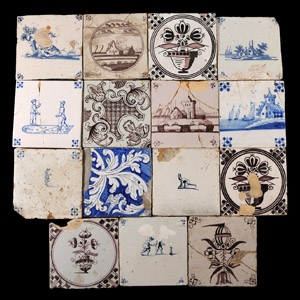
Post Medieval Glazed Ceramic Tile Group
17th-18th century A.D.Sold for (Inc. bp): £65
Comprising 15 tiles mainly displaying landscape scenes and floral and foliate designs. 3.8 kg total, 12.6 x 12.6 - 13.1 x 13.1 cm
Acquired 1990s-early 2000s. East Anglian private collection. -
.jpg)
Post Medieval Glazed Ceramic Tile Group
17th-18th century A.D.Estimate: £100 - 140 (+bp*)
Opening Bid: £40
Composed of various coloured glazes and designs including dense foliage, geometric schemes, landscapes, figural scenes, architectural scenes, animals and others, in various styles. 6 kg total, 12.8 x 6.4 - 13.5 x 13 cm
Acquired 1960s-1990s. Late Alison Barker collection, a retired London barrister.
