
Loading, please wait...
LOT 2046
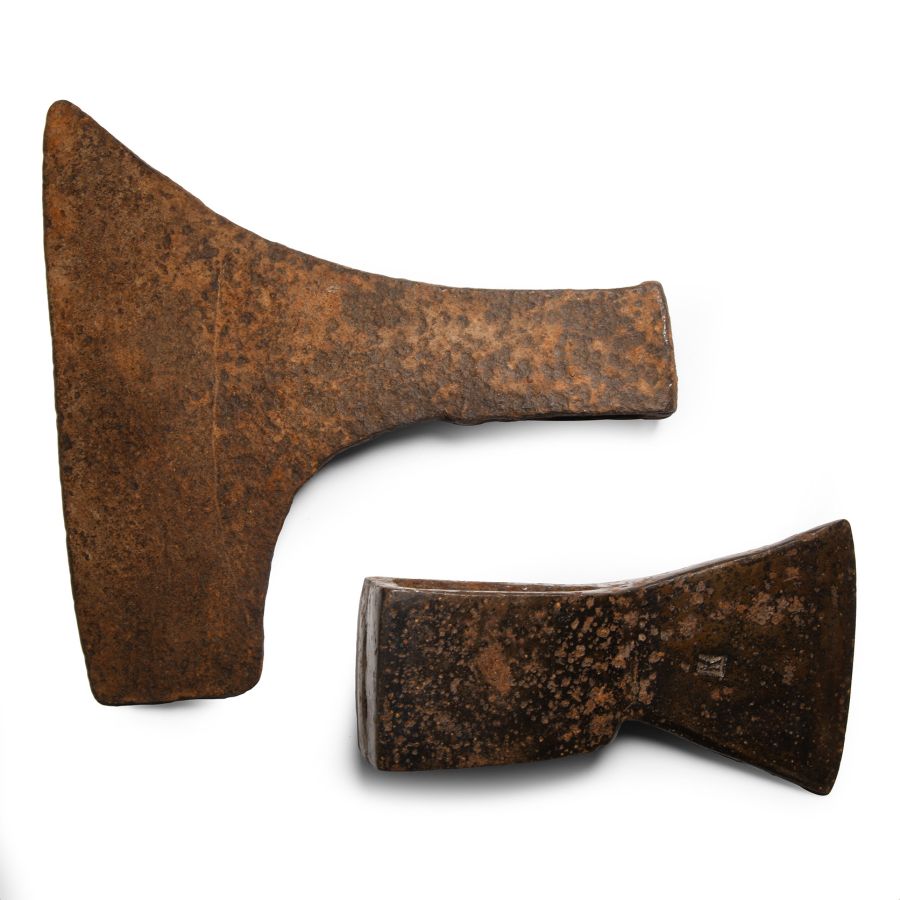
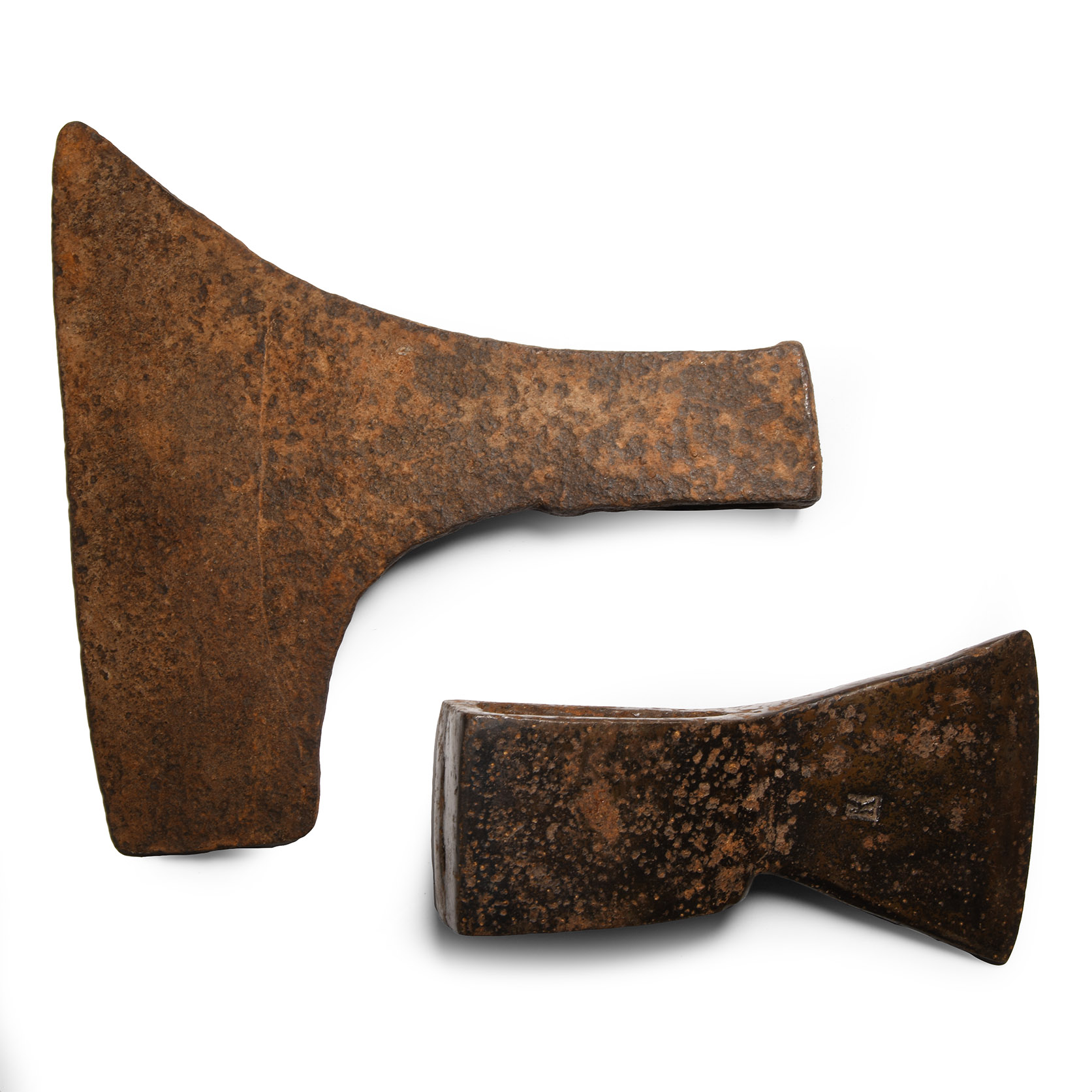
Post Medieval Iron Axehead Group
17TH-18TH CENTURY A.D.
6 1/2 - 8 in. (1.98 kg total, 16.5-20.5 cm).
Comprising a large side-axe with wide chin; a substantial felling axe with punched maker's mark 'K' to one face. [2, No Reserve]
ProvenanceFrom the collection of the famous author, writer and speaker, Gordon Bailey, Essex, UK; formed since 1968.
CONDITIONTimeLine Auctions follows a vetting process to ensure the authenticity and legality of all items, reinforcing our commitment to integrity and responsible trading. Each antiquity, antique, and coin lot undergoes thorough examination by a vetting committee of at least ten external specialists, professional trade association members, scientists, and archaeologists: Our Vetting Process
AUCTIONS:
TimeLine is a leading auction house specialising in antiquities, ancient art, collectables, natural history, coins, medals, and books. Our auctions offer museums, collectors, historians, and enthusiasts the opportunity to acquire unique and historically significant pieces.
-
Gemstone Collection
20th century AD.Sold for (Inc. bp): £7
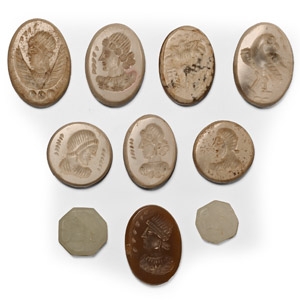
Mainly discoid and ellipsoid plaques in carnelian and other materials, with incuse images including profile bust, perching bird and others; after the antique. 25.1 grams total, 11-25 mm
Acquired on the UK art market. Property of a North London, UK, gentleman. -
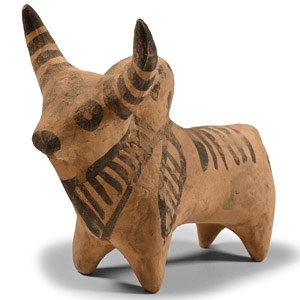
Indus Valley Style Terracotta Bull
20th century A.D.Sold for (Inc. bp): £72
Ceramic zebu with painted markings, hole to the underside; after the antique. 246 grams, 12.7 cm
London art market, 1990s. -
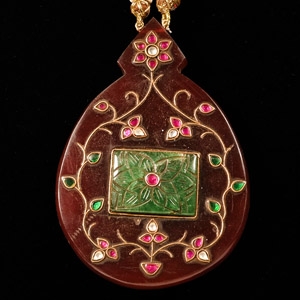
Jadeite Pendant Necklace with 'Rubies' and Other Cabochons
Late 19th-early 20th century A.D.Sold for (Inc. bp): £130
Plaque with floral design comprising inset glass cabochons, synthetic rubies and gold-coloured wire detailing, central floral plaque. 100 grams, pendant height: 98 mm
Property of a South West London gentleman.
