
Loading, please wait...
LOT 2171
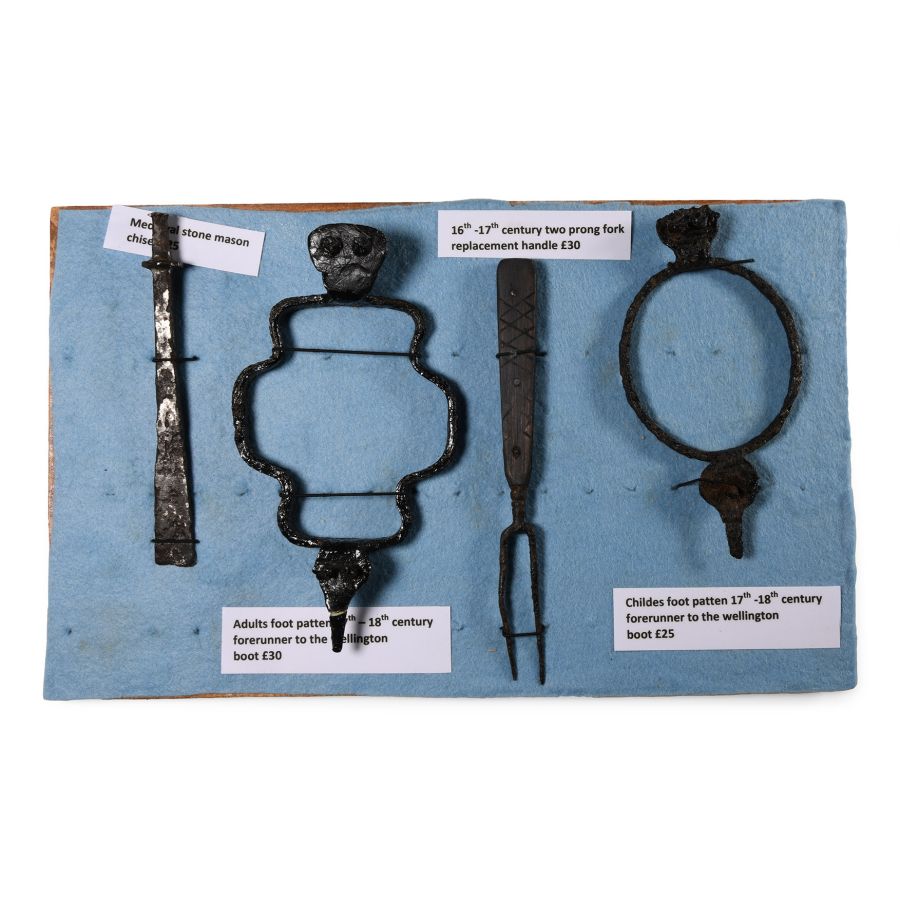
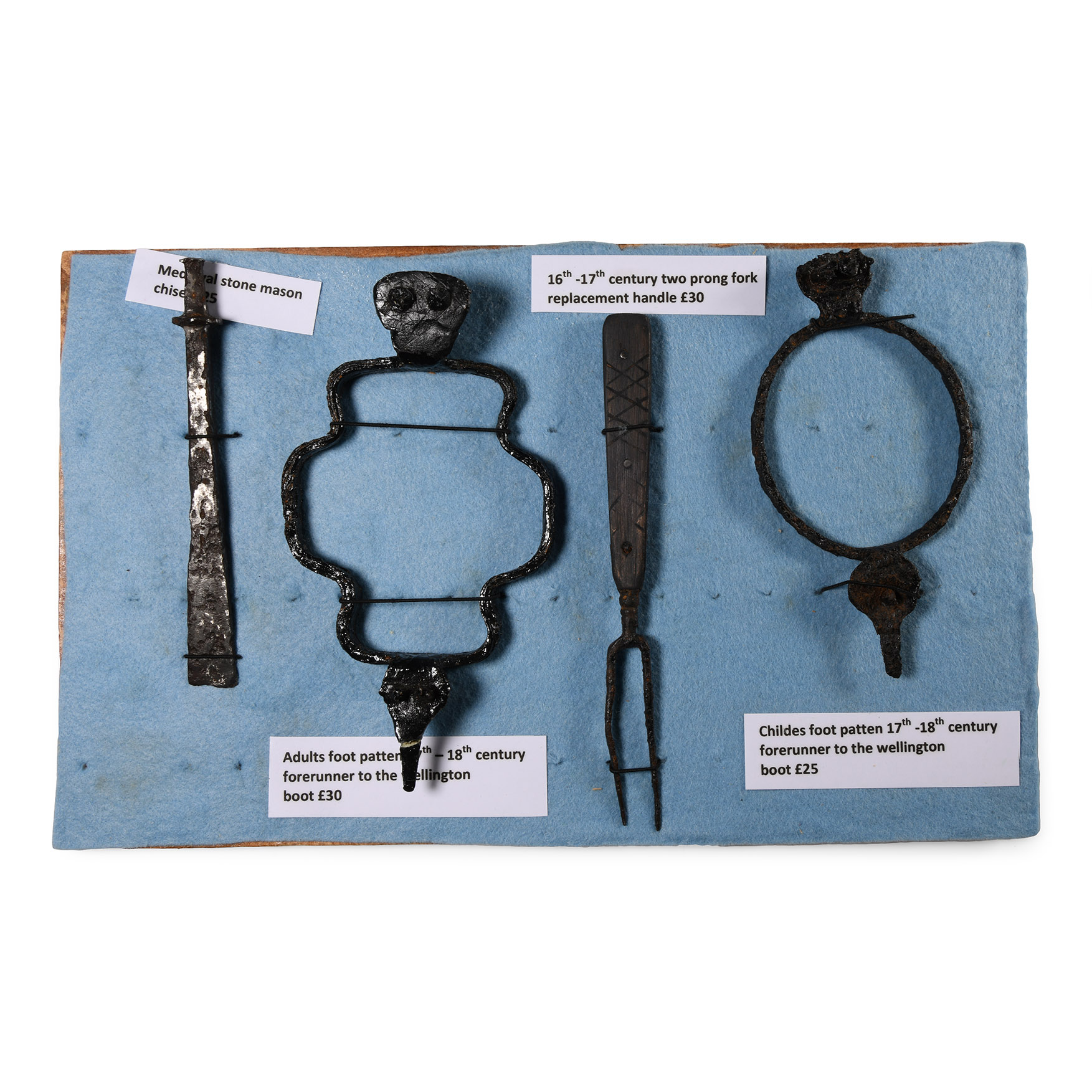
Post Medieval Iron Artefact Display
16TH-18TH CENTURY A.D.
5 7/8 - 7 1/4 in. (563 grams total, 15-18.5 cm).
Comprising: a medieval stone mason's chisel; two post medieval foot pattens (17th-18th century A.D.) for an adult and a child, composed of a ring with extended tongue fitted with iron rivets used to secure the ring to a wooden platform; a 16th-17th century two prong fork with handle replacement; mounted on a backing board. [4, No Reserve]
ProvenanceFrom the collection of the famous author, writer and speaker, Gordon Bailey, Essex, UK; formed since 1968.
PublishedBailey, G., Detector finds 5, Witham, 2002, fig.1, p.6, for the Medieval iron chisel.
LiteratureCf. Bailey, G., Detector finds 2, Witham, 1993, pp.55-57, for similar foot pattens; Bailey, G., Detector finds 7, Witham, 2011, p.37, for a similar fork.
FootnotesIron pattens first came into use probably in 17th century A.D., and gained popularity by the first half of this century. The original design of the patten was that of one piece of shaped wood, but this evolved into to a wooden platform attached to the underside of an iron ring. The foot pattens were forerunners of the Wellington boot which came into use in 19th century A.D.
CONDITIONTimeLine Auctions follows a vetting process to ensure the authenticity and legality of all items, reinforcing our commitment to integrity and responsible trading. Each antiquity, antique, and coin lot undergoes thorough examination by a vetting committee of at least ten external specialists, professional trade association members, scientists, and archaeologists: Our Vetting Process
AUCTIONS:
TimeLine is a leading auction house specialising in antiquities, ancient art, collectables, natural history, coins, medals, and books. Our auctions offer museums, collectors, historians, and enthusiasts the opportunity to acquire unique and historically significant pieces.
-
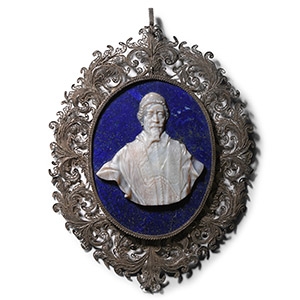
Silver Plaque with Cameo of Pope Alexander VII
17th-18th century A.D.Sold for (Inc. bp): £1,300
A carved agate facing bust within a lapis lazuli plaque, held in a silver canatille frame comprising elaborate filigree foliage and with suspension loop; image of Pope Alexander VII. 500 grams, 28.5 cm
Private collection, England.
Pope Alexander VII was born Fabio Chigi and took the role of head of the Catholic Church and ruler of the Papal States from 7 April 1655 to his death, in May 1667. He held a number of diplomatic positions in the Holy See, was ordained in 1634, and became bishop of Nardo in 1635. Pope Innocent X elevated him to the role of secretary of state in 1651, and in the following year he was appointed a cardinal. Alexander VII supported various construction projects in Rome, wrote poetry and patronized artists working on the decoration of churches. -
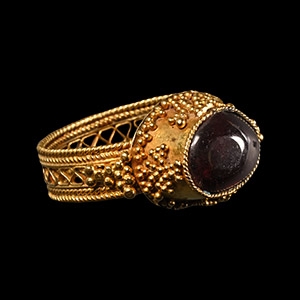
Byzantine Style Gold Ring
20th century A.D. and earlierSold for (Inc. bp): £416
Flat-section hoop in 5th-6th century A.D. Byzantine style with openwork median band flanked by filigree ropework, granule cluster to each shoulder, the bezel a tall tapering cell with cruciform and other granule clusters, inset slightly irregular ancient cabochon garnet. 7.55 grams, 28.74 mm overall, 21.12 mm internal diameter (approximate size British R, USA 8 1/2, Europe 18 3/4, Japan 18)
From a New York, USA, private collection. Acquired in the 1990s. Property of a North American gallery. -
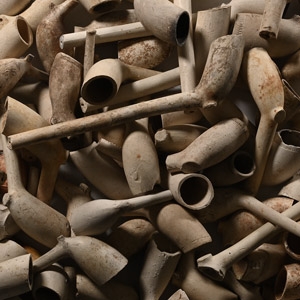
Post Medieval Clay Pipe Collection
Circa 19th century A.D.Sold for (Inc. bp): £26
Including types with a disc or spur heel, rouletted band beneath the rim, high-relief tendrils, scallop detailing and other types. 1.14 kg total, 4-17 cm
From the collection of the famous author, writer and speaker, Gordon Bailey, Essex, UK; formed since 1968.
