
Loading, please wait...
LOT 0422
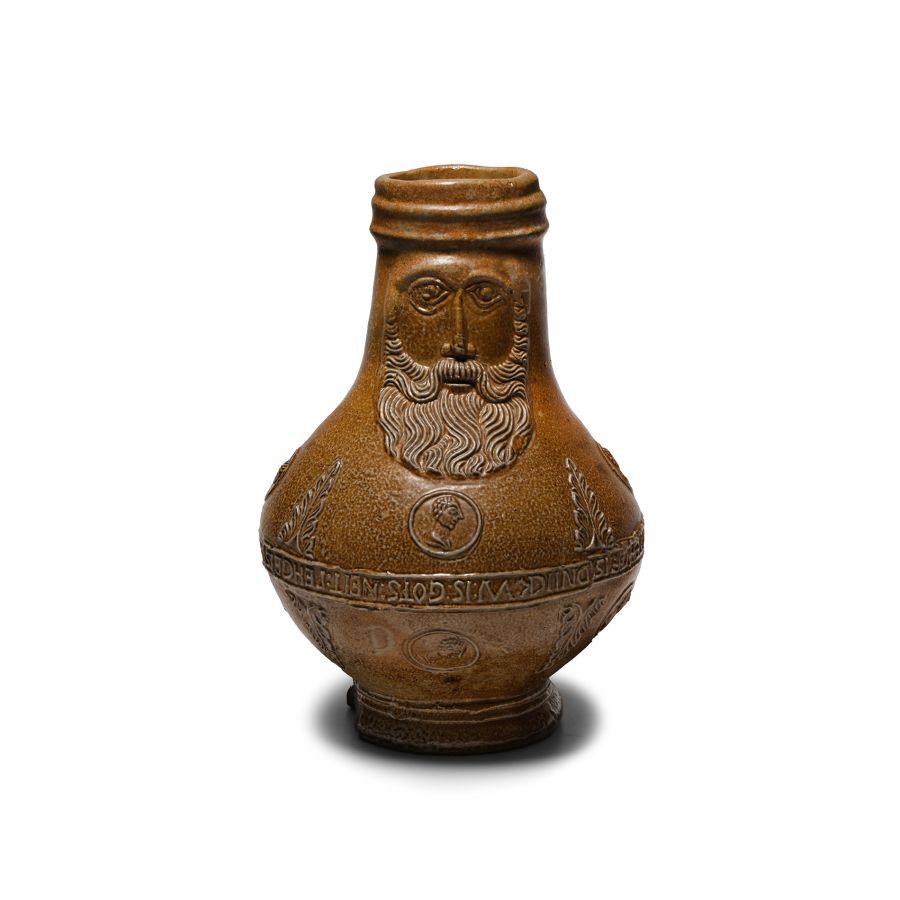
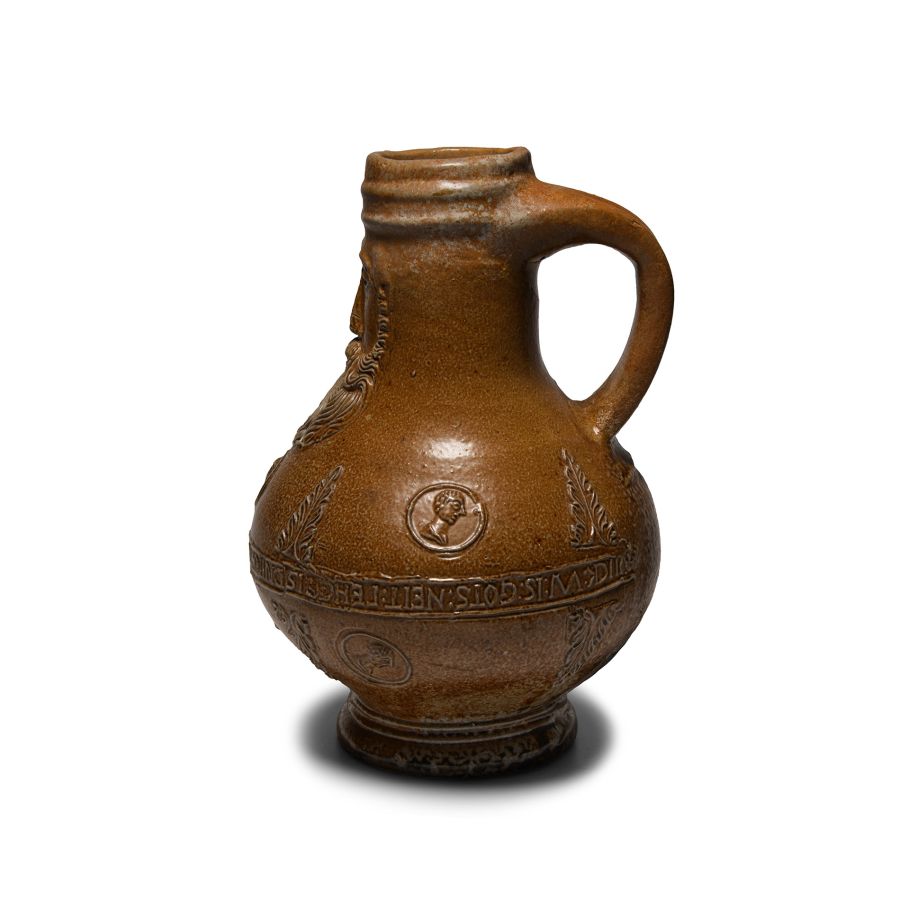
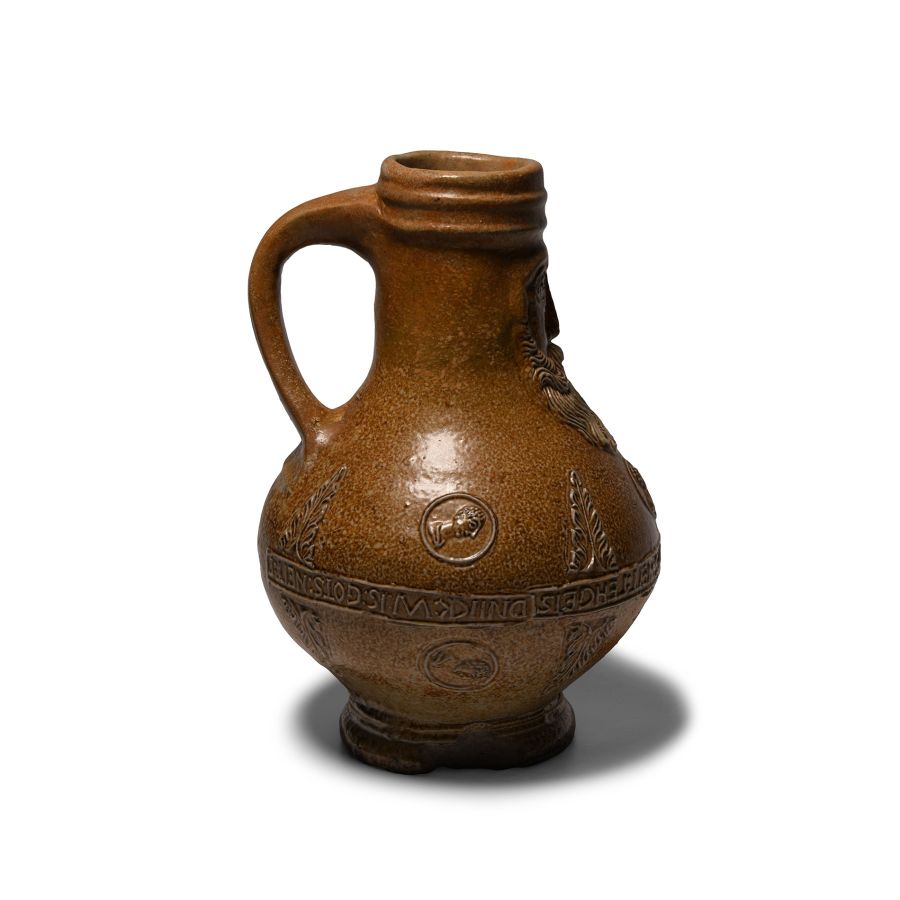
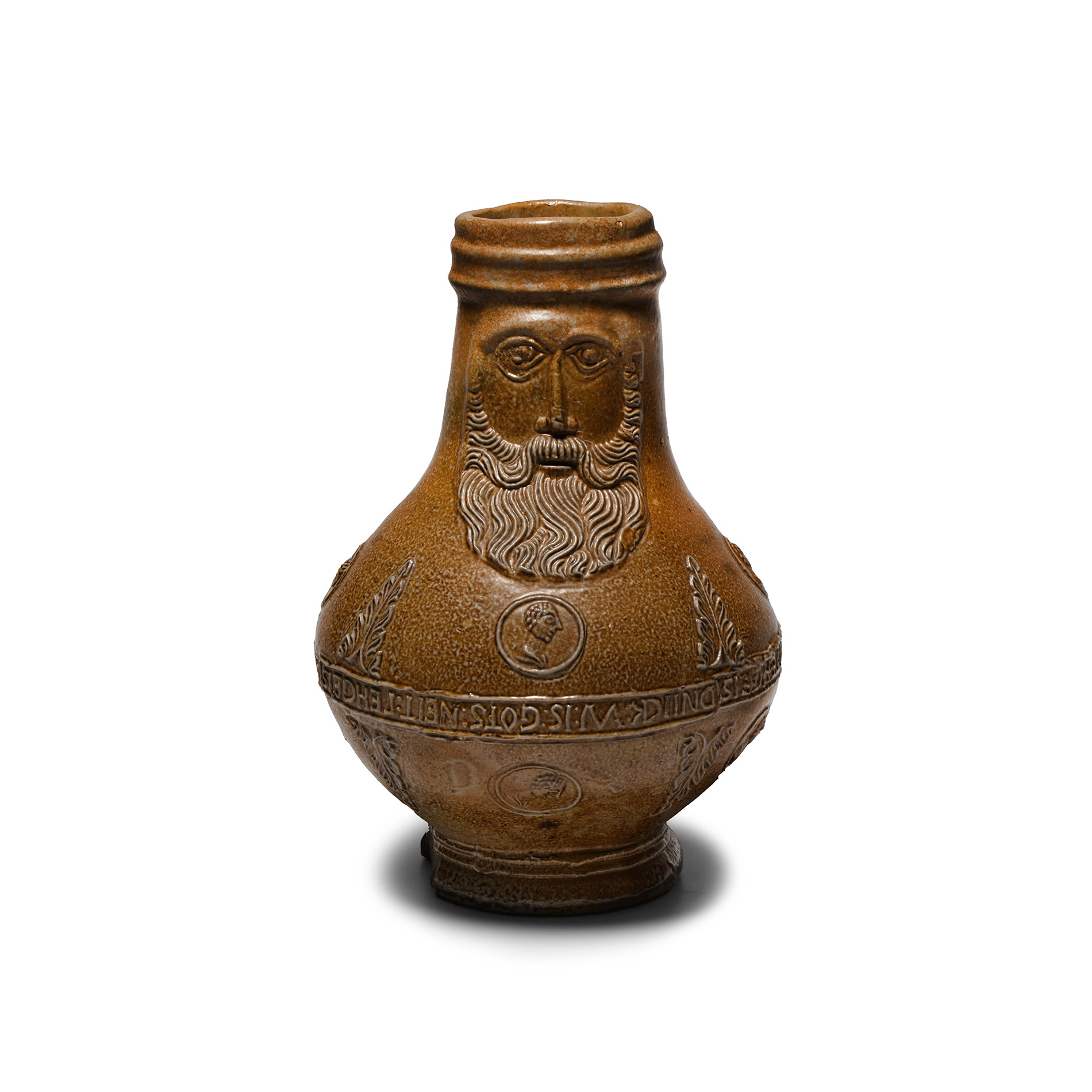
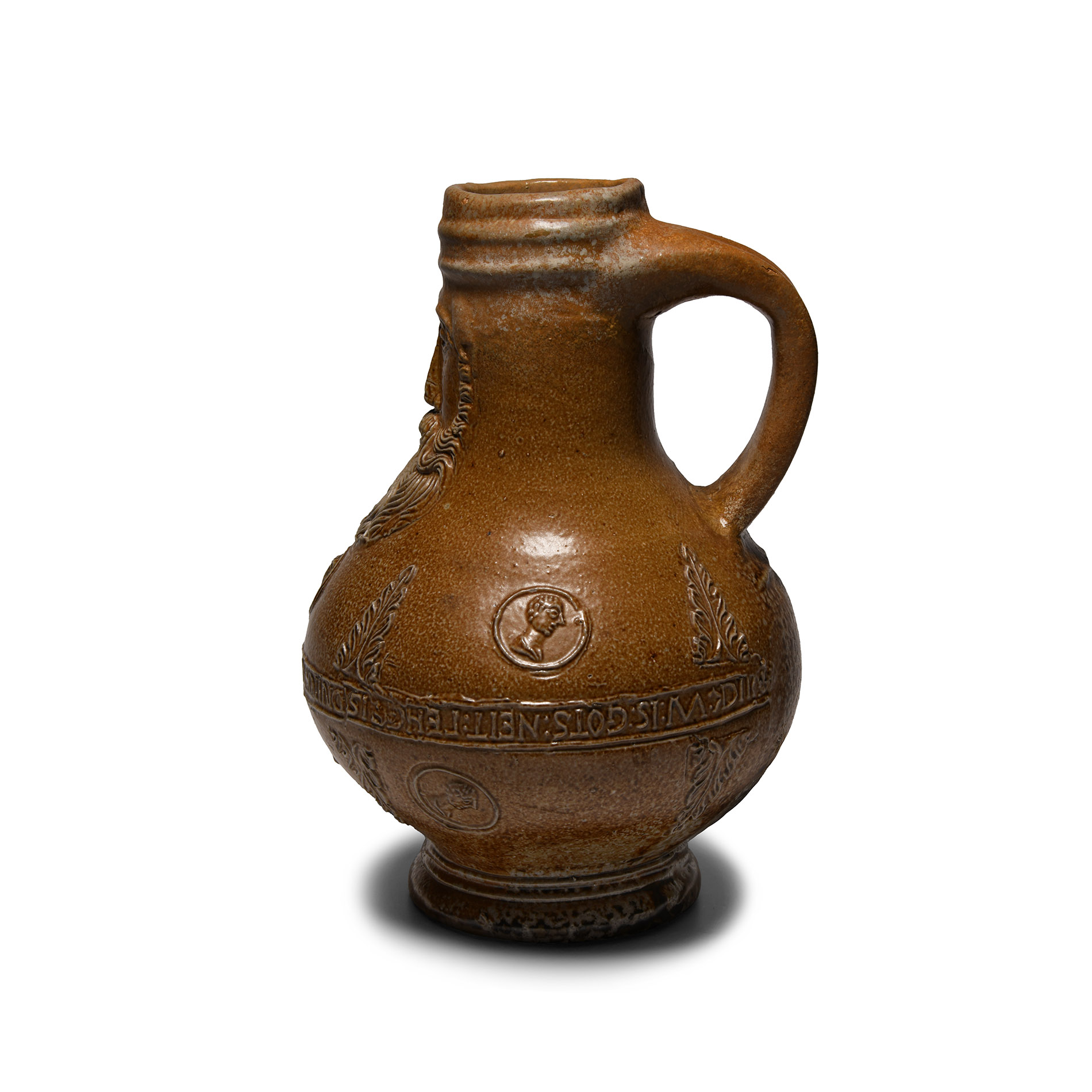
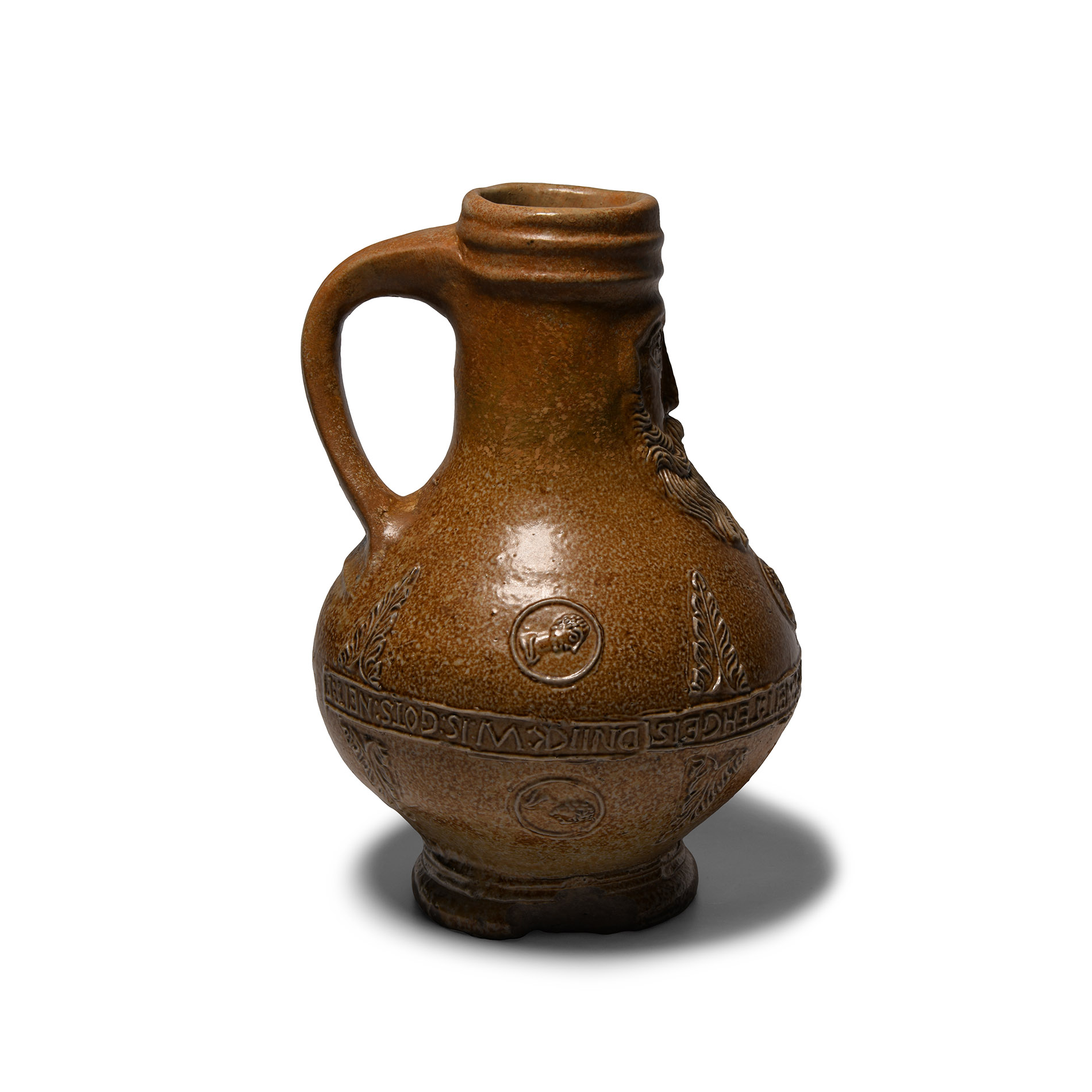
Post Medieval Inscribed Salt-Glazed Bellarmine Jug
16TH CENTURY A.D.
7 1/8 in. (634 grams, 18 cm high).
Of squat spherical form with a broad cylindrical neck, strap handle and foot with rolled rim, bearded face or Bartmann 'mask', frieze of busts within roundels and acanthus palmettes over and below the medial inscription; neck and rim restored; label to base reading 'Schriftbandkrug Renaissance Frechen 1550'.
ProvenanceEx private UK collection.
Acquired from a provincial auction.
See Bartmannkrug examples in Klinge, E., Duits Steengoed, Amsterdam, 1996; similar jug in Schneider, J.W., Oet d'oole Deuze, in Jaarboek Twente, 1967; cf. The British Museum, museum numbers 1890,1222.5 and 1893,0205.71, for similar jug and inscription.
CONDITIONTimeLine Auctions follows a vetting process to ensure the authenticity and legality of all items, reinforcing our commitment to integrity and responsible trading. Each antiquity, antique, and coin lot undergoes thorough examination by a vetting committee of at least ten external specialists, professional trade association members, scientists, and archaeologists: Our Vetting Process
AUCTIONS:
TimeLine is a leading auction house specialising in antiquities, ancient art, collectables, natural history, coins, medals, and books. Our auctions offer museums, collectors, historians, and enthusiasts the opportunity to acquire unique and historically significant pieces.
-
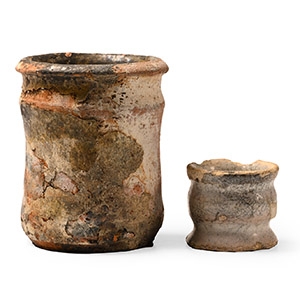
Post Medieval 'Thames' Glazed Terracotta Jar Group
17th-18th century A.D.Sold for (Inc. bp): £39
One cylindrical in shape with waisted centre and remains of a mottled yellow-green glaze; one shallow with squat body, splayed foot and veined blue-white glaze. 85 grams total, 25-57 mm
Found Thames foreshore spoil, 1980s. -
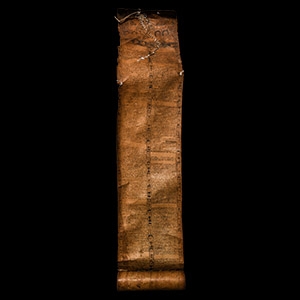
Ethiopian Magic Scroll
Early-mid 19th century A.D.Sold for (Inc. bp): £416
Produced using parchment; rectangular with inked geometric borders; leading edge with panel of nimbate winged cherubim; two panels of Coptic text divided by a series of saltire motifs, facing masks and quatrefoils, traces of red and green pigment; old seam repair; linen binding tape. 114 grams, 2.20 m long
Ex Adalberto Frezza, 2004. Ex central London gallery. -
.jpg)
Russian Gilt Painted Wooden Icon of Hodegetria
Circa 19th century A.D.Sold for (Inc. bp): £152
The Virgin holding the infant Christ, gesturing towards him with her right hand, wearing a carmine red maphorion embellished with golden pearled embroidery, elaborate cuffs and neckline to the himation; Christ making the blessing sign with his hand, the green chiton and orange himation embellished with red folds; both figures nimbate within a shallow recess and framed by a red border, inscription 'ΜΡ ΘΥ' for 'Mother of God' flanking the Virgin's halo, 'IC XC' for 'Jesus Christ' over the Child’s head; winged nimbate ‘Angel of God’ and nimbate Saint Matrona in rectangular panels on either side; split and repaired. 896 grams, 31.2 cm
Ex French gallery, Paris.
For the Orthodox believers, the Mother of God (Theotokos) carries a special meaning. The believers relate to her as a mother who suffered and lived through the death of her son, a figure not only of love and compassion, but also of fortitude and sacrifice.
