
Loading, please wait...
LOT 0381
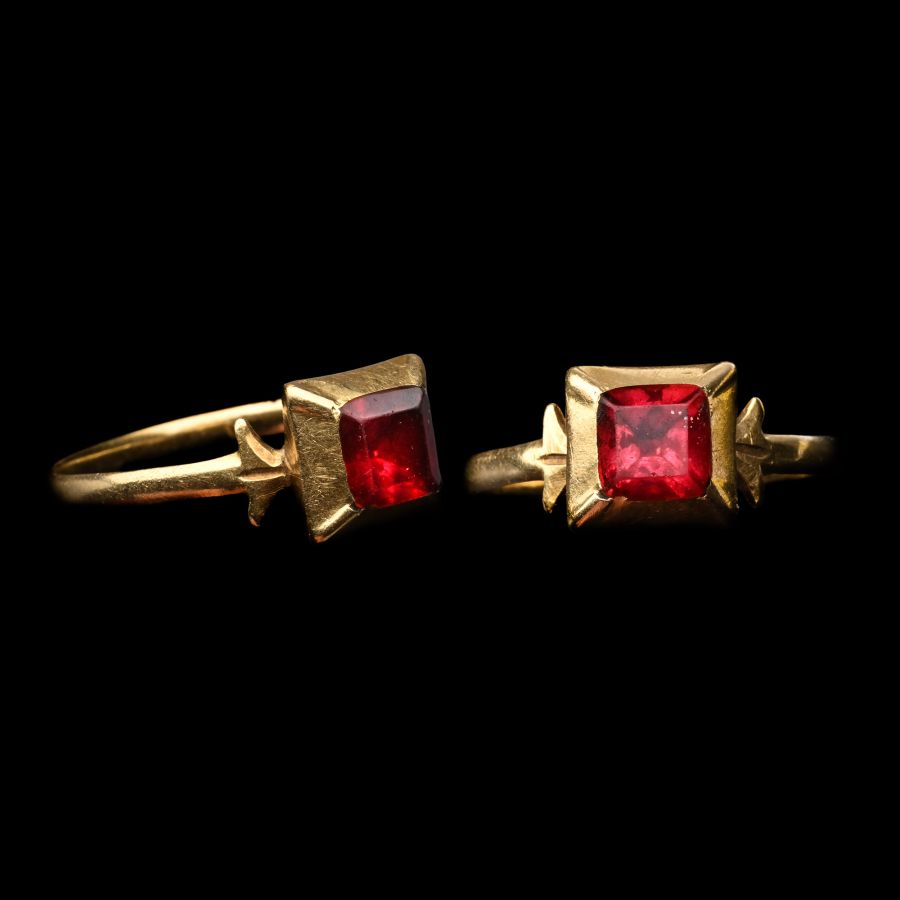
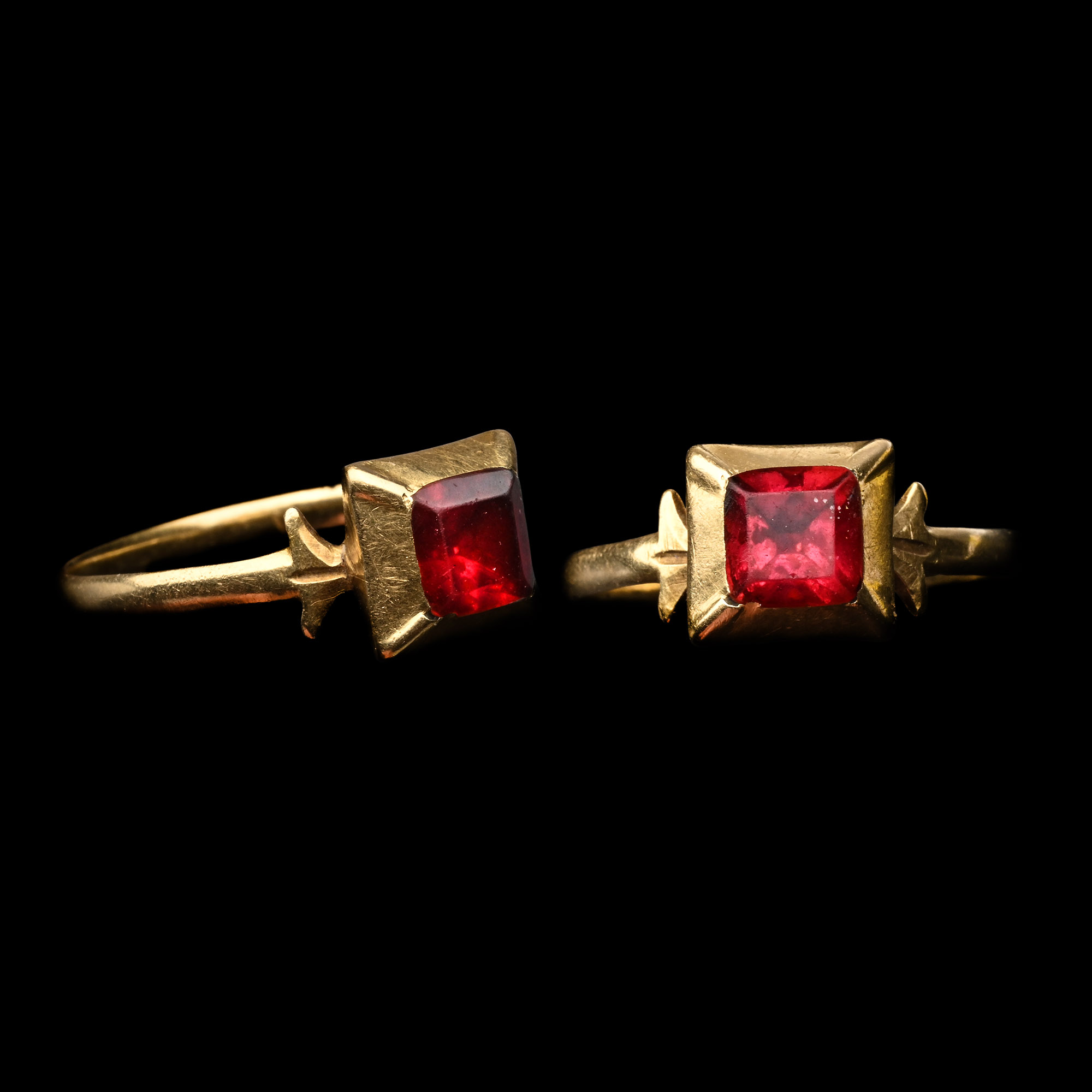
Post Medieval Gold Ring with Red Glass
ITALY, 18TH CENTURY A.D.
1 in. (2.13 grams, 23.86 mm overall, 18.06 mm internal diameter (approximate size British P, USA 7 1/2, Europe 16.23, Japan )15).
With a slender D-section hoop, raised rectangular bezel set with glass paste in a red-foiled setting.
ProvenancePrivate collection, UK.
CONDITIONTimeLine Auctions follows a vetting process to ensure the authenticity and legality of all items, reinforcing our commitment to integrity and responsible trading. Each antiquity, antique, and coin lot undergoes thorough examination by a vetting committee of at least ten external specialists, professional trade association members, scientists, and archaeologists: Our Vetting Process
AUCTIONS:
TimeLine is a leading auction house specialising in antiquities, ancient art, collectables, natural history, coins, medals, and books. Our auctions offer museums, collectors, historians, and enthusiasts the opportunity to acquire unique and historically significant pieces.
-
Indus Valley Style Terracotta Idol Group
20th century A.D.Sold for (Inc. bp): £39
Mixed group of figures with anatomical details. 352 grams, 11.5-17.5 cm
Very fine condition.
Property of a retired English university professor; acquired on the UK art market. From the private collection of John Meredith, acquired since the 1990s; thence by descent. -
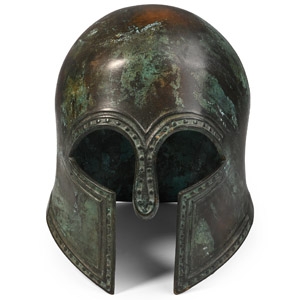
Reproduction Bronze Corinthian Helmet
20th century A.D.Sold for (Inc. bp): £2,600
With deep nasal and cheek-guards, pelletted bands to the rim; casting seam. 4.69 kg, 21.5 cm
From a private Tyneside collection, formed since the early 2000s. -
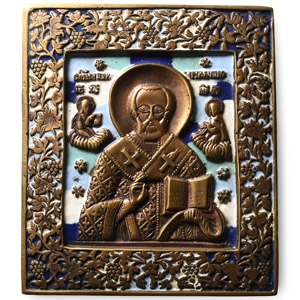
Russian Orthodox Enamelled Bronze Travel Icon with Saint Nicholas
19th century A.D.Estimate: £250 - 350 (+bp*)
Opening Bid: £125
Representing Saint Nicholas of Myra with a book in his left hand and making the gesture of blessing with his right, dressed as a bishop with sticharion, covered by omophorion, and surmounted by an epitrachelion embroidered with crosses; the saint flanked by Jesus and Virgin Mary, Christ holding the gospel, Mary the bishop’s epitrachelion; Cyrillic inscriptions 'Saint Nikolaos the Wonderworker (СВЯТЫЙ НИКОЛА ЧУДОТВОРЕЦ), Iesus Christos (ΙΣ ΧC) and Mother of God (ΜΡ ΘΥ)' on the enamelled background. 348 grams, 10.7 cm
Acquired from Chris Martin-Zakheim, Iconastas, 5 Piccadilly Arcade, London SW1. From the private collection of a West London, UK, gentleman, formed since the early 2000s.
The icon features meticulous craftsmanship typical of Orthodox iconography. The enamel colors, despite the passage of time, retain their vibrant intensity, highlighting the key elements of the depicted images. The refined details and use of enamel give depth and luminosity to the icon, making it a precious example of the Russian Orthodox tradition.
