
Loading, please wait...
LOT 2062
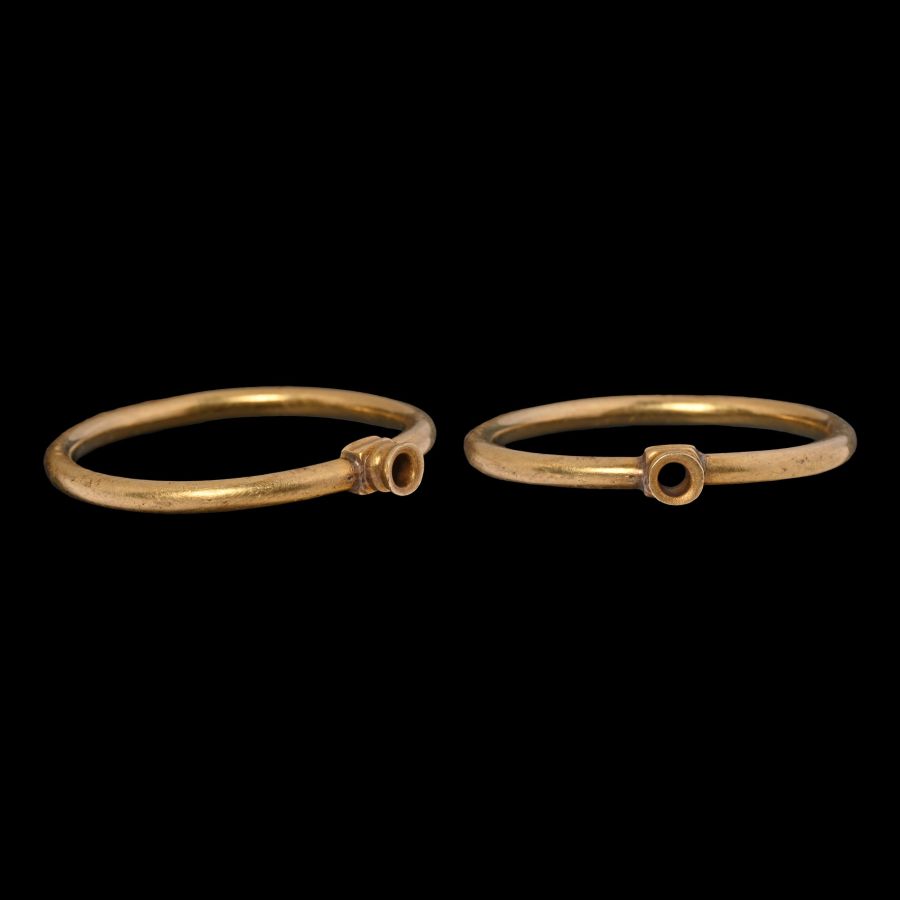
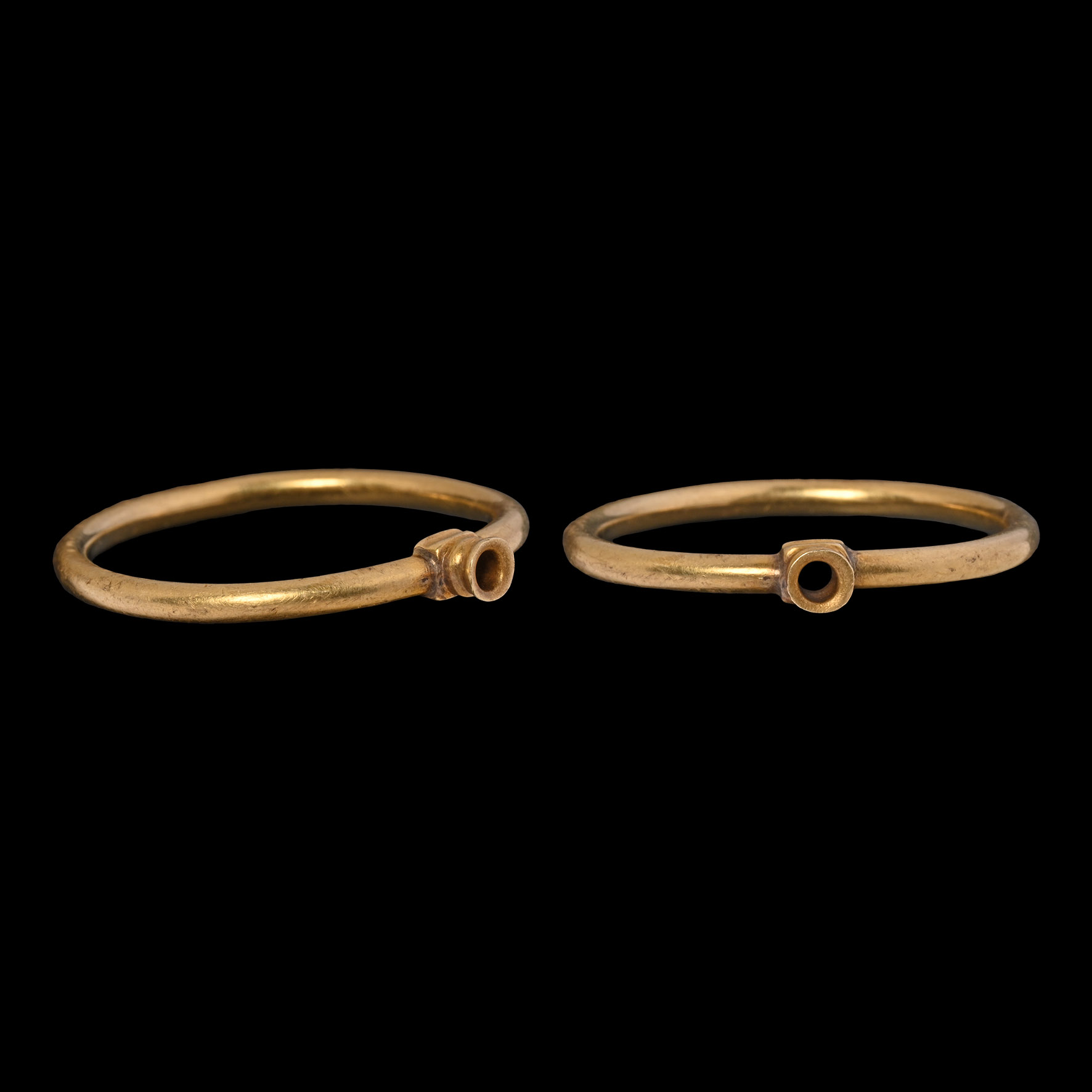
Post Medieval Gold Ring Fitting
1800-1900 A.D.
1 in. (2.66 grams, 24.60 grams).
Comprising a round-section hoop and square mount with reel-moulded tube. [No Reserve]
ProvenanceFound Yorkshire, UK.
Accompanied by a copy of the British Museum's Portable Antiquities Scheme (PAS) report no.SWYOR-519A68.
Recorded with the Portable Antiquities Scheme under reference SWYOR-519A68.
CONDITIONTimeLine Auctions follows a vetting process to ensure the authenticity and legality of all items, reinforcing our commitment to integrity and responsible trading. Each antiquity, antique, and coin lot undergoes thorough examination by a vetting committee of at least ten external specialists, professional trade association members, scientists, and archaeologists: Our Vetting Process
AUCTIONS:
TimeLine is a leading auction house specialising in antiquities, ancient art, collectables, natural history, coins, medals, and books. Our auctions offer museums, collectors, historians, and enthusiasts the opportunity to acquire unique and historically significant pieces.
-
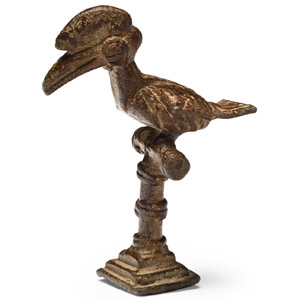
Georgian Bronze Statuette of a Giant Hornbill
18th-19th century A.D.Sold for (Inc. bp): £78
Perching on a column on a tiered plinth, modelled in the round. 11.2 grams, 38 mm
Found Suffolk, UK. From an old private collection of Norfolk, UK, gentleman, formed since 1998. -

Agate Necklace Bead Group
20th century A.D.Sold for (Inc. bp): £156
Comprising forty matching spherical banded agate beads with single median stripe, with six further beads of slightly different pattern; all pierced for stringing. 175 grams total, 14 mm each
UK gallery, early 2000s. -

Post Medieval Iron Bill Hook and Tool Collection
13th-17th century A.D.Sold for (Inc. bp): £33
Comprising four sickles and one pruning knife with crescent blade and the whittle tang handle terminating in a hook, two with reconstructed modern handle; one sickle with cutler's mark EE. 1.32 kg total, 20.5-37.5 cm
From the collection of the famous author, writer and speaker, Gordon Bailey, Essex, UK; formed since 1968.
Among our specimens a particular importance is given to the 13th century A.D. sickle with a maker's marks evident on the blade. Like many knives, sickles sometimes carry a cutler's mark. Sickles were produced in various sizes depending on the type of work they were to be used for. The large examples would have been used for clearing weeds or harvesting hay or crops. The small sickles would have been used for cutting herbs or similar.
