
Loading, please wait...
LOT 1945
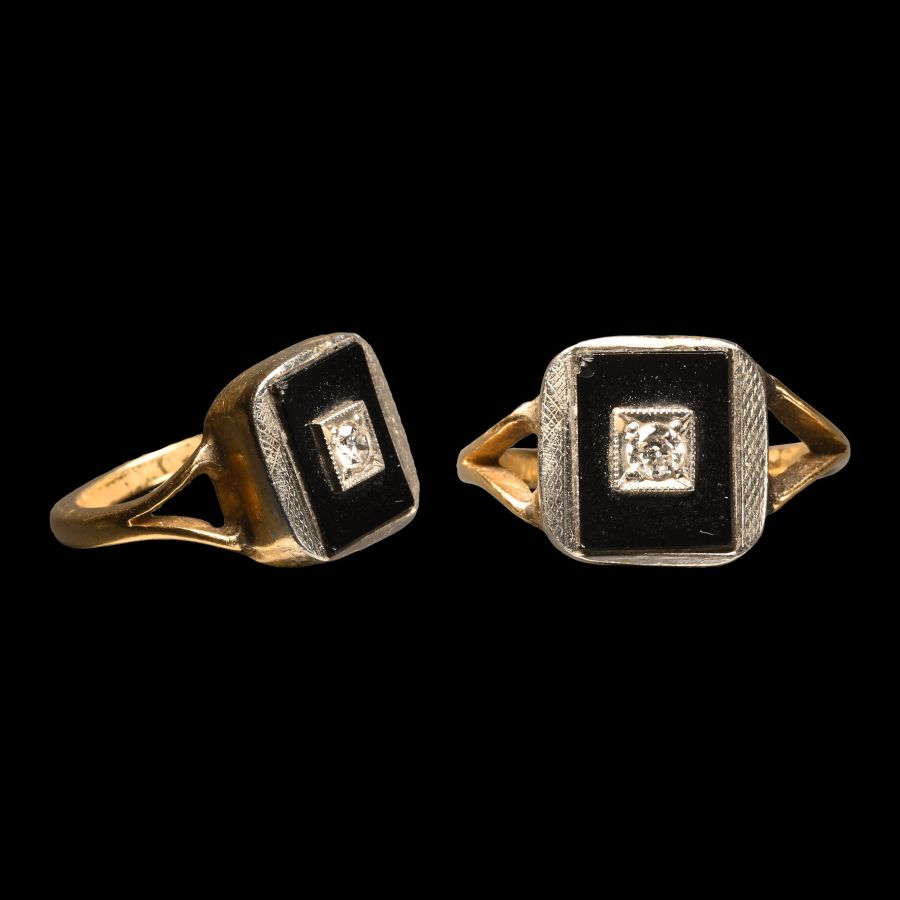
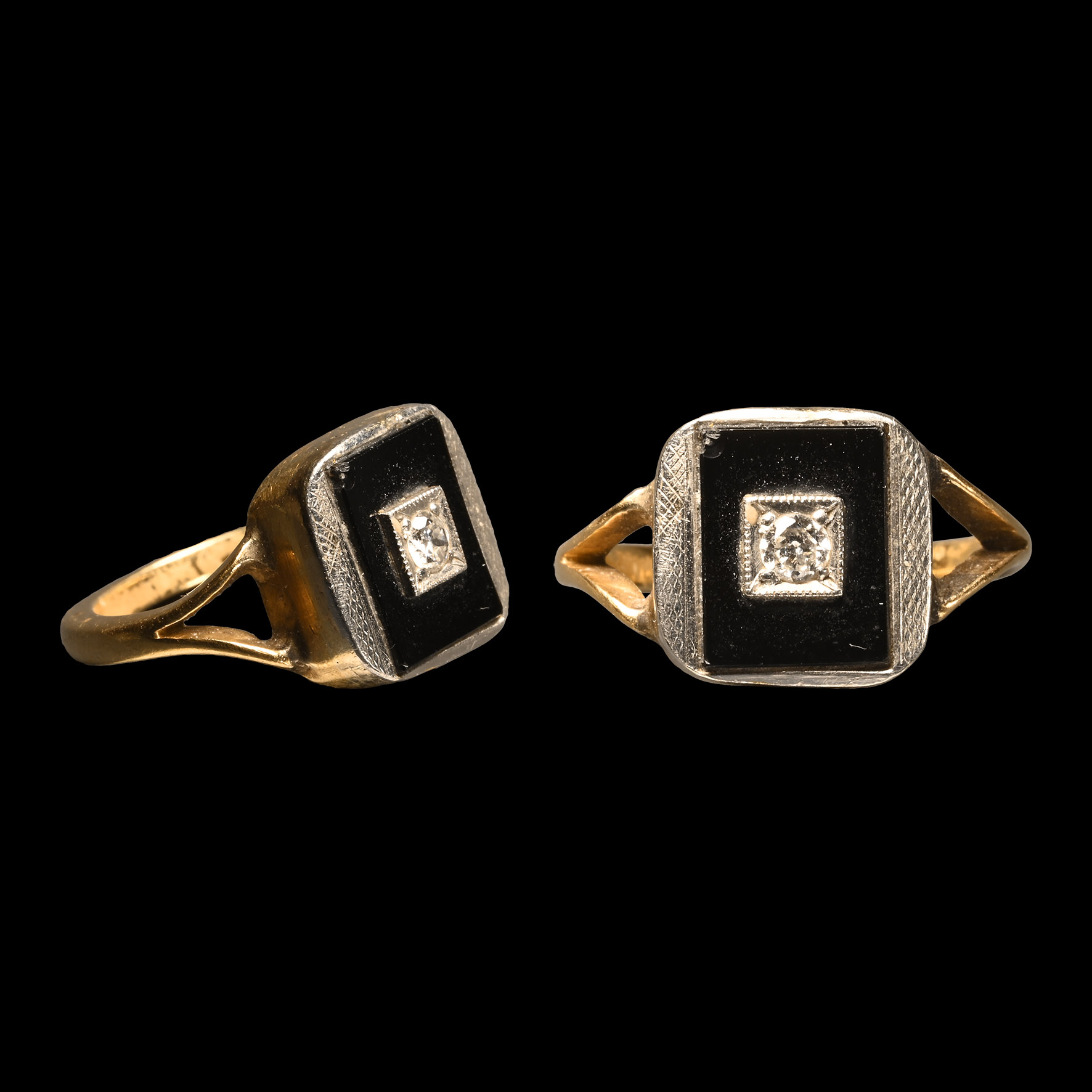
Post Medieval Gold Memorial Ring with Diamond
LATE 19TH-20TH CENTURY A.D.
3/4 in. (3.35 grams, 19.05 mm overall, 14.94 mm internal diameter (approximate size British F, USA 2 3/4, Europe 3.67, Japan 3)).
Featuring openwork shoulders and rectangular bezel set with a platinum-mounted diamond against a black background; stamped '18 ct & pt' to reverse.
ProvenanceAcquired 1990s-early 2000s.
East Anglian private collection.
TimeLine Auctions follows a vetting process to ensure the authenticity and legality of all items, reinforcing our commitment to integrity and responsible trading. Each antiquity, antique, and coin lot undergoes thorough examination by a vetting committee of at least ten external specialists, professional trade association members, scientists, and archaeologists: Our Vetting Process
AUCTIONS:
TimeLine is a leading auction house specialising in antiquities, ancient art, collectables, natural history, coins, medals, and books. Our auctions offer museums, collectors, historians, and enthusiasts the opportunity to acquire unique and historically significant pieces.
-
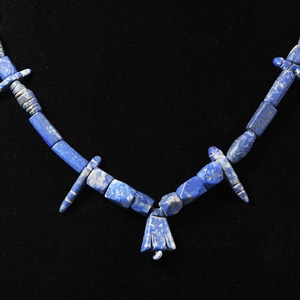
Bactrian Style Lapis Lazuli Bead Necklace
20th century A.D. or earlierSold for (Inc. bp): £26
Composed of lapis beads of facetted, decorated and square tube types, together with other types, including a lotus flower pendant bead. 30.9 grams, 78 cm long
Ex W.J. collection, 1990s. -
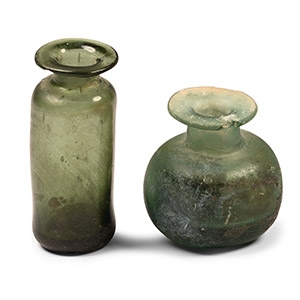
Post Medieval 'Thames' Glass Poison Bottle Group
16th-17th century A.D.Sold for (Inc. bp): £156
Comprising two glass bottles: one with a rounded cuboid-shaped body, slender neck, everted rim and remains of iridescent surfaces; one cylindrical bottle with short neck and broad everted rim. 58 grams total, 41-58 mm
Found Thames foreshore spoil, 1980s. -
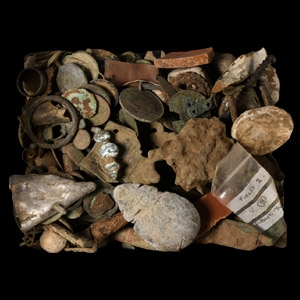
Copper-Alloy Finds Group
20th century A.D. and earlierSold for (Inc. bp): £1
Mainly comprising complete and fragmentary items including badges, brooches, furniture and other fittings, musket balls, buttons, nails, strap ends, weights, coins, crotal bells, jewellery and figures; together with other miscellaneous items. 5.1 kg total, 1-13 cm
Acquired 1990s-early 2000s. East Anglian private collection.
