
Loading, please wait...
LOT 2199
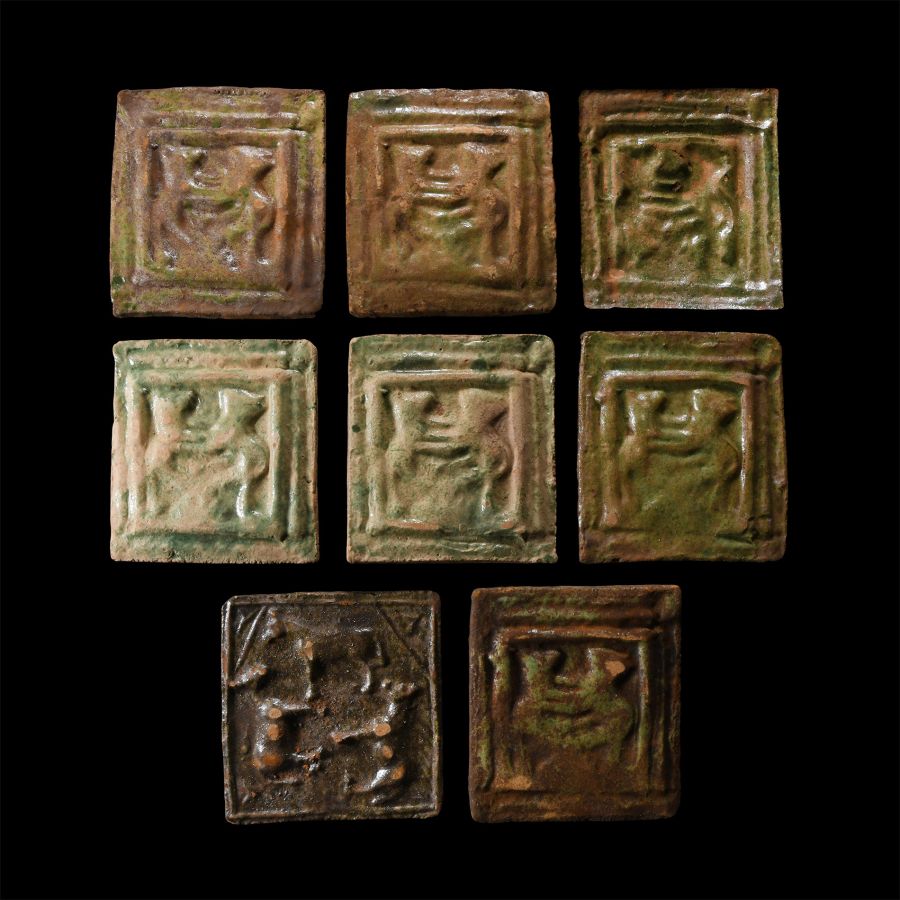
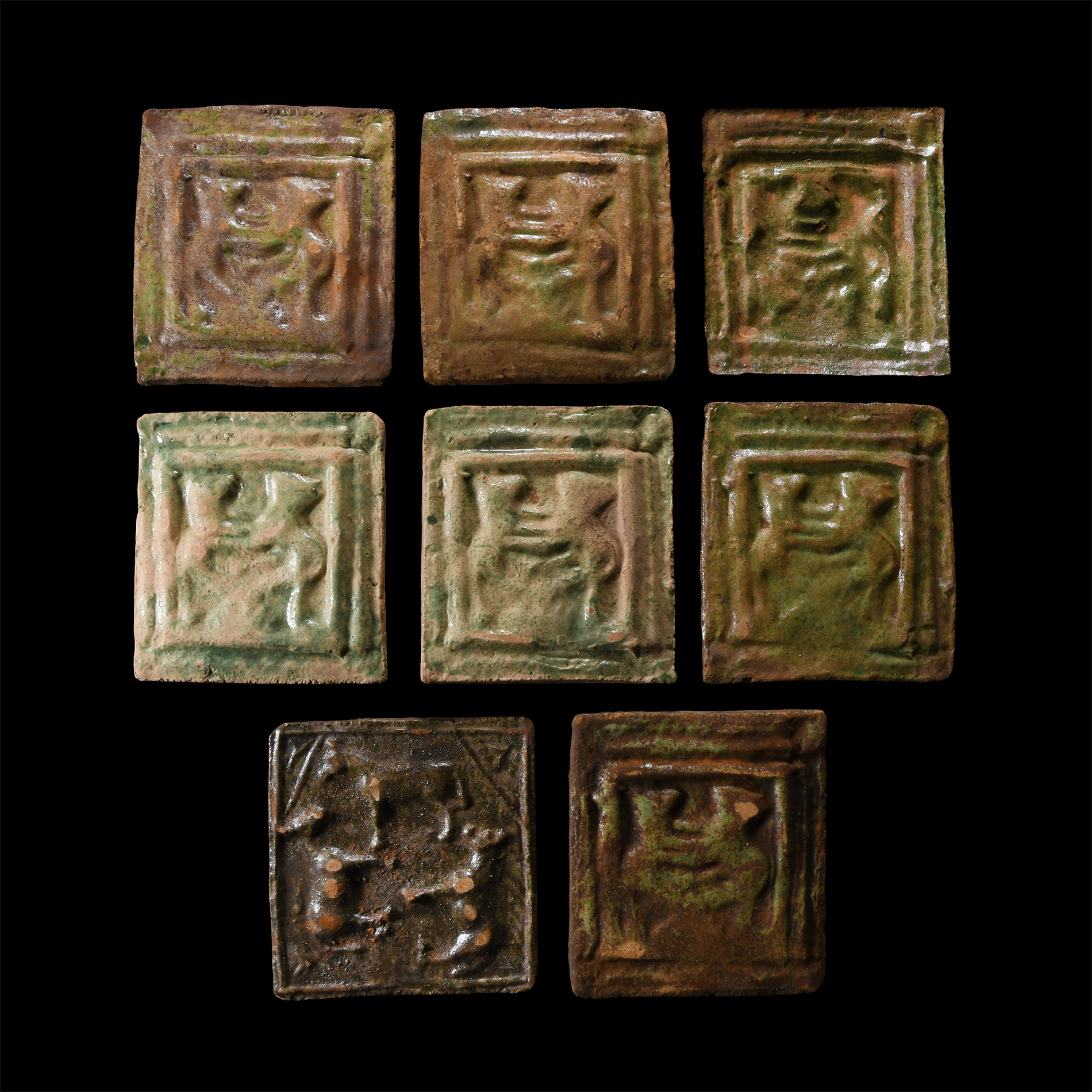
Post Medieval Glazed Ceramic Tile Group
17TH-18TH CENTURY A.D.
4 x 3 1/2 - 3 3/4 x 4 in. (1.26 kg total, 10 x 9 - 9.5 x 10.2 in.).
Comprising two designs in relief including three horses in an enclosure and two animals, likely cats, fighting; coloured glazes. [11, No Reserve]
ProvenanceAcquired 1990s-early 2000s.
East Anglian private collection.
Cf. similar specimen in the British Museum, inventory no.OA.9377.
FootnotesThe tile production increased in the second half of the sixteenth century and during the following centuries. The fragments discovered from various localities (pot-tiles, rectangular, triangular and trapezoidal panels, open-work crest tiles) were all produced in regional workshops, from the end of the 15th century or at the beginning of the 16th century. They all had diverse decorative motifs, mainly animals and geometrical or vegetal combinations, almost all of them singular finds for this study area.
CONDITIONTimeLine Auctions follows a vetting process to ensure the authenticity and legality of all items, reinforcing our commitment to integrity and responsible trading. Each antiquity, antique, and coin lot undergoes thorough examination by a vetting committee of at least ten external specialists, professional trade association members, scientists, and archaeologists: Our Vetting Process
AUCTIONS:
TimeLine is a leading auction house specialising in antiquities, ancient art, collectables, natural history, coins, medals, and books. Our auctions offer museums, collectors, historians, and enthusiasts the opportunity to acquire unique and historically significant pieces.
-
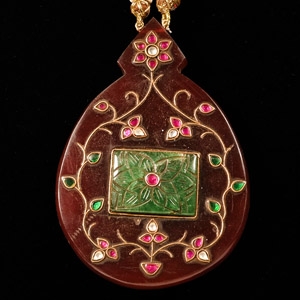
Jadeite Pendant Necklace with 'Rubies' and Other Cabochons
Late 19th-early 20th century A.D.Sold for (Inc. bp): £130
Plaque with floral design comprising inset glass cabochons, synthetic rubies and gold-coloured wire detailing, central floral plaque. 100 grams, pendant height: 98 mm
Property of a South West London gentleman. -
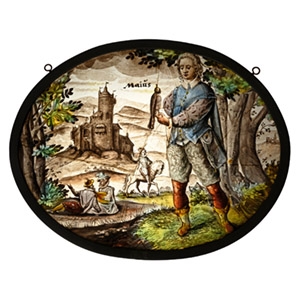
Stained Glass Panel of the Month of May
Southern Low Countries, circa 1580-1600 A.D.Sold for (Inc. bp): £546
Ellipsoid panel with polychrome landscape scene depicting a fowler in the foreground holding his left arm extended for a perching bird of prey wearing a hood; the fowler in slashed doublet and hose with turned boots standing before an oak tree; in the middle distance, two figures sitting in the grass, the female playing a lute and the male gesticulating, and a third riding with arm raised releasing a hawk; in the distance, wooded hills with a castle; inked title 'Maiŭs' (May); lead came with two suspension loops; cracked and repaired. 266 grams, 23.7 cm
De Baecque Vente aux enchere, 5 March 2022, no.55. Ex central London gallery. -
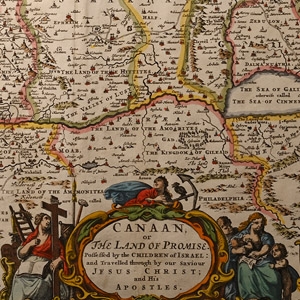
English Map of the Holy Land by Joseph Moxon
London, Circa 1691 A.D.Sold for (Inc. bp): £390
Laid paper map with hand-tinted detailing to the political boundaries, heraldic embellishments and miniature scenes; centre-bottom an ellipse with the title 'Canaan, or The Land of Promise possessed by the Children of Israel and travelled through by our Saviour Jesus Christ and His Apostles.', strip below with 'Translated, Revised and Corrected by Joseph Moxon, Hydrographer to the Kings most Excellent Majesty'; top centre a heater shield surmounted by a bishop's mitre above an ornate panel with the text 'To the Right Reverend father in God Humphrey Lord Bishop of London this Mapp is humbly Dedicated by J. Moxon'; top left: legend for symbols; top right: 'A Scale of 40 English Miles'; bottom row: scenes depicting the Nativity, Crucifixion, Resurrection and instruction of the Apostles. 53 grams, 47 x 33 cm
Acquired on the UK art market. Scottish private collection.
The dedication to 'Humphrey Lord Bishop of London' suggests a date of engraving during the episcopacy of Humphrey Henchman, between 1663 and 1675; he is the only man of that name to have held the office. The map can have been printed subsequently.
