
Loading, please wait...
LOT 2122
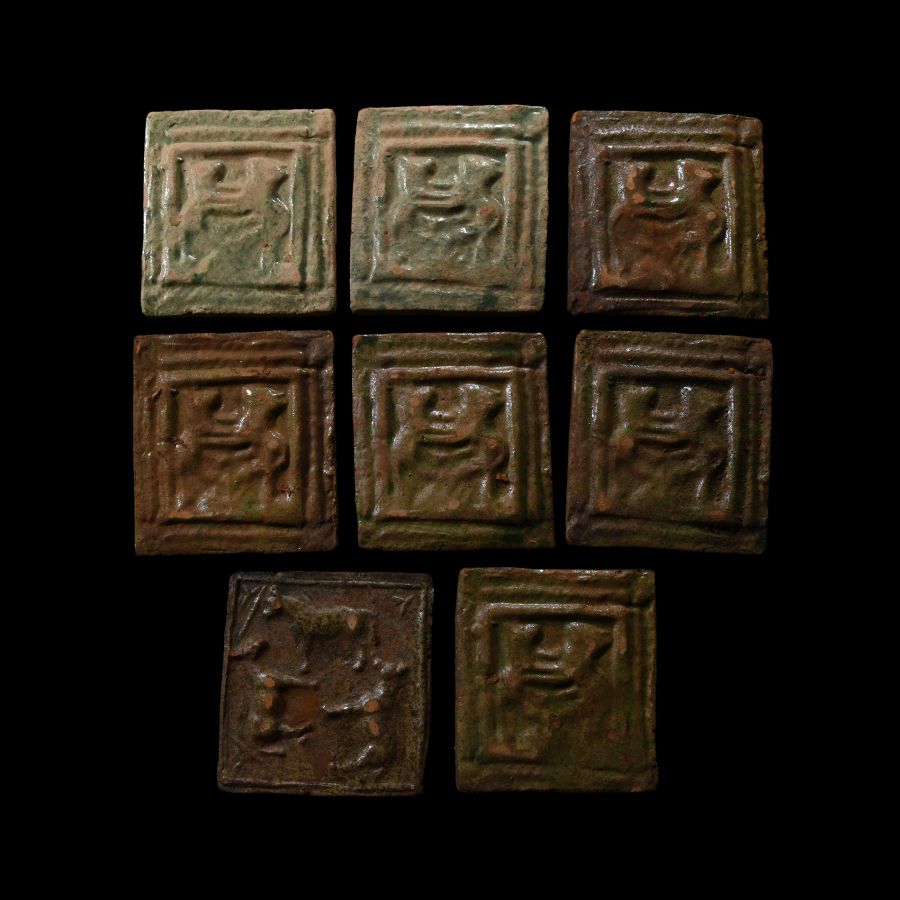
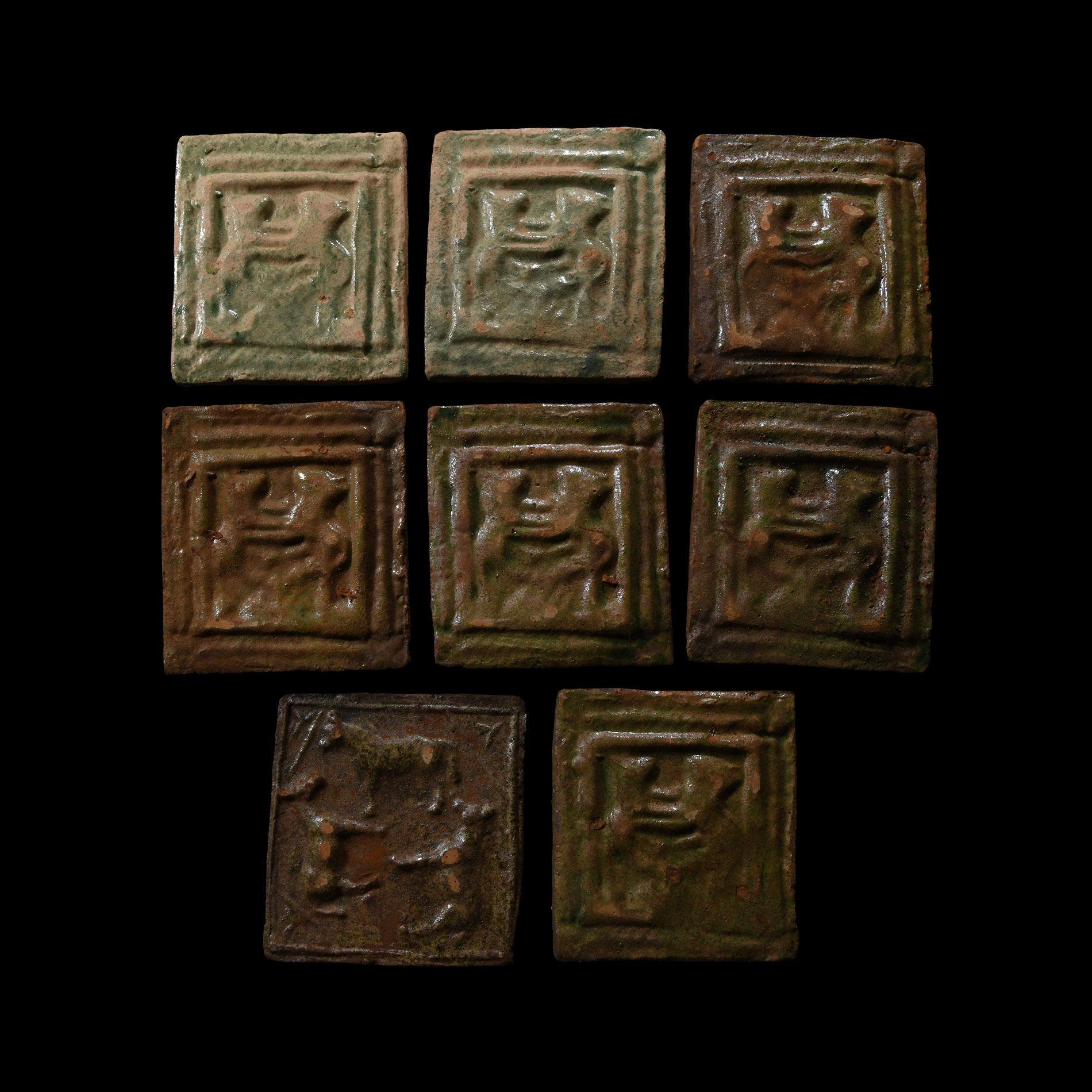
Post Medieval Glazed Ceramic Tile Group
17TH-18TH CENTURY A.D.
3 1/2 - 4 x - 3 3/4 x 4 1/8 in. (1.34 kg total, 9 x 10 - 9.5 x 10.5 cm).
Comprising two designs in relief including three horses in an enclosure and two animals, likely cats, fighting; coloured glazes. [10]
ProvenanceAcquired 1990s-early 2000s.
East Anglian private collection.
TimeLine Auctions follows a vetting process to ensure the authenticity and legality of all items, reinforcing our commitment to integrity and responsible trading. Each antiquity, antique, and coin lot undergoes thorough examination by a vetting committee of at least ten external specialists, professional trade association members, scientists, and archaeologists: Our Vetting Process
AUCTIONS:
TimeLine is a leading auction house specialising in antiquities, ancient art, collectables, natural history, coins, medals, and books. Our auctions offer museums, collectors, historians, and enthusiasts the opportunity to acquire unique and historically significant pieces.
LOT 2122
Post Medieval Glazed Ceramic Tile Group
Estimate £100 - 140€120 - 160 (for guidance only)$140 - 190 (for guidance only)
-
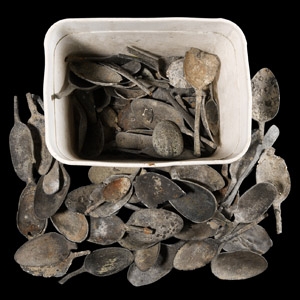
Post Medieval Pewter Spoon Group
Circa 17th-18th century A.D.Sold for (Inc. bp): £3
Comprising spoon bowls of various types, including examples with decoration, together with a number of stems. 2.7 kg total, 6.5-14.5 cm
Acquired 1990s-early 2000s. East Anglian private collection. -
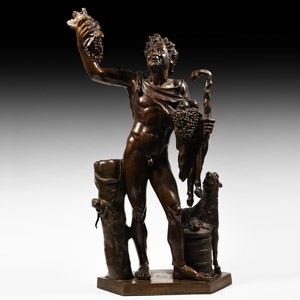
Post Medieval Bronze 'Fauno Rosso' Satyr
19th century A.D.Sold for (Inc. bp): £1,690
Standing on a hexagonal base wearing a goatskin mantle tied by the forelegs around his shoulders, with poppy seed-heads and bunches of grapes by the left arm; in his raised right hand, a bunch of grapes and in his left hand a cudgel; stump of a tree by his right leg and barrel beside his left, with a lamb to the rear placing its foreleg on top; modelled after the so-called Fauno Rosso from Hadrian's Villa, now in the Capitoline Museum. 18.5 kg, 67 cm high
From an important Paris gallery, France.
Half-man, half-beast, satyrs were believed to be the children of goats and mountain nymphs. Followers of the god Dionysus, they had a reputation for drunkenness and spent their days participating in orgiastic rituals. They represented the crude and boisterous facets of the stereotypical male persona, particularly of rural man. -
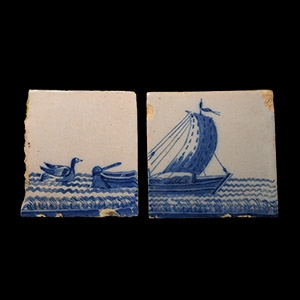
Post Medieval Glazed Ceramic Boat Tile Set
Circa 18th century A.D.Sold for (Inc. bp): £7
Two tiles from a set depicting sailing ships, a duck swimming on the water below the stern. 435 grams total, 12.8 x 13 - 11.4 x 12.6 cm
Acquired 1990s-early 2000s. East Anglian private collection.
