
Loading, please wait...
LOT 2040
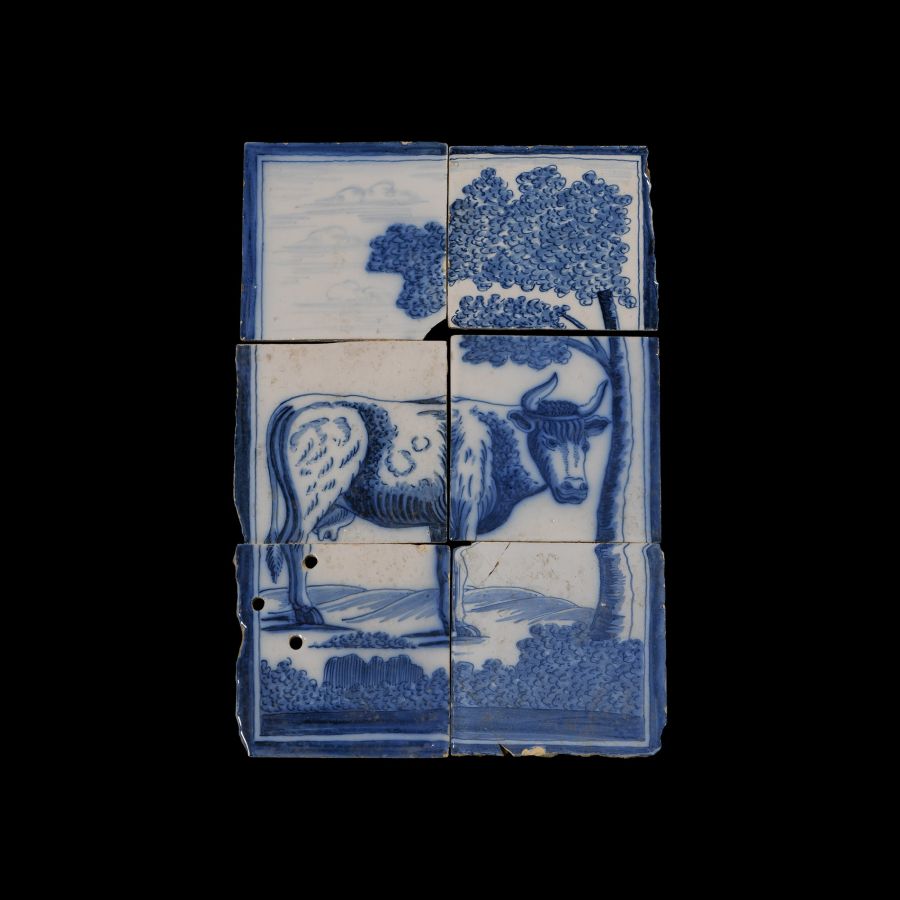
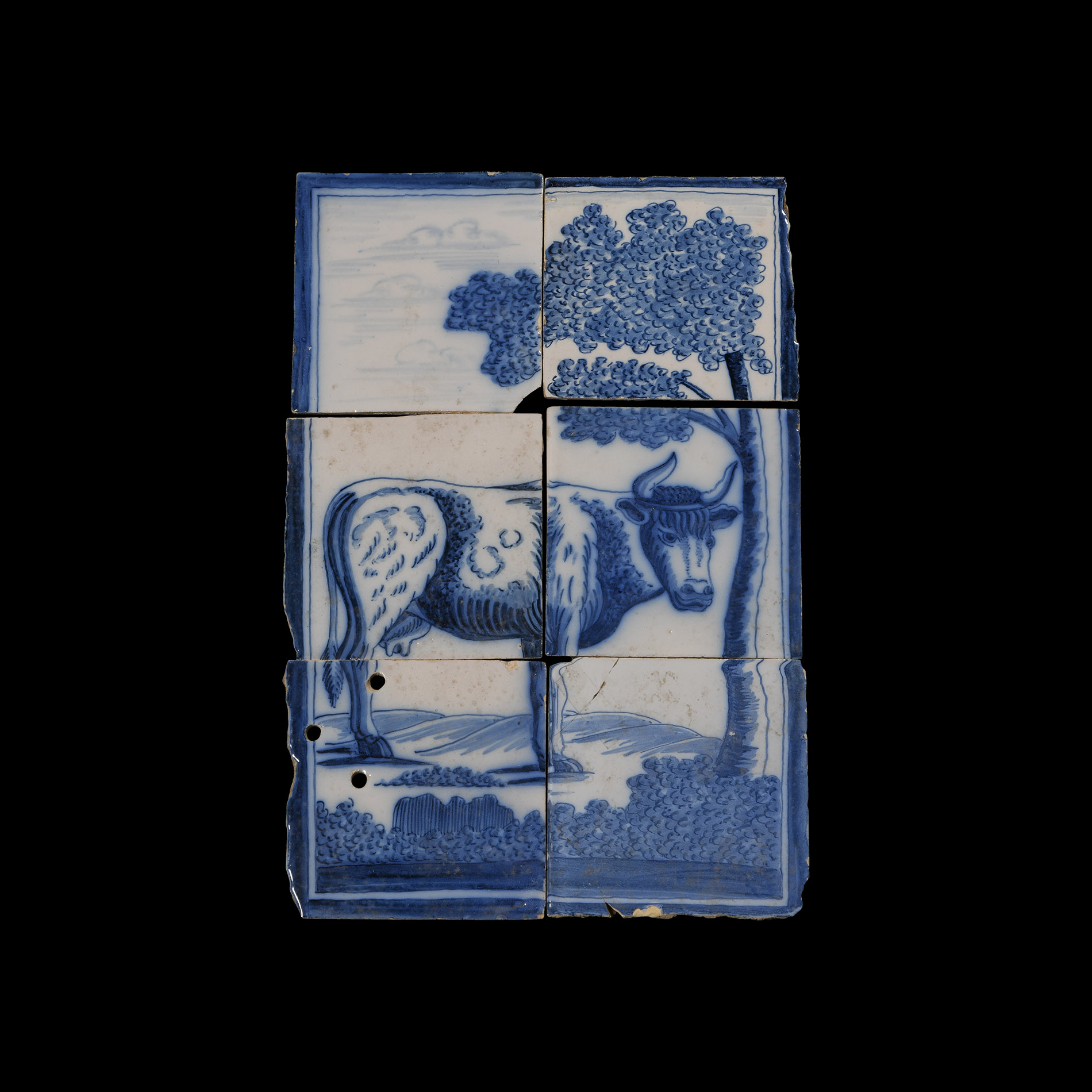
Post Medieval Glazed Ceramic Cow in Landscape Tile Set
CIRCA 18TH CENTURY A.D.
5 1/4 x 4 3/4 - 5 1/4 x 5 1/8 in. (1.35 kg total, 13.4 x 12.2 - 13.4 x 13 cm).
Glazed in blue and white with some repairs. [6, No Reserve]
ProvenanceAcquired 1990s-early 2000s.
East Anglian private collection.
TimeLine Auctions follows a vetting process to ensure the authenticity and legality of all items, reinforcing our commitment to integrity and responsible trading. Each antiquity, antique, and coin lot undergoes thorough examination by a vetting committee of at least ten external specialists, professional trade association members, scientists, and archaeologists: Our Vetting Process
AUCTIONS:
TimeLine is a leading auction house specialising in antiquities, ancient art, collectables, natural history, coins, medals, and books. Our auctions offer museums, collectors, historians, and enthusiasts the opportunity to acquire unique and historically significant pieces.
-
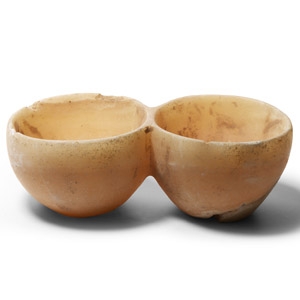
Bactrian Style Alabaster Bowls
20th century A.D.Estimate: £100 - 140 (+bp*)
Opening Bid: £50
Carved as two conjoined hemispherical bowls; repaired. 950 grams, 18.5 cm
Property of a North London, UK, gentleman. -
.jpg)
Gilt Painted Wooden Icon of Saint Paraskevi
Circa 19th century A.D.Sold for (Inc. bp): £260
Depicting a richly dressed facing figure, crowned and nimbate, winged angels on clouds flanking the head; holding a cross in her right hand and a scroll in her proper left arm bearing handwritten Slavic script of the Nicene Creed; additional Slavic script with her name across the right and left fields. 854 grams, 31 cm
The timber shows some old insect flight holes and we are advised that this piece has been recently treated with Permthrin, as a precaution.
Ex French gallery, Paris.
Saint Paraskevi is usually depicted holding an Eastern Cross and a scroll with the words from the Nicene Creed (here, in old Slavonic: Верую во единаго Бога Отца, Вседержителя, Творца небу и земли,видимым же всем и невидимым = We believe in one God, the Father, the almighty, maker of heaven and earth, of all that is, seen and unseen), professing her faith in another while being crowned with the crown of the martyrdom by two angels. -
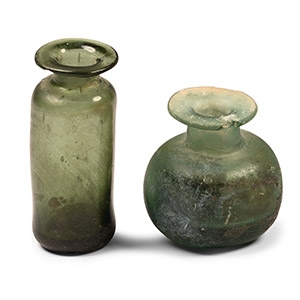
Post Medieval 'Thames' Glass Poison Bottle Group
16th-17th century A.D.Sold for (Inc. bp): £156
Comprising two glass bottles: one with a rounded cuboid-shaped body, slender neck, everted rim and remains of iridescent surfaces; one cylindrical bottle with short neck and broad everted rim. 58 grams total, 41-58 mm
Found Thames foreshore spoil, 1980s.
