
Loading, please wait...
LOT 2186
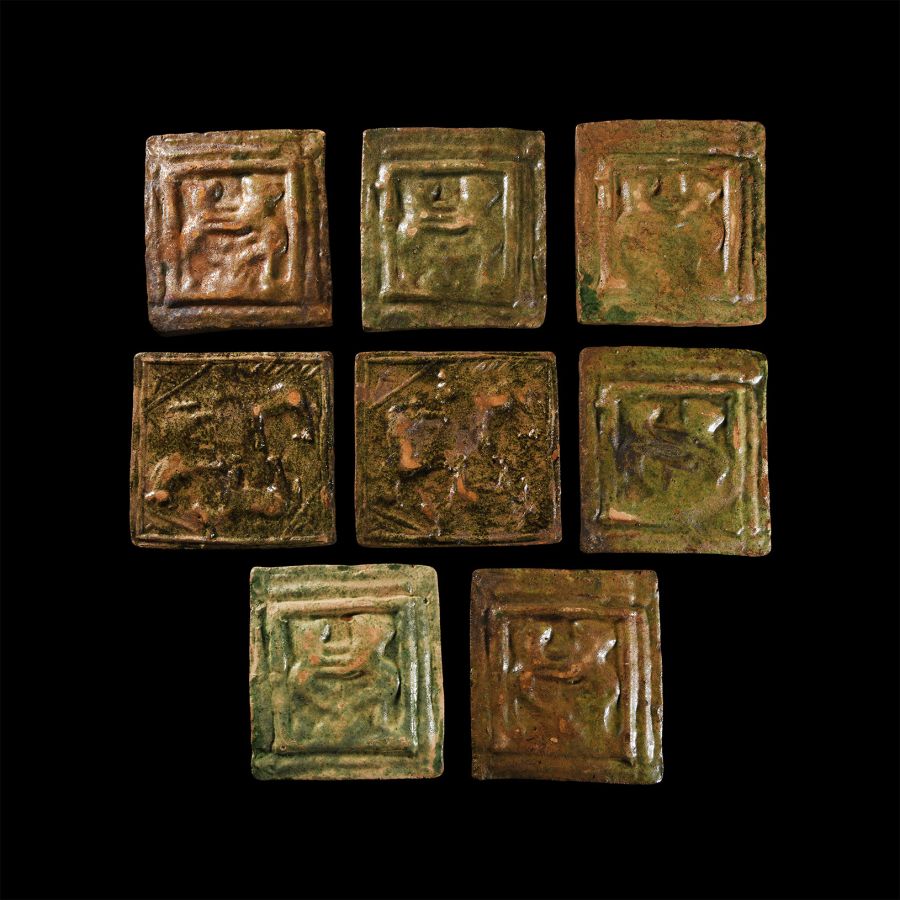
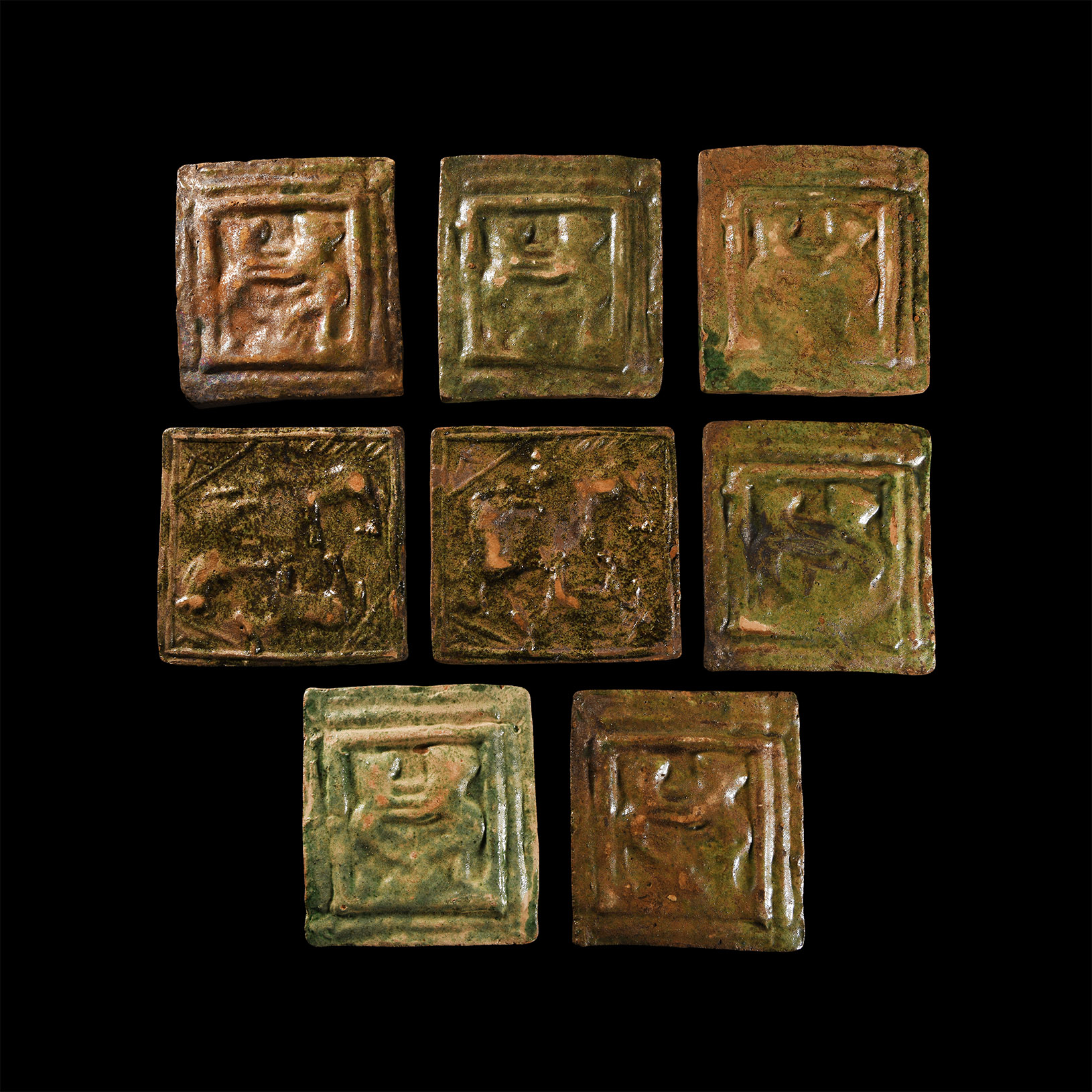
Post Medieval Glazed Ceramic Animal Tile Group
17TH-18TH CENTURY A.D.
3 7/8 x 8 5/8 - 4 x 3 5/8 in. (1.29 kg total, 9.9 x 9.1 - 10.2 x 9.3 cm).
Comprising two tile designs in relief: three horses in an enclosure; two animals, likely cats, fighting; coloured glazes. [8, No Reserve]
ProvenanceAcquired 1990s-early 2000s.
East Anglian private collection.
Cf. similar specimen in the British Museum, inventory no.OA.9377.
FootnotesThe tile production increased in the second half of the 16th century and during the following centuries. The fragments discovered from various localities (pot-tiles, rectangular, triangular and trapezoidal panels, open-work crest tiles) were all produced in regional workshops, from the end of the 15th century or at the beginning of the 16th century. They all had diverse decorative motifs, mainly animals and geometrical or vegetal combinations, almost all of them singular finds for this study area.
CONDITIONTimeLine Auctions follows a vetting process to ensure the authenticity and legality of all items, reinforcing our commitment to integrity and responsible trading. Each antiquity, antique, and coin lot undergoes thorough examination by a vetting committee of at least ten external specialists, professional trade association members, scientists, and archaeologists: Our Vetting Process
AUCTIONS:
TimeLine is a leading auction house specialising in antiquities, ancient art, collectables, natural history, coins, medals, and books. Our auctions offer museums, collectors, historians, and enthusiasts the opportunity to acquire unique and historically significant pieces.
-
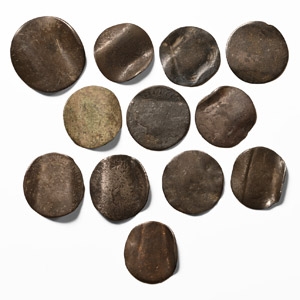
Post Medieval Silver and Bronze Love Token Collection
Circa 18th century A.D.Sold for (Inc. bp): £20
Mixed group comprising of mostly silver issue coins, each worn flat and coin bent into a double-curved 's' profile for use as a token of love. 27.65 grams total, 19-25mm.
Found on various UK sites since 1974. Property of an Essex collector.
The custom of giving a bent coin as a love-token is known from the 17th century in England. The coins were usually smoothed to obliterate the monarch’s head and then bent twice; sometimes they were engraved with initials or symbols such as hearts or knots. If the sweetheart accepted the youth's advances, she kept the token; if not, she disposed of the coin. The tradition is referred to in the children's rhyme 'There was a crooked man, and he walked a crooked mile, he found a crooked sixpence on a crooked stile.' -
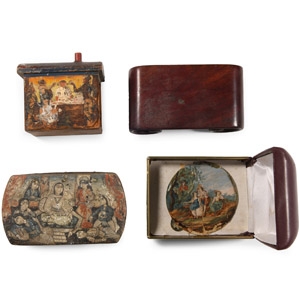
Miniature Painting Group
20th century A.D.Sold for (Inc. bp): £33
Including a pastoral scene with lovers in a bower and onlooker in the bushes, a tavern scene with drinkers leaning against a bar, and other items. 246 grams total, 6.8-10 cm
From the family collection of a Maida Vale lady, UK. -
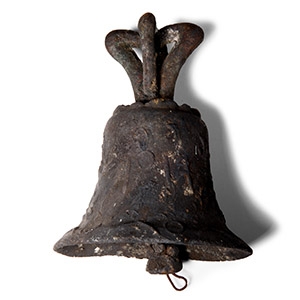
Georgian Church Bell
Dated 1817 A.D.Sold for (Inc. bp): £46
Squat in profile with rosette to the crown and cage above; low-relief foliage and '1817' to the outer face; clapper in situ, loop absent. 1 kg, 14 cm
From a collection acquired on the UK art market from various auction houses and collections mostly before 2000. From an important Cambridgeshire estate; thence by descent.
