
Loading, please wait...


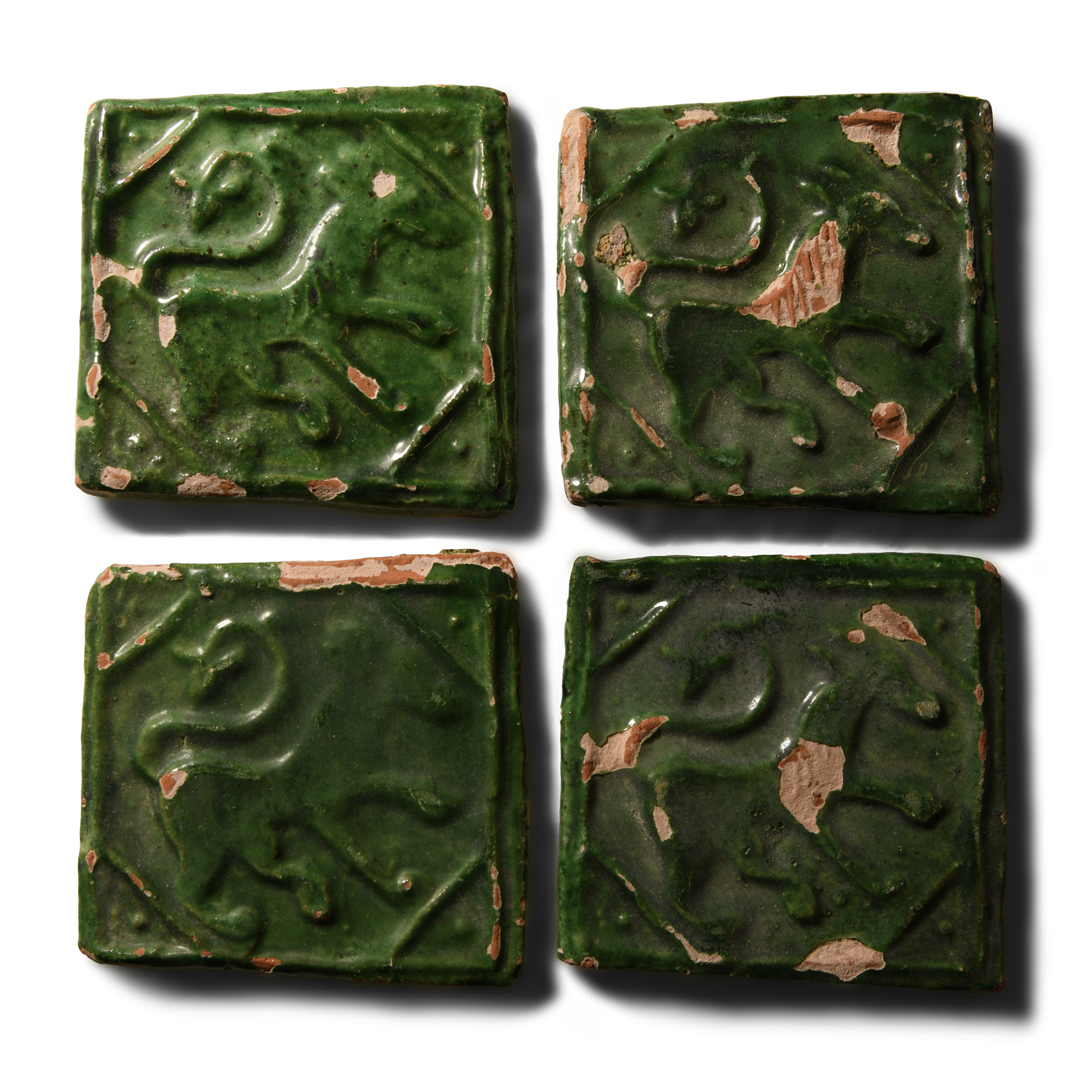
LOT 1987
Post Medieval Glazed Animal Tile Group
17TH-18TH CENTURY A.D.
4 x 3 7/8 - 4 x 4 in. (548 grams total, 10.2 x 9.8 - 10.2 x 9.9 cm).
Group of four green-glazed tiles, each square in plan with raised edges and zoomorphic motif in high relief. [4, No Reserve]
ProvenanceAcquired 1990s-early 2000s.
Ex East Anglian private collection.
Cf. similar specimen in the British Museum, inventory no.OA.9377.
FootnotesTile production increased in the second half of the 16th century and during the following centuries. The fragments discovered from various localities (pot-tiles, rectangular, triangular and trapezoidal panels, open-work crest tiles) were all produced in regional workshops, from the end of the 15th century or at the beginning of the 16th century. They all had diverse decorative motifs, mainly animals and geometrical or vegetal combinations, almost all of them singular finds for this study area.
CONDITIONTimeLine Auctions follows a vetting process to ensure the authenticity and legality of all items, reinforcing our commitment to integrity and responsible trading. Each antiquity, antique, and coin lot undergoes thorough examination by a vetting committee of at least ten external specialists, professional trade association members, scientists, and archaeologists: Our Vetting Process
AUCTIONS:
TimeLine is a leading auction house specialising in antiquities, ancient art, collectables, natural history, coins, medals, and books. Our auctions offer museums, collectors, historians, and enthusiasts the opportunity to acquire unique and historically significant pieces.
-
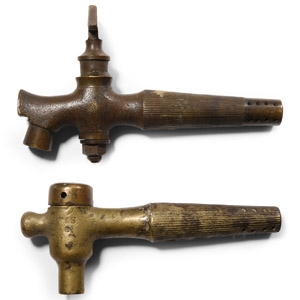
Post Medieval Bronze Beer Tap Group
19th century A.D.Sold for (Inc. bp): £33
Group of two beer-keg taps each with a ribbed spile and lateral vents. 605 grams total, 14.7 - 15.4 cm
From the collection of the famous author, writer and speaker, Gordon Bailey, Essex, UK; formed since 1968. -
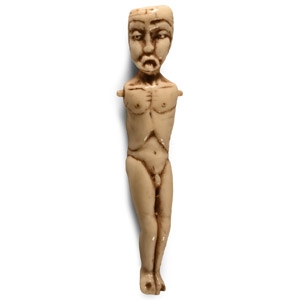
Post Medieval Bone Figure of Christ
18th century A.D.Sold for (Inc. bp): £91
Corpus Christi carved in the round with exaggerated head, spigots for posable arms, holes to the feet. 18 grams, 93 mm
From a collection acquired on the UK art market from various auction houses and collections mostly before 2000. From an important Cambridgeshire estate; thence by descent. -
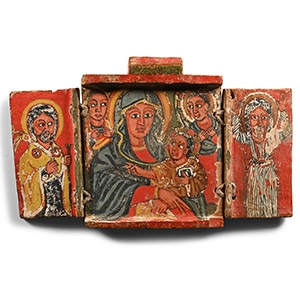
Ethiopian Folding Wooden Triptych Icon
Early 17th century A.D.Sold for (Inc. bp): £1,170
Portable shrine with painted geometric ornament to the outer face. opening doors to reveal a triptych with central image of Mary Theotokos and Child, Abune Gebre Menfes Kidus with hands raised, nimbate figure with yellow cloak and tau-cross staff. 66 grams, 94 mm high
Acquired in 2000 from a French private collection. Ex central London gallery.
