
Loading, please wait...
LOT 1993
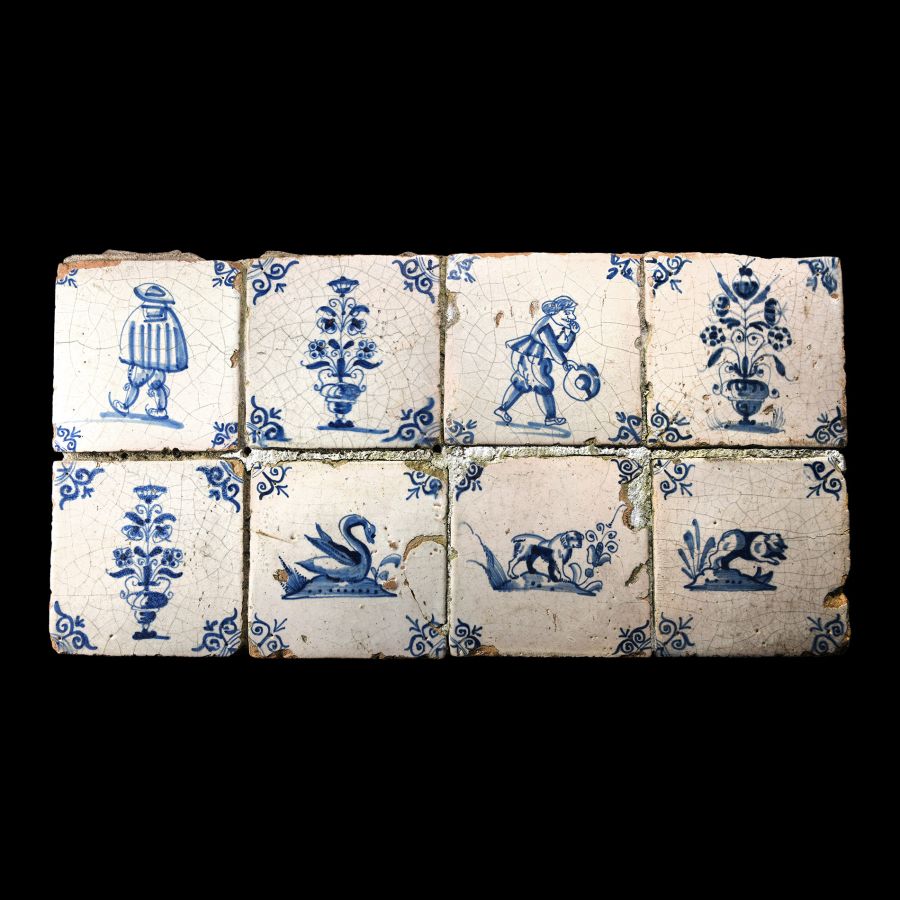
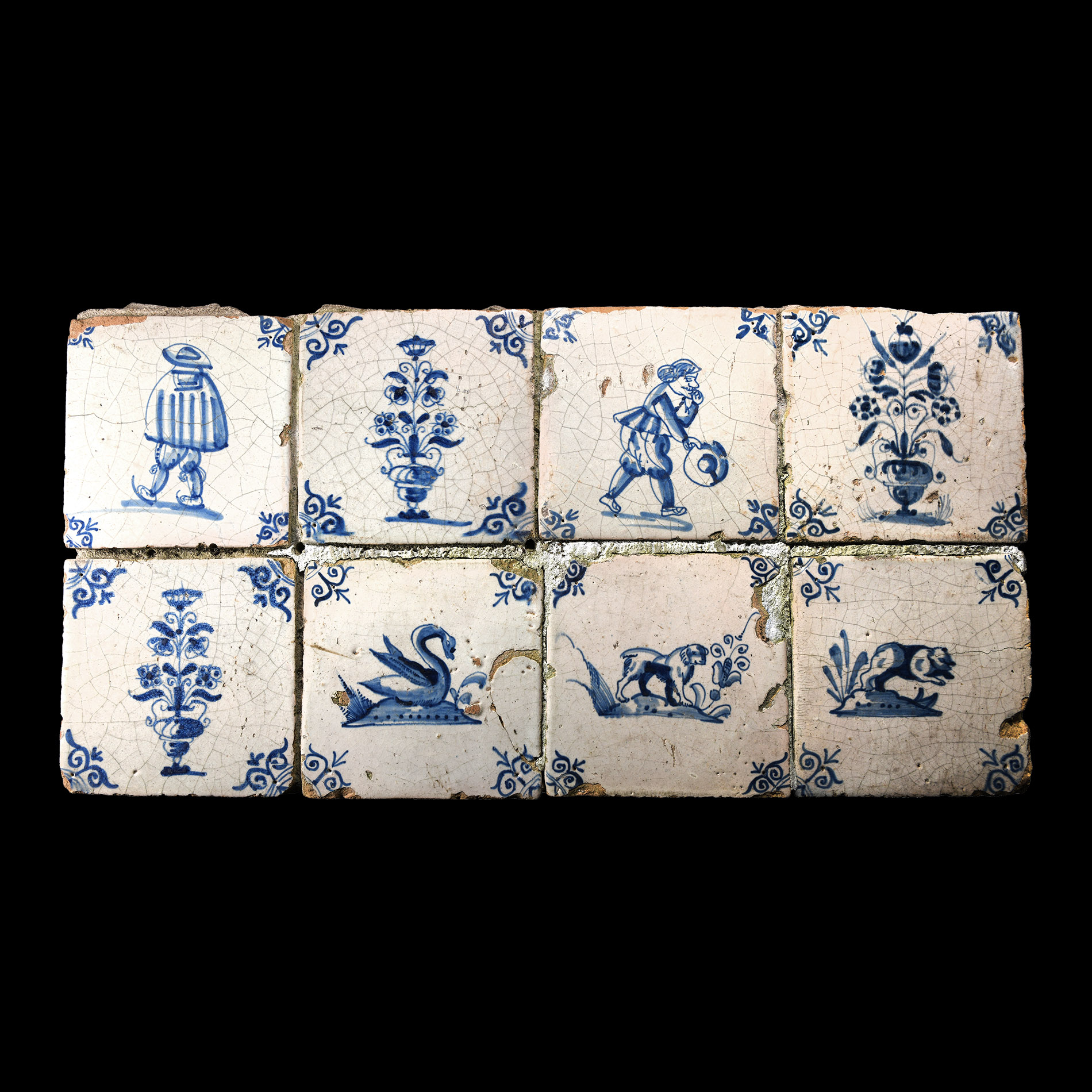
Post Medieval Dutch Glazed Ceramic Tiles
CIRCA 17TH-18TH CENTURY A.D.
21 1/8 x 11 in. (8.7 kg, 53.5 x 28 cm).
Comprising eight blue and white tiles set into a slab, displaying animals, figural vignettes and floral compositions. [No Reserve]
ProvenanceAcquired 1990s-early 2000s.
East Anglian private collection.
TimeLine Auctions follows a vetting process to ensure the authenticity and legality of all items, reinforcing our commitment to integrity and responsible trading. Each antiquity, antique, and coin lot undergoes thorough examination by a vetting committee of at least ten external specialists, professional trade association members, scientists, and archaeologists: Our Vetting Process
AUCTIONS:
TimeLine is a leading auction house specialising in antiquities, ancient art, collectables, natural history, coins, medals, and books. Our auctions offer museums, collectors, historians, and enthusiasts the opportunity to acquire unique and historically significant pieces.
-
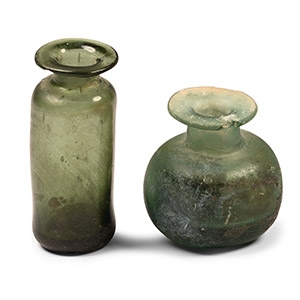
Post Medieval 'Thames' Glass Poison Bottle Group
16th-17th century A.D.Sold for (Inc. bp): £156
Comprising two glass bottles: one with a rounded cuboid-shaped body, slender neck, everted rim and remains of iridescent surfaces; one cylindrical bottle with short neck and broad everted rim. 58 grams total, 41-58 mm
Found Thames foreshore spoil, 1980s. -
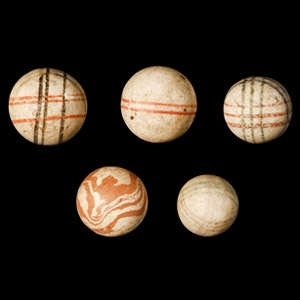
Post Medieval 'Thames' Decorated China Marble Collection
19th century A.D.Sold for (Inc. bp): £13
A group of variously sized, unglazed bisque marbles decorated with polychrome plaid-like geometric rings and marbling/crazy pattern effect. 28 grams, 1.2 mm - 1.8 cm
Found Billingsgate spoil from the Thames foreshore, London, UK. -
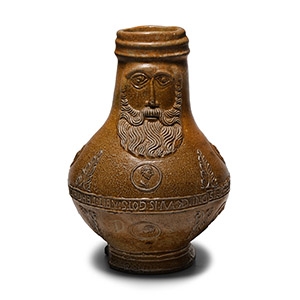
Post Medieval Inscribed Salt-Glazed Bellarmine Jug
16th century A.D.Sold for (Inc. bp): £468
Of squat spherical form with a broad cylindrical neck, strap handle and foot with rolled rim, bearded face or Bartmann 'mask', frieze of busts within roundels and acanthus palmettes over and below the medial inscription; neck and rim restored; label to base reading 'Schriftbandkrug Renaissance Frechen 1550'. 634 grams, 18 cm high
Ex private UK collection. Acquired from a provincial auction.
