
Loading, please wait...
LOT 2156
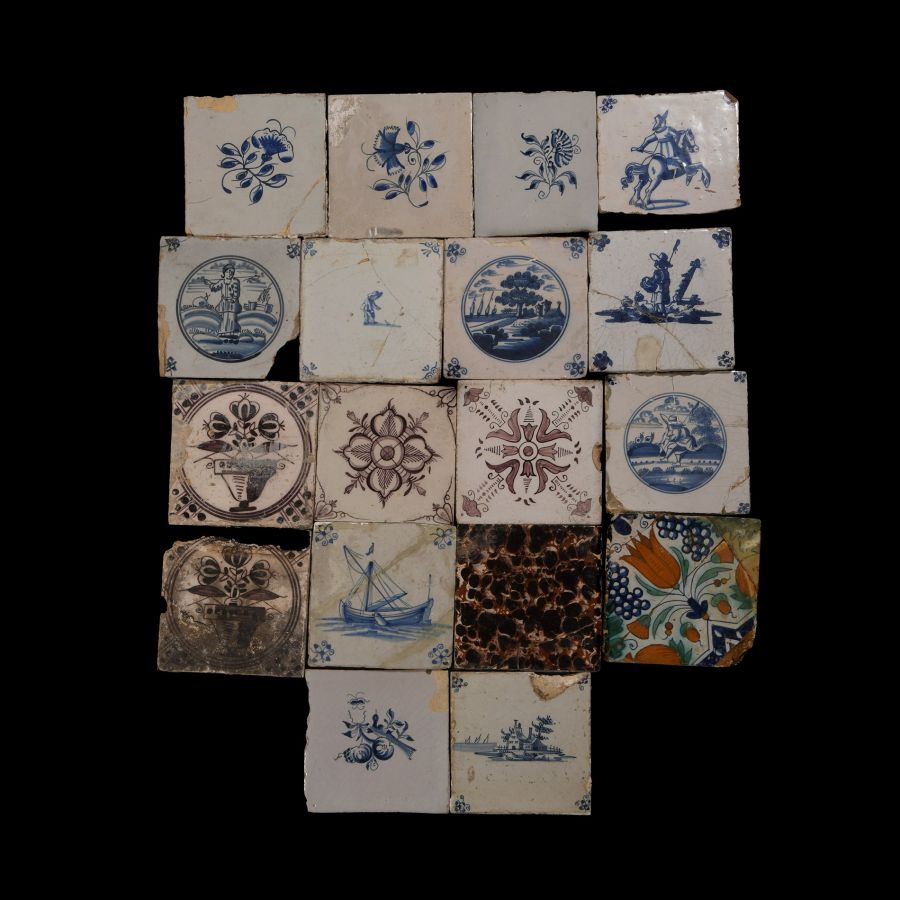
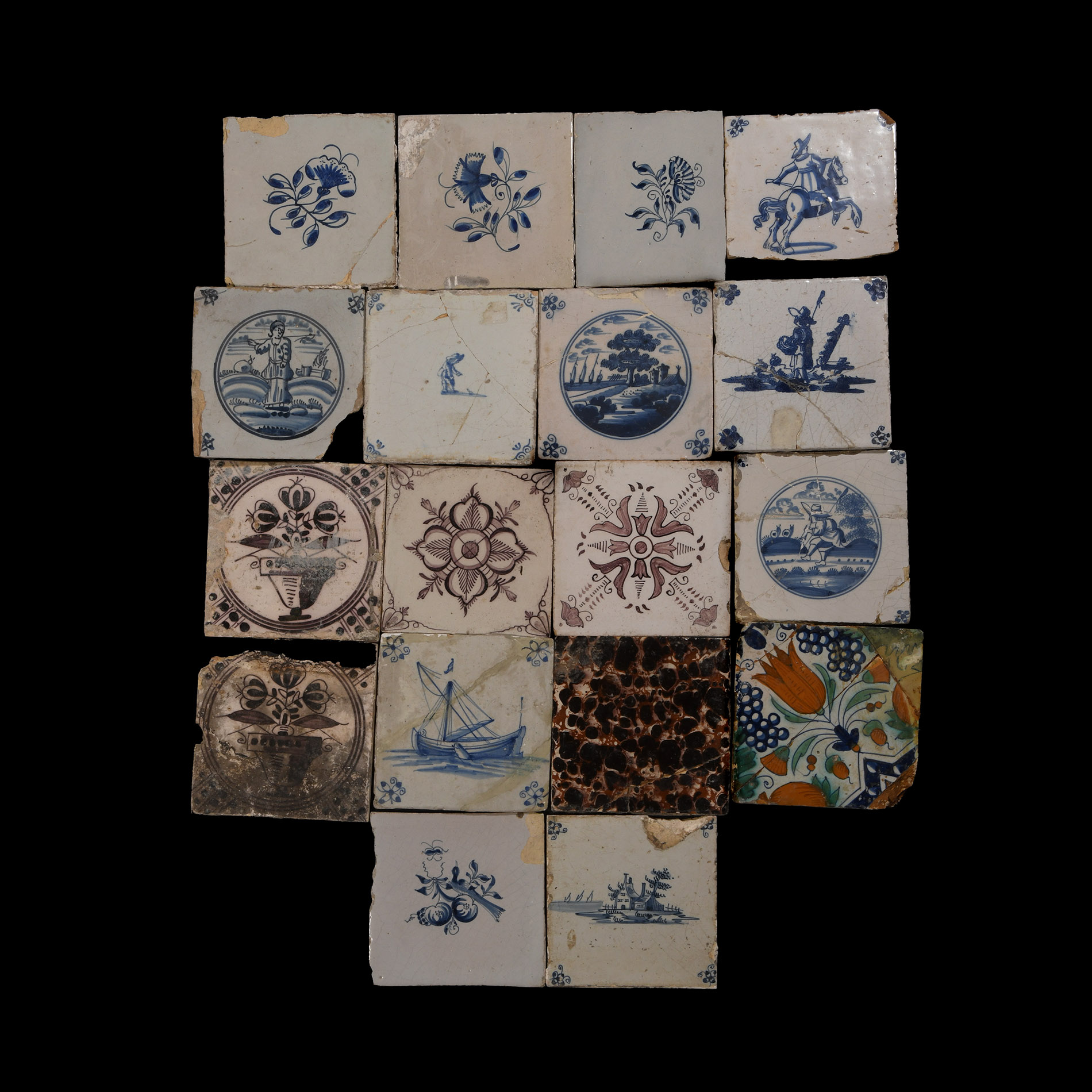
Post Medieval Dutch Glazed Ceramic Tile Group
CIRCA 17TH-18TH CENTURY A.D.
4 3/8 x 4 3/4 - 5 1/8 x 5 3/8 in. (4.6 kg total, 11 x 12 - 13 x 13.5 cm).
Comprising polychrome tiles displaying sailing vessels, figural scenes, perching bird, landscapes and foliate compositions. [18, No Reserve]
ProvenanceAcquired 1990s-early 2000s.
East Anglian private collection.
TimeLine Auctions follows a vetting process to ensure the authenticity and legality of all items, reinforcing our commitment to integrity and responsible trading. Each antiquity, antique, and coin lot undergoes thorough examination by a vetting committee of at least ten external specialists, professional trade association members, scientists, and archaeologists: Our Vetting Process
AUCTIONS:
TimeLine is a leading auction house specialising in antiquities, ancient art, collectables, natural history, coins, medals, and books. Our auctions offer museums, collectors, historians, and enthusiasts the opportunity to acquire unique and historically significant pieces.
-
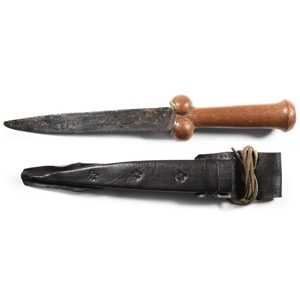
Post Medieval Iron Kidney Dagger with Replacement Handle and Sheath
15th century A.D. and laterSold for (Inc. bp): £72
The tapering blade with a single cutting edge; replica leather scabbard decorated with 'fleur de lys' and wooden handle with bulbous guard and pommel. 229 grams, 36.5 cm long
From the collection of the famous author, writer and speaker, Gordon Bailey, Essex, UK; formed since 1968.
The term 'ballock dagger' was used in medieval times to describe a dagger with a grip bearing a considerable resemblance to a phallic symbol. It was also called 'kidney dagger' during the Victorian times. The constant characteristic is the presence of two roundish and symmetrical bulbs at the guard, with the grip itself emerging upward between them and flaring slightly towards the top, sometimes being surmounted by a cap. -
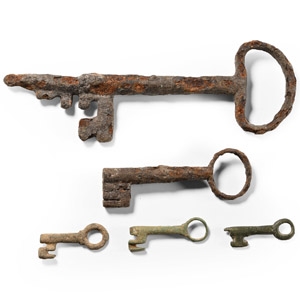
Tudor and Later Bronze and Iron Key Group
16th-18th century A.D.Sold for (Inc. bp): £46
Including a large iron door-key with kidney-shaped bow, a barrel-shank key and small casket keys. 115 grams total, 3.3-15 cm
Found various sites in the UK. Ex N.Mills. -
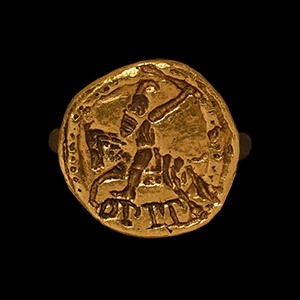
Medieval Style Gold Signet Ring with Knight on Horseback
20th century A.D.Sold for (Inc. bp): £598
Substantial hoop with discoid bezel, low-relief figure of a charging horseman; in 10th century A.D. Italian style. 12.2 grams, 25.06 mm overall, 18.10 mm internal diameter (approximate size British Q, USA 8, Europe 17.49, Japan 16)
Acquired in France in the 1990s. Property of a North American gallery.
