Loading, please wait...
LOT 2169
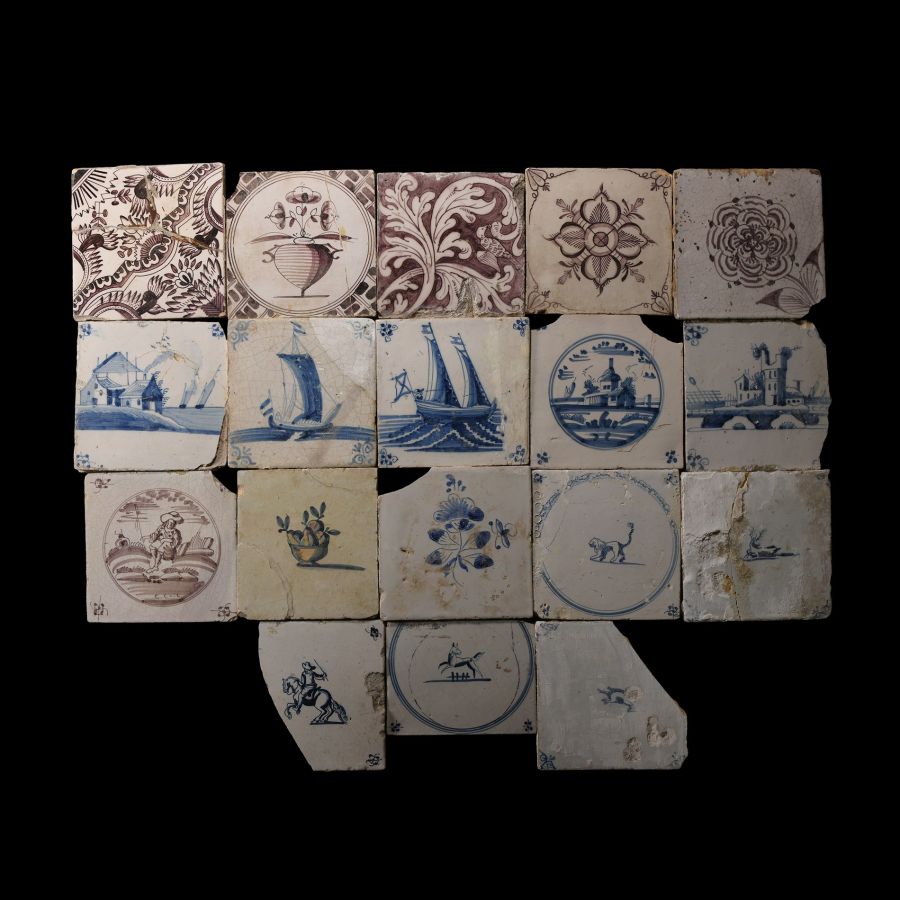
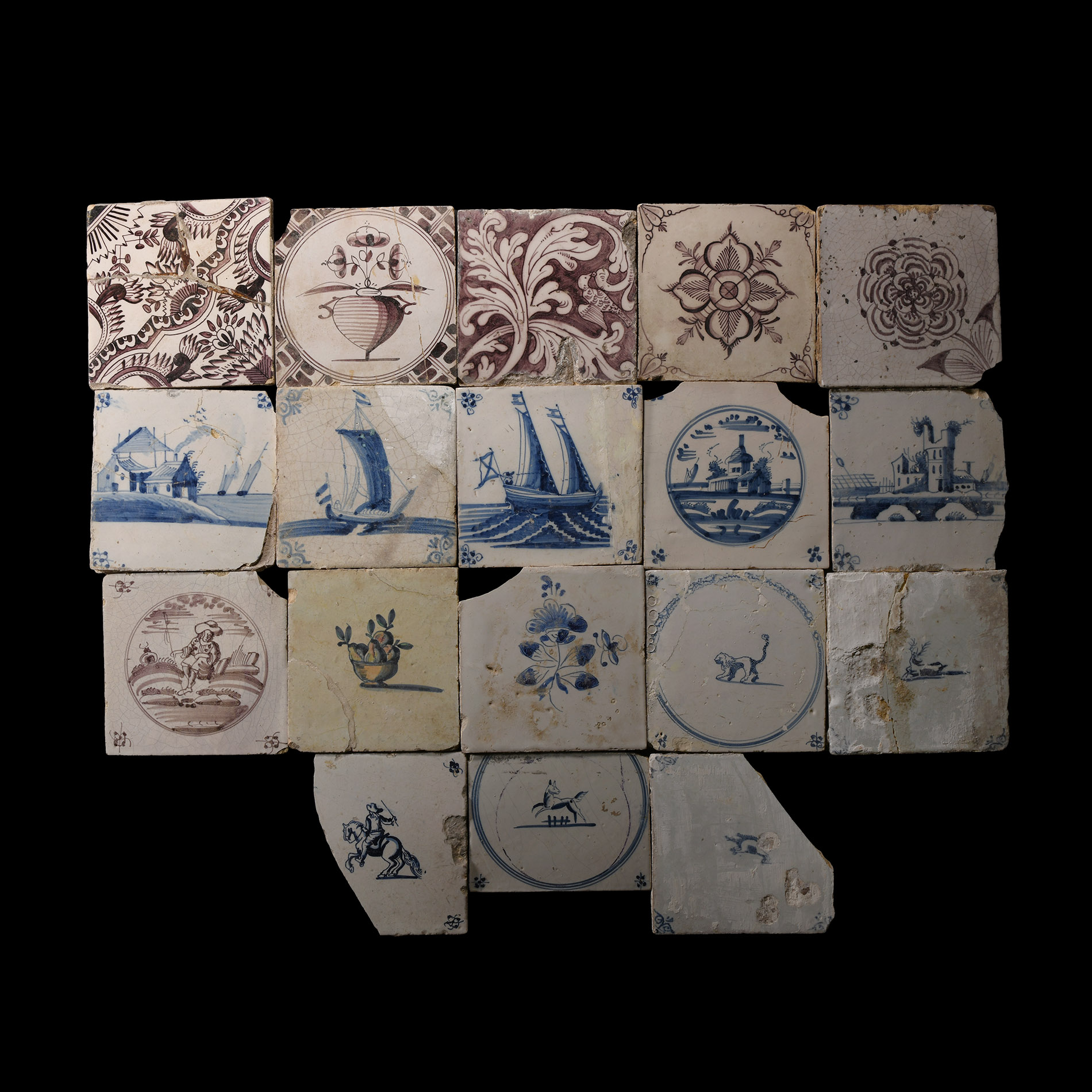
Post Medieval Dutch Glazed Ceramic Tile Group
CIRCA 17TH-18TH CENTURY A.D.
4 1/8 x 5 - 5 3/8 x 5 3/8 in. (4.2 kg total, 10.5 x 12.8 - 13.5 x 13.5 cm).
Comprising various designs in differently coloured glazes, including animals, still life, figural scenes, floral and vegetal motifs, sailing vessels and architectural subject matter. [18, No Reserve]
ProvenanceAcquired 1990s-early 2000s.
East Anglian private collection.
TimeLine Auctions follows a vetting process to ensure the authenticity and legality of all items, reinforcing our commitment to integrity and responsible trading. Each antiquity, antique, and coin lot undergoes thorough examination by a vetting committee of at least ten external specialists, professional trade association members, scientists, and archaeologists: Our Vetting Process
AUCTIONS:
TimeLine is a leading auction house specialising in antiquities, ancient art, collectables, natural history, coins, medals, and books. Our auctions offer museums, collectors, historians, and enthusiasts the opportunity to acquire unique and historically significant pieces.
-
Post Medieval Bronze Horse Harness Mount Collection
16th-19th century A.D.Sold for (Inc. bp): £78
Including rosette and floral types; many of these objects are published in the Detector Finds book series. 407 grams total, 43-62 mm
From the collection of the famous author, writer and speaker, Gordon Bailey, Essex, UK; formed since 1968. -
Medieval Style 'Billy and Charlie' Fantasy Pendant
19th century A.D.Sold for (Inc. bp): £104
By William Smith and Charles Eaton; obverse: robed figure with keys; reverse: two combatants with swords. 78 grams, 95 mm
From the collection of the famous author, writer and speaker, Gordon Bailey, Essex, UK; formed since 1968.
"Billy and Charlies", also known as the Shadwell forgeries, refer to a very extensive series of fake antiquities made in Victorian London by William Smith (Billy) and Charles Eaton (Charley). They were mudlarks who searched the Thames for items of value. William Edwards, a London antique dealer, made Billy's acquaintance around 1845, and he met Charley some years later. He paid them for items of interest that they found. Billy and Charley earned money from this until 1857, when they decided to counterfeit antiquities. They cast objects from lead or pewter, cutting dies into plaster of Paris moulds with nails and knives, and bathing the finished items in acid to simulate aging. Their commonest products were medallions, but others included daggers, statuettes, ampullae and even small shrines; as they were both illiterate the inscriptions on many of the objects are nonsense. They sold their forgeries to very prominent collectors of the time who thought they were genuine. Eventually, due to the large volume of objects that were appearing on the market, they were arrested and tried at court though they could not be found guilty of any crime at the time. They were released and carried on producing fakes but their style of manufacture had become well known and they eventually disappeared from history. -
Large Renaissance Lime Wood Bas-Relief of The Presentation of Christ to the Temple
Rhineland, circa 1480-1500 A.D.Sold for (Inc. bp): £12,350
The gilt polychrome carving showing Saint Simeon holding the infant Christ in his arms before his circumcision, Saint Simeon wearing a priestly mitre, holding the infant above an altar covered by an embroidered brocade; Virgin Mary to his left gazing at the infant tenderly, veiled and wearing a long robe with gilt decoration; to her left Saint Joseph dressed in a long robe and gilt cloak, holding a carpenter's axe in his left hand; praying Saint Anna to the right of Saint Simeon, wearing a simple dress and veil; to her right Saint Joachim, wearing a yellow cap and gilt cloak; the columns of the Temple of Jerusalem on the background; on a wooden stand. 10.15 kg, 86.5 cm wide
Crait and Muller, 8 June 2021, no.2. Ex central London gallery. Accompanied by an academic report by Dr Raffaele D’Amato. This lot has been checked against the Interpol Database of stolen works of art and is accompanied by search certificate no.12181-221704.
The relief shows the parents and relatives of infant Jesus following the Jewish tradition of circumcising young boys eight days after their birth. This iconography is symbolic as, according to the tradition, Saint Anna and Saint Joachim, parents of Mary, died before the birth of Christ. This panel originally would have adorned the interior panels of a large altarpiece, showing the cycle of life of Christ.