
Loading, please wait...
LOT 2158
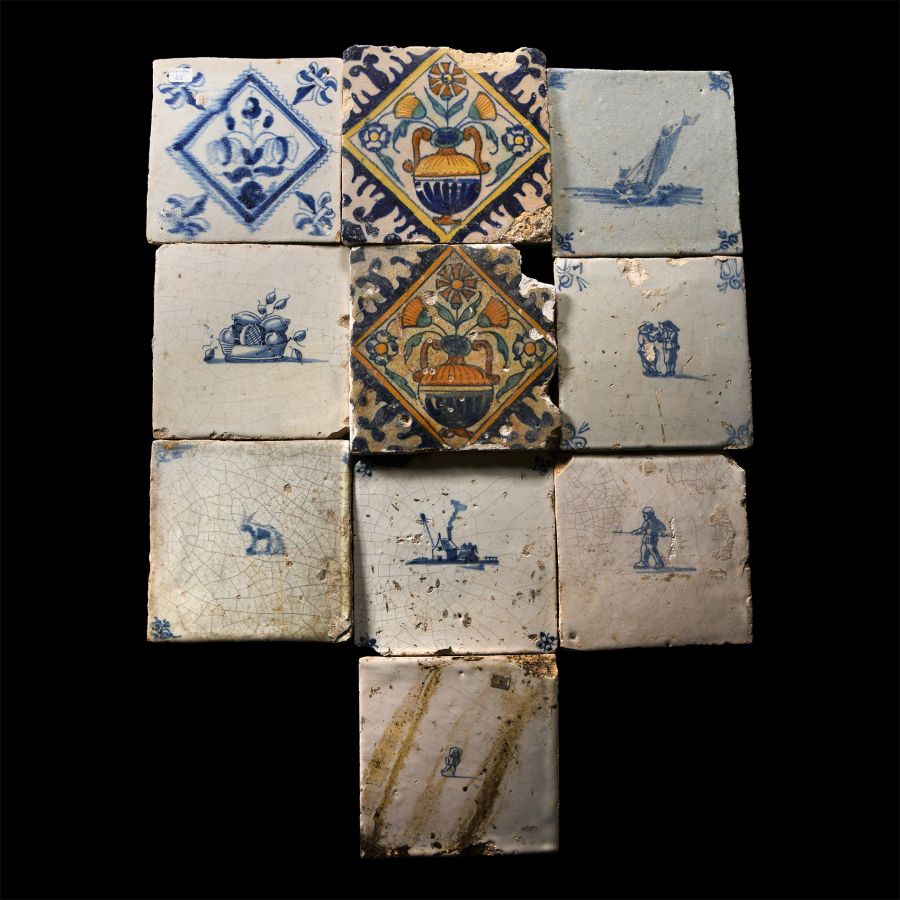
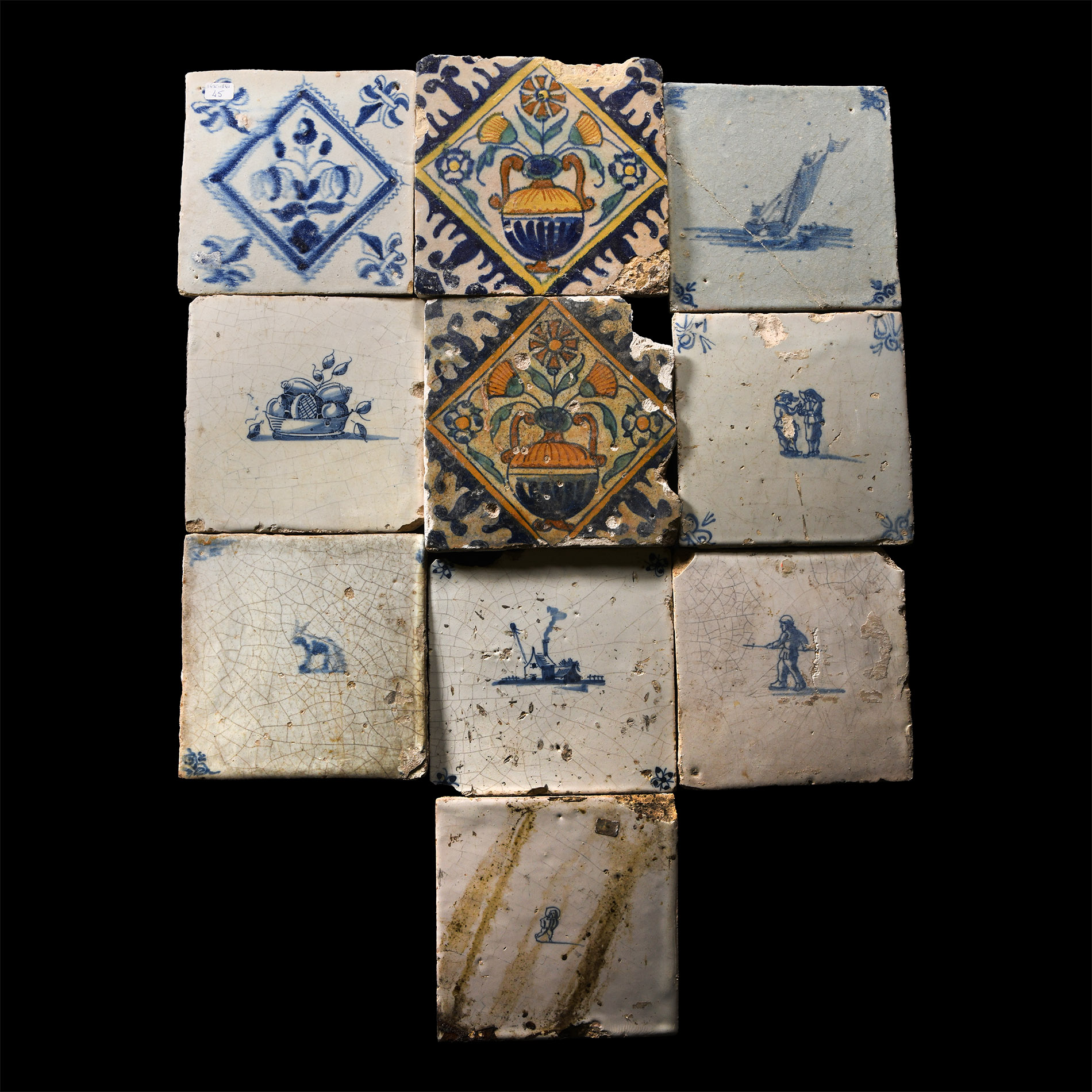
Post Medieval Dutch Glazed Ceramic Tile Group
CIRCA 17TH-18TH CENTURY A.D.
5 x 5 1/8 - 5 1/8 x 5 1/4 in. (3.4 kg total, 12.5 x 13 - 13 x 13.3 cm).
Composed mainly of blue and white glazed tiles displaying sailing vessels, still life scenes, figural vignettes, animals, polychrome floral motifs and others. [10, No Reserve]
ProvenanceAcquired 1990s-early 2000s.
East Anglian private collection.
TimeLine Auctions follows a vetting process to ensure the authenticity and legality of all items, reinforcing our commitment to integrity and responsible trading. Each antiquity, antique, and coin lot undergoes thorough examination by a vetting committee of at least ten external specialists, professional trade association members, scientists, and archaeologists: Our Vetting Process
AUCTIONS:
TimeLine is a leading auction house specialising in antiquities, ancient art, collectables, natural history, coins, medals, and books. Our auctions offer museums, collectors, historians, and enthusiasts the opportunity to acquire unique and historically significant pieces.
-
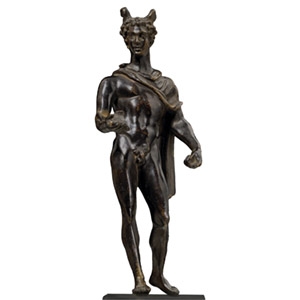
Bronze Statuette of Mercury
17th-18th century A.D.Estimate: £1,200 - 1,700 (+bp*)
Opening Bid: £600
Modelled standing nude in contrapposto stance, wearing a mantle draped to the left shoulder and secured at the right, small wings embedded in the curly hair, left hand extended in gripping attitude, right hand thrust forward holding a small coin-purse; mounted on a custom-made stand. 1.23 kg total, 24.7 cm including stand
Private collection, England. -
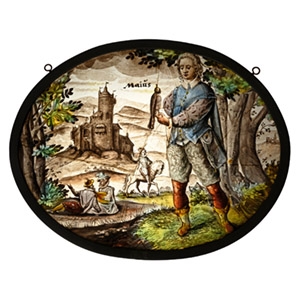
Stained Glass Panel of the Month of May
Southern Low Countries, circa 1580-1600 A.D.Sold for (Inc. bp): £546
Ellipsoid panel with polychrome landscape scene depicting a fowler in the foreground holding his left arm extended for a perching bird of prey wearing a hood; the fowler in slashed doublet and hose with turned boots standing before an oak tree; in the middle distance, two figures sitting in the grass, the female playing a lute and the male gesticulating, and a third riding with arm raised releasing a hawk; in the distance, wooded hills with a castle; inked title 'Maiŭs' (May); lead came with two suspension loops; cracked and repaired. 266 grams, 23.7 cm
De Baecque Vente aux enchere, 5 March 2022, no.55. Ex central London gallery. -
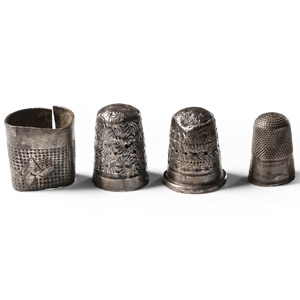
Post Medieval Silver Thimble Group
17th-20th century A.D.Sold for (Inc. bp): £46
Including tubular, bell-shaped and other types. 13.5 grams total, 18-21 mm
From the collection of the famous author, writer and speaker, Gordon Bailey, Essex, UK; formed since 1968.
