
Loading, please wait...
LOT 1978
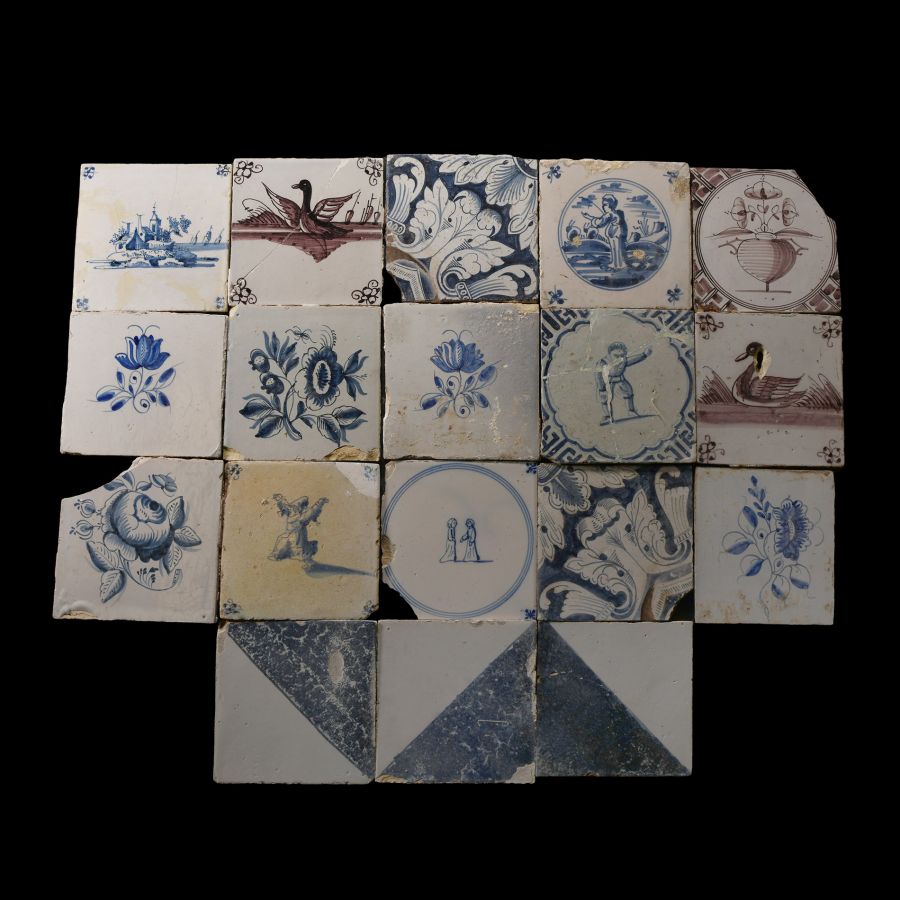
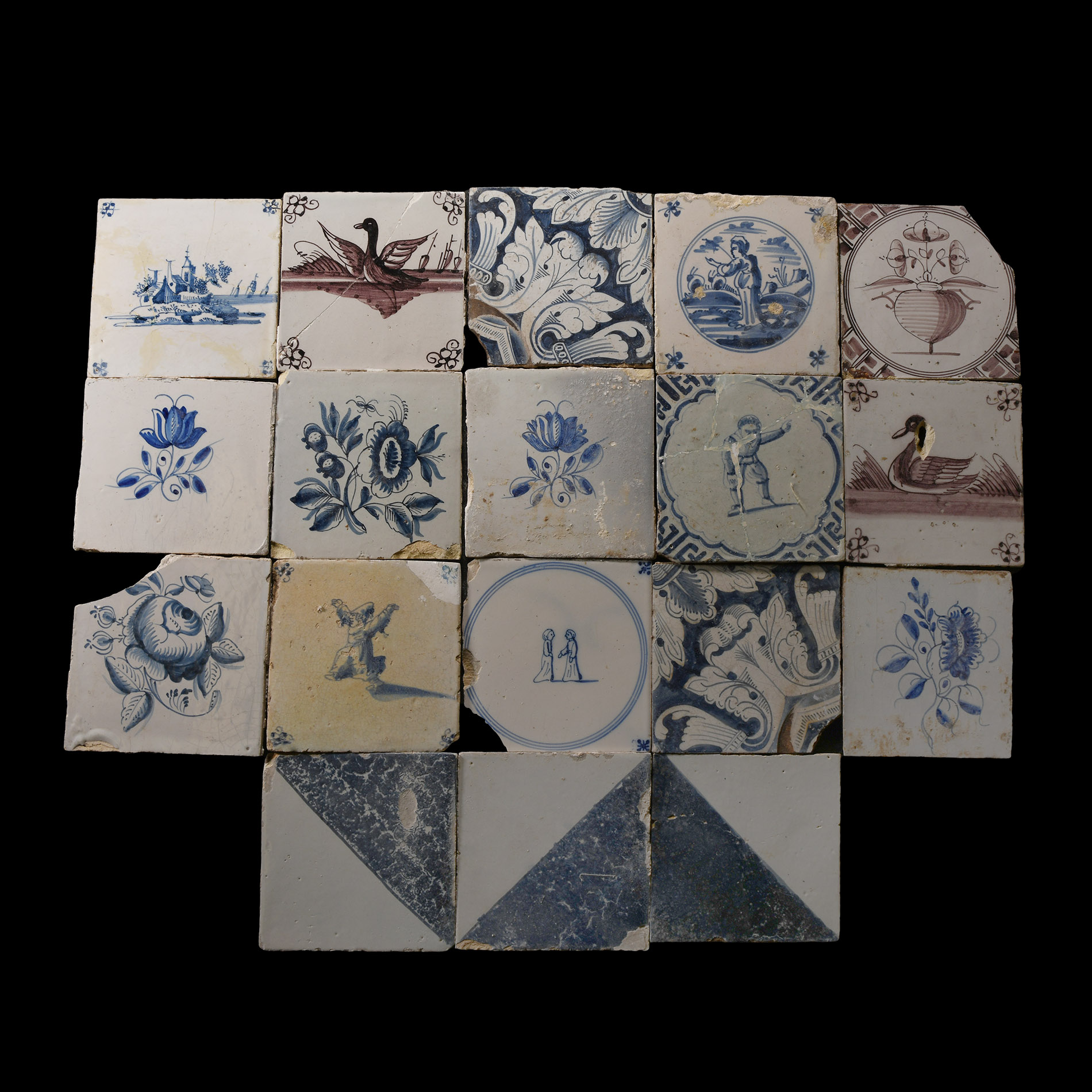
Post Medieval Dutch Glazed Ceramic Tile Group
CIRCA 17TH-18TH CENTURY A.D.
5 1/8 x 5 1/8 in. (4.4 kg total, 13 x 13 cm each).
Comprising glazes of various colours and displaying wildlife, landscape scenes, geometric designs, figural scenes, plants and vegetal motifs. [18, No Reserve]
ProvenanceAcquired 1990s-early 2000s.
East Anglian private collection.
TimeLine Auctions follows a vetting process to ensure the authenticity and legality of all items, reinforcing our commitment to integrity and responsible trading. Each antiquity, antique, and coin lot undergoes thorough examination by a vetting committee of at least ten external specialists, professional trade association members, scientists, and archaeologists: Our Vetting Process
AUCTIONS:
TimeLine is a leading auction house specialising in antiquities, ancient art, collectables, natural history, coins, medals, and books. Our auctions offer museums, collectors, historians, and enthusiasts the opportunity to acquire unique and historically significant pieces.
-
.jpg)
Framed Bronze Plaque with Religious Scene
Late 19th century A.D.Estimate: £500 - 700 (+bp*)
Opening Bid: £250
A repoussé plaque presenting a religious scene: Christ seated in majesty surrounded by putti and holding the orb and sceptre above a throng of nimbate apostles, Saint Paul and Saint Peter at the centre; gilt border and wooden frame. 1.4 kg, 40 x 40 cm
Private collection, England. -
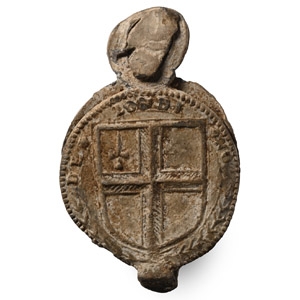
Charles I City of London Lead Seal
1625-1631 A.D.Sold for (Inc. bp): £111
Two-part, four-lobed seal with strap and tag above; obverse with heater shield bearing the arms of the City of London with legend to beaded border 'DE * LO[.]DI ONO' (from London); reverse with angel holding an orb with legend 'GLORIA * IN * EXCELSIS' (glory in the highest); accompanied by a letter from the British Museum, with attachments. 37.5 grams, 57 mm
From the collection of the famous author, writer and speaker, Gordon Bailey, Essex, UK; formed since 1968. Accompanied by the original Museum of London letter by Geoff Egan dated 3rd January 1979.
The item was identified by Geoff Egan (then on secondment from the Museum of London to the British Museum) in 1979 as a four-lobed cloth seal, of a type which had recently been found from a shipwreck off the coast of Norway. The likelihood is that the seal was issued by or in connection with Blackwell Hall, which had a near-monopoly on the cloth trade in 17th c. London. The significance of the angel motif and the motto were not known to Egan, and are still debated. -
.jpg)
Bactrian Style Lapis Lazuli Bead Necklace String
20th century A.D.Sold for (Inc. bp): £33
Graduated group of beads, mainly polyhedral and annular types. 42 grams, 42.5 cm
London, UK, art market, 1980-2000s
