Loading, please wait...

Use mousewheel to zoom in and out, click to enlarge

Details

LOT 1913

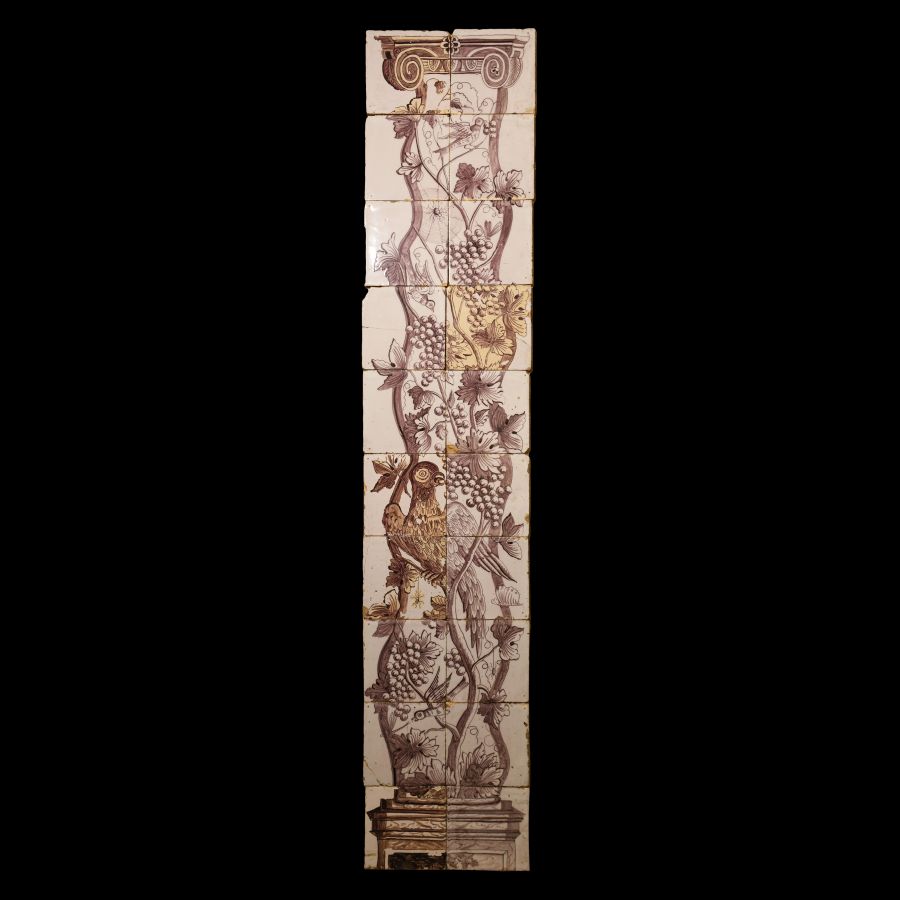
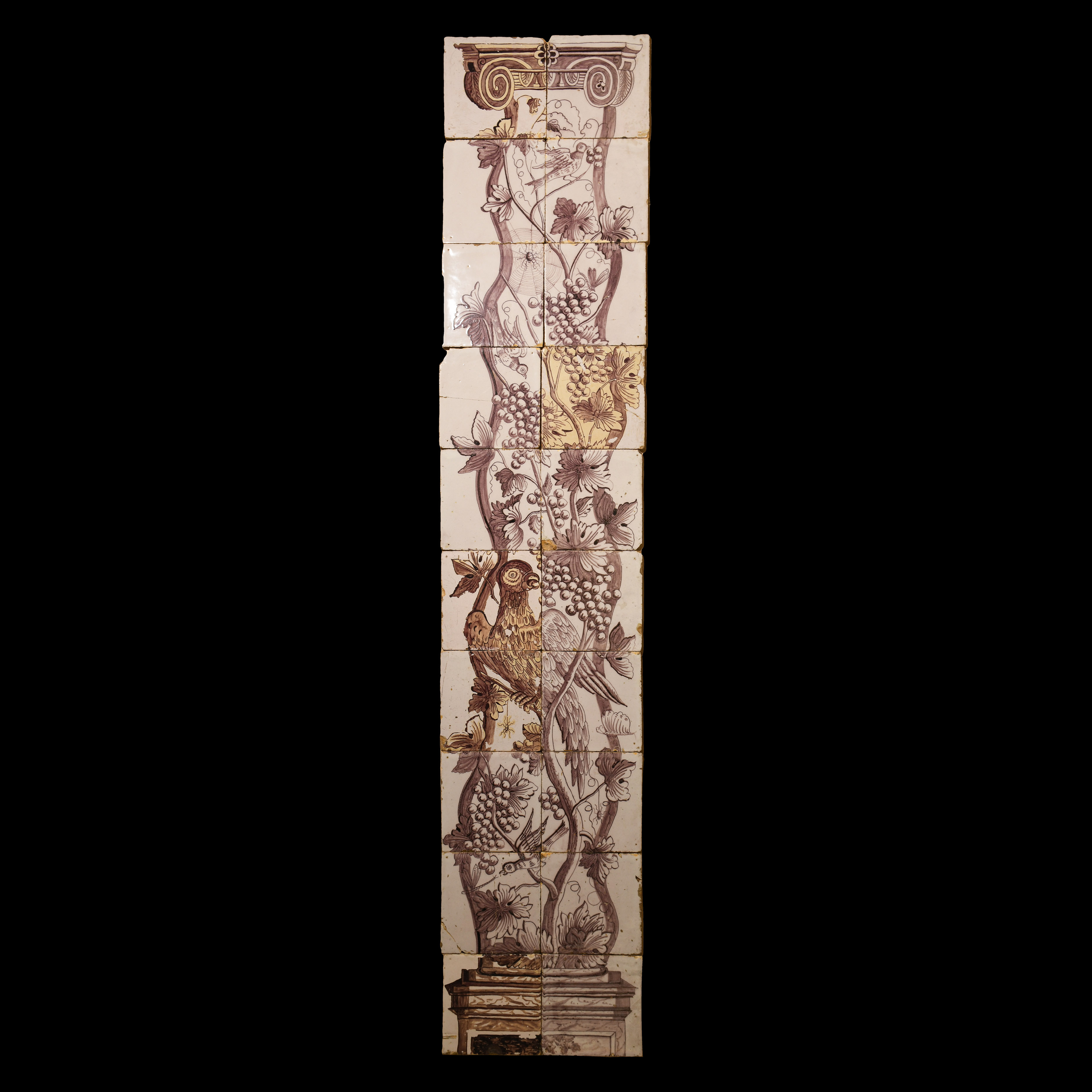
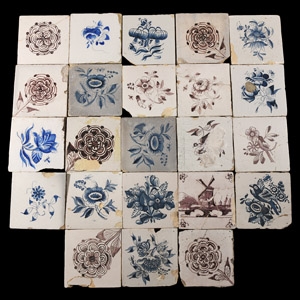
Post Medieval Dutch Glazed Ceramic Picture Tile Set

CIRCA 17TH-18TH CENTURY A.D.

5 1/8 x 5 1/8 in. (3.9 kg total, 13 x 13 cm).

Depicting a wild bird perched in a trellis covered in fruiting vine leaves, crowned by an architectural capital, some restoration. [20]

Provenance

Acquired 1990s-early 2000s.
East Anglian private collection.

Literature

Cf. Pluis, J., The Dutch Tile: Designs and Names, Leiden, 1997, p.625, for a similar set.

CONDITION

VETTING:

TimeLine Auctions follows a vetting process to ensure the authenticity and legality of all items, reinforcing our commitment to integrity and responsible trading. Each antiquity, antique, and coin lot undergoes thorough examination by a vetting committee of at least ten external specialists, professional trade association members, scientists, and archaeologists: Our Vetting Process


AUCTIONS:

TimeLine is a leading auction house specialising in antiquities, ancient art, collectables, natural history, coins, medals, and books. Our auctions offer museums, collectors, historians, and enthusiasts the opportunity to acquire unique and historically significant pieces.

LOT 1913

Post Medieval Dutch Glazed Ceramic Picture Tile Set

Sold for (Inc. bp): £247

Print page

RELATED LOTS

  • Post Medieval Heavy Gold Hearts Content Cannot Repent Posy Ring
    Post Medieval Heavy Gold 'Hearts Content Cannot Repent' Posy Ring
    17th century A.D.

    Sold for (Inc. bp): £845

    Composed of a carinated outer face and inscription to interior in cursive script: 'Hearts content cannot repent' followed by a maker's stamp formed as florid a letter 'I' within a rectangular cartouche. 6.54 grams, 21.46 mm overall, 17.32 mm internal diameter (approximate size British N, USA 6 1/2, Europe 13.72, Japan 13)


    Acquired on the UK antiques market between 1974-1985. Albert Ward collection, Essex, UK.

    In the medieval period many rings bore posy inscriptions in Latin or French, the languages frequently spoken by the affluent elites. Later, inscriptions in English became more usual, although the lack of standardisation in spelling might surprise the modern reader. The inscription is generally found on the interior of the ring, hidden to everyone except the wearer and most of the sentimental mottoes were taken from the popular literature of the time. In fact, love inscriptions often repeat each other, which suggests that goldsmiths used stock phrases. In the later 16th century, ‘posy’ specifically meant a short inscription. A posy is described in contemporary literature as a short ‘epigram’ of less than one verse. George Puttenham (1589) explained that these phrases were not only inscribed on finger rings, but also applied to arms and trenchers. The practice of giving rings engraved with mottoes at betrothals or weddings was common in England from the 16th century onwards, and continued until the late 18th century. Sources suggest that rings could be acquired ready- engraved, or alternatively engraved sometime after their initial production, by a hand other than the goldsmith’s. Joan Evans assumed that posy rings were principally used by/between lovers and distinguished four contexts for the giving of posy rings by one lover to another: betrothals, weddings, St Valentine’s Day and occasions of mourning. Samuel Pepys’ diary makes clear that posy rings might also mark the marriage of a family member, when bearers could even commission their own rings and chose their own mottoes from books. The rings could also function as tokens of friendship or loyalty.

    Lot Details

  • Georgian Gold Memento Mori Ring
    Georgian Gold Memento Mori Ring
    Dated 12 October 1847 A.D.

    Sold for (Inc. bp): £390

    With everted upper and lower rim engraved with foliate motifs to the front faces, recessed central band engraved with a floral panel and inscription 'IN MEMORY OF', with continued inscription to the interior in cursive script 'O. Coates Obt. 12. Oct 1847, aet 54', followed by the hallmarks comprising: HI or IH maker's mark, anchor for Birmingham, 18 carat mark, duty mark and date letter 'Gothic A' for 1824; field to exterior keyed to receive enamel; seemingly an older ring with later inscription. 1.50 grams, 19.63 mm overall, 17.78 mm internal diameter (approximate size British O, USA 7, Europe 14.98, Japan 14)


    Found Romney Marsh area, Kent, UK. Property of a Kent gentleman.

    Lot Details

  • Tudor and Later Thames Lead Toy Griddle Group
    Tudor and Later 'Thames' Lead Toy Griddle Group
    16th-17th century A.D.

    Sold for (Inc. bp): £13

    Comprising: an openwork griddle with fish; rectangular example with openwork volute lug and beaded design to one face; rectangular plaque displaying fish scales. 12.4 grams total, 30-39 mm


    Found Thames foreshore spoil, 1980s.

    Lot Details

Stay up-to-date with the latest from TimeLine Auctions by joining our mailing list