
Loading, please wait...
LOT 1901
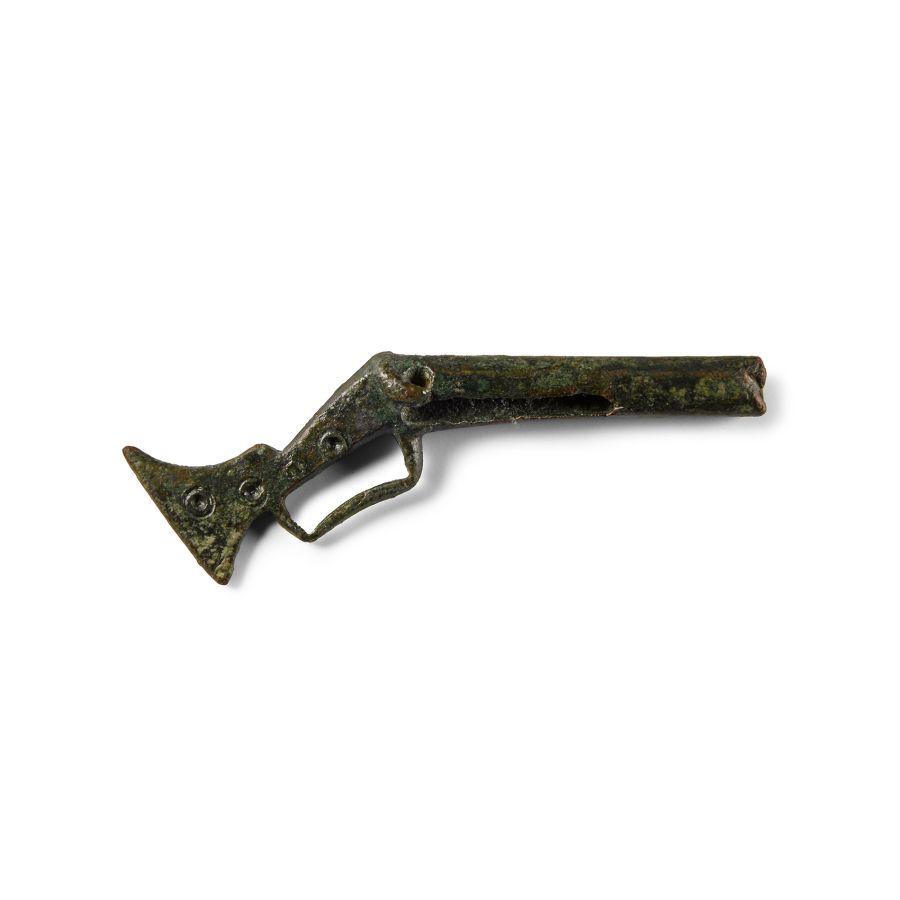
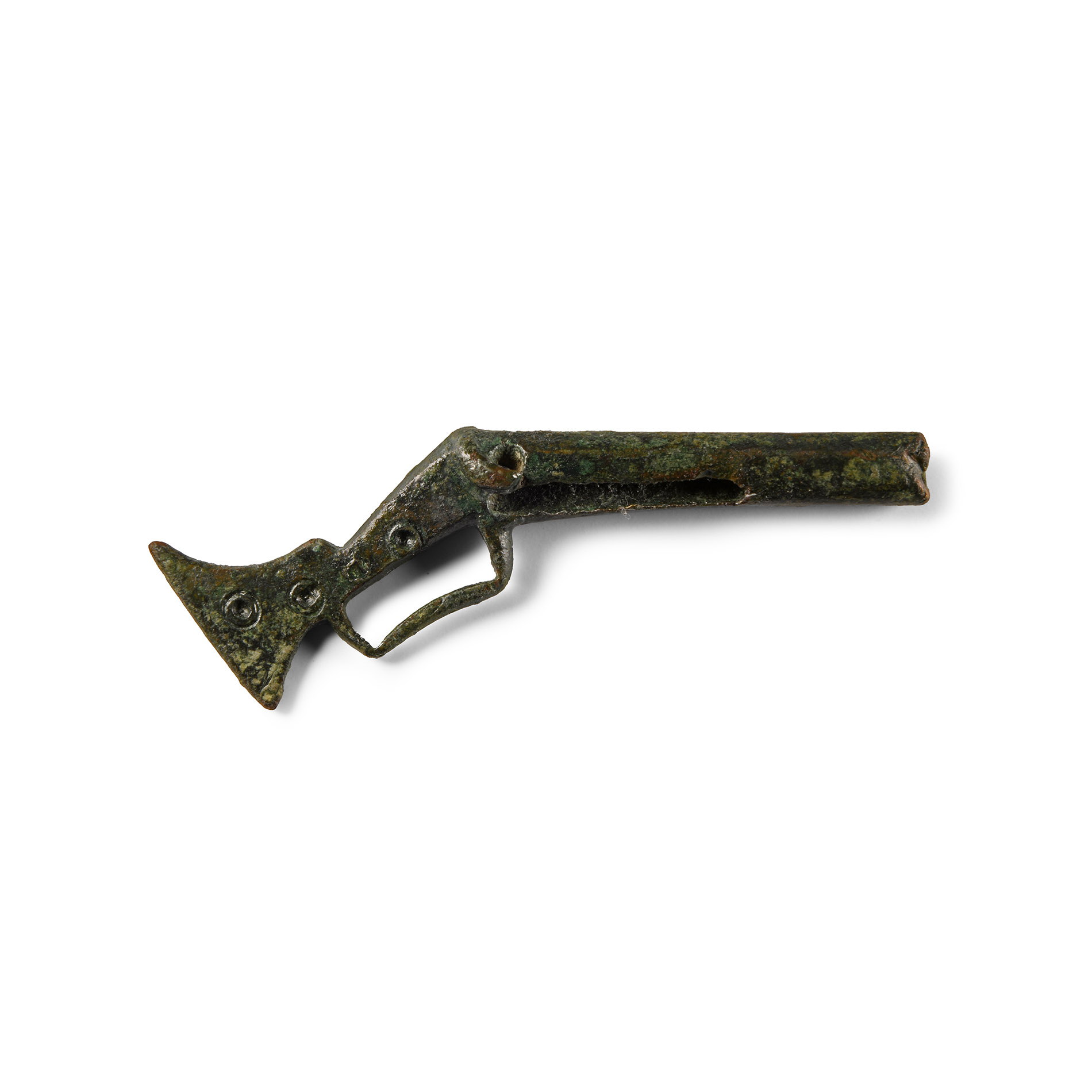
Post Medieval 'Dorset' Bronze Petronel
17TH CENTURY A.D.
2 3/4 in. (16.3 grams, 70 mm).
A cast petronel or model musket of Type 2 Design 1, with fishtail butt, facetted barrel, c-shaped pan and rectangular trigger guard; ring-and-dot motifs to the butt. [No Reserve]
ProvenanceFound Dorset, UK.
Property of a Gloucestershire, UK, collector.
Property of an East Sussex, UK, gentleman.
Cf. Forsyth, C. & Egan, G., Toys, Trifles & Trinkets. Base-Metal Miniatures from London 1200-1800, London, 2005, item 1.24.
FootnotesThe lower face of the barrel is absent near the trigger-guard.
CONDITIONTimeLine Auctions follows a vetting process to ensure the authenticity and legality of all items, reinforcing our commitment to integrity and responsible trading. Each antiquity, antique, and coin lot undergoes thorough examination by a vetting committee of at least ten external specialists, professional trade association members, scientists, and archaeologists: Our Vetting Process
AUCTIONS:
TimeLine is a leading auction house specialising in antiquities, ancient art, collectables, natural history, coins, medals, and books. Our auctions offer museums, collectors, historians, and enthusiasts the opportunity to acquire unique and historically significant pieces.
-
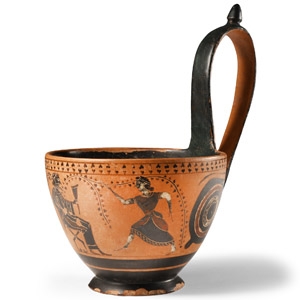
Attic Style Handled Cup
20th century A.D.Sold for (Inc. bp): £59
Terracotta kyathos with tall looped handle and knop thumbpad, painted motifs including a seated bearded male holding a flask flanked by two dancing girls, looped tendrils and concentric rings representing eyes. 235 grams, 18.5 cm
From the late Alison Barker collection, 1970-1990. -
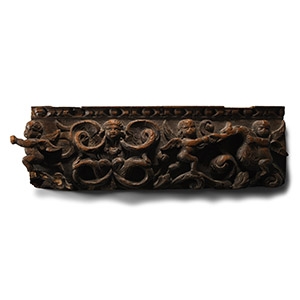
Elizabethan Elaborate Carved Wood Panel with Putti and Mythical Beasts
16th-17th century A.D.Sold for (Inc. bp): £195
Rectangular section of panel frame with egg-and-dart upper band, main panel with frieze comprising: winged putto facing with arms extended; facing anguiped with scrolled tendrils around; facing putto with arms extended feeding a hatched gobbet to a swan being ridden by a second facing putto; all carved in the half-round with undercuts and heavy deailing; mounting rings and wire to the reverse. 932 grams, 48 cm
Private collection, London, UK. -
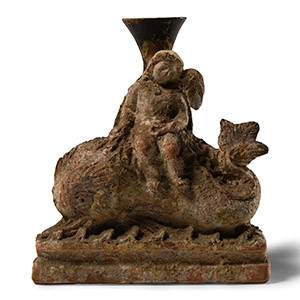
Greek Style Plastic Vase
20th century A.D.Sold for (Inc. bp): £78
Comprising a D-shaped base and trumpet-shaped spout with loop handle, figure of a winged putto sitting on the back of a dolphin; after the antique. 102 grams, 10.5 cm
Ex Paris collection, early 20th century.
