
Loading, please wait...
LOT 2150
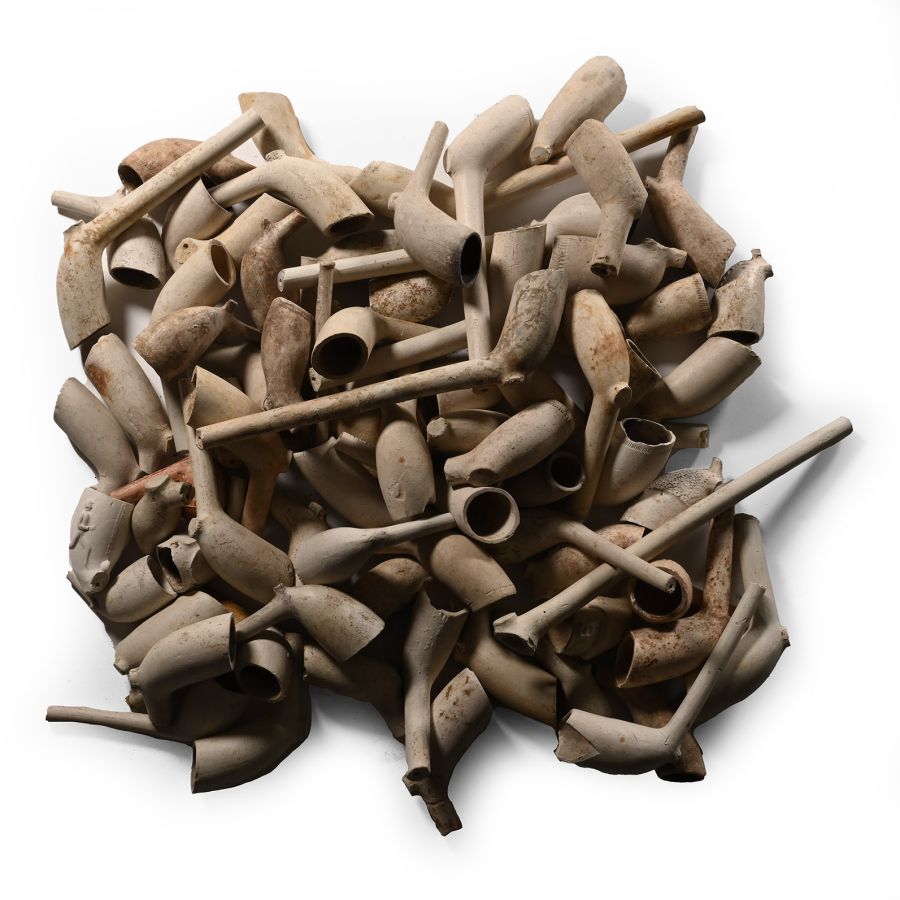
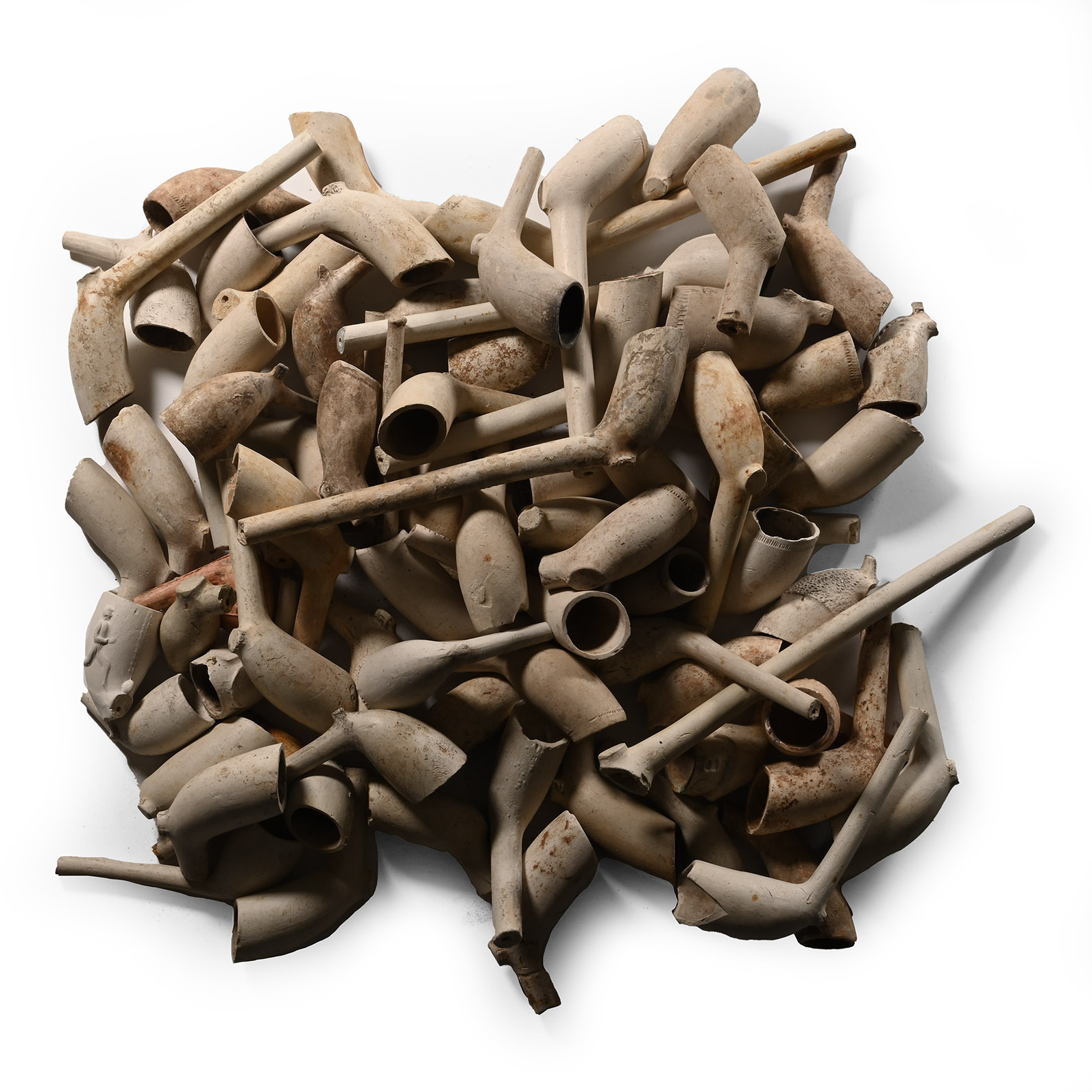
Post Medieval Clay Pipe Collection
CIRCA 19TH CENTURY A.D.
1 1/2 - 6 3/4 in. (1.14 kg total, 4-17 cm).
Including types with a disc or spur heel, rouletted band beneath the rim, high-relief tendrils, scallop detailing and other types. [No Reserve]
ProvenanceFrom the collection of the famous author, writer and speaker, Gordon Bailey, Essex, UK; formed since 1968.
LiteratureCf. Bailey, G., Detector Finds 3, Witham, 1997, pp.48-51.
CONDITIONTimeLine Auctions follows a vetting process to ensure the authenticity and legality of all items, reinforcing our commitment to integrity and responsible trading. Each antiquity, antique, and coin lot undergoes thorough examination by a vetting committee of at least ten external specialists, professional trade association members, scientists, and archaeologists: Our Vetting Process
AUCTIONS:
TimeLine is a leading auction house specialising in antiquities, ancient art, collectables, natural history, coins, medals, and books. Our auctions offer museums, collectors, historians, and enthusiasts the opportunity to acquire unique and historically significant pieces.
-
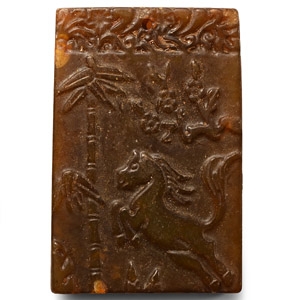
Chinese Hardstone Plaque Pendant
20th century A.D.Sold for (Inc. bp): £7
Obverse with a prancing horse in a landscape, reverse with three columns of text. 35 grams, 59 x 39 mm
Ex Paris gallery, 1980-1990. From a Parisian collection. -

Framed Watercolour Painting of a Nobleman's Residence
Persia, 20th century A.D.Sold for (Inc. bp): £7
With two servants bringing lidded chafing dishes of food to the crouching male wearing a helmet and cuirass with a shield at his feet; below, an attendant in helmet and riding coat holds the reins of the horse; panels of nastaliq text above and below; mounted in a glazed wooden frame. 1.16 kg, 47.5 x 32.3 cm
Very fine condition.
Acquired on the UK art market, 1980s-1990s. The Woodbridge collection of Indo-Persian art. -
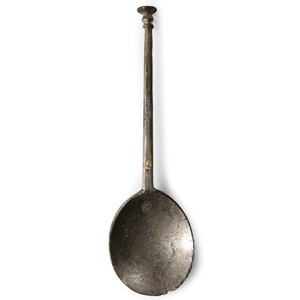
Tudor Tinned Bronze Spoon with Spoons Maker's Mark
16th century A.D.Sold for (Inc. bp): £78
With flat oval cross-section stem, tapering very slightly from the bowl and ending in a simple ball seal knop; a maker's mark within a circular border has been stamped within the bowl, adjacent to the stem. 37 grams, 16.2 cm
From the collection of the famous author, writer and speaker, Gordon Bailey, Essex, UK; formed since 1968.
Spoons with this type of knop date from the 16th century A.D. The knop, when bearing an owner's initial, could be used as a seal. The bronze spoons of the Tudor era were inexpensive and not mentioned in wills, but if silvered or in silver they were often listed among their owner’s property.
