
Loading, please wait...
LOT 2007
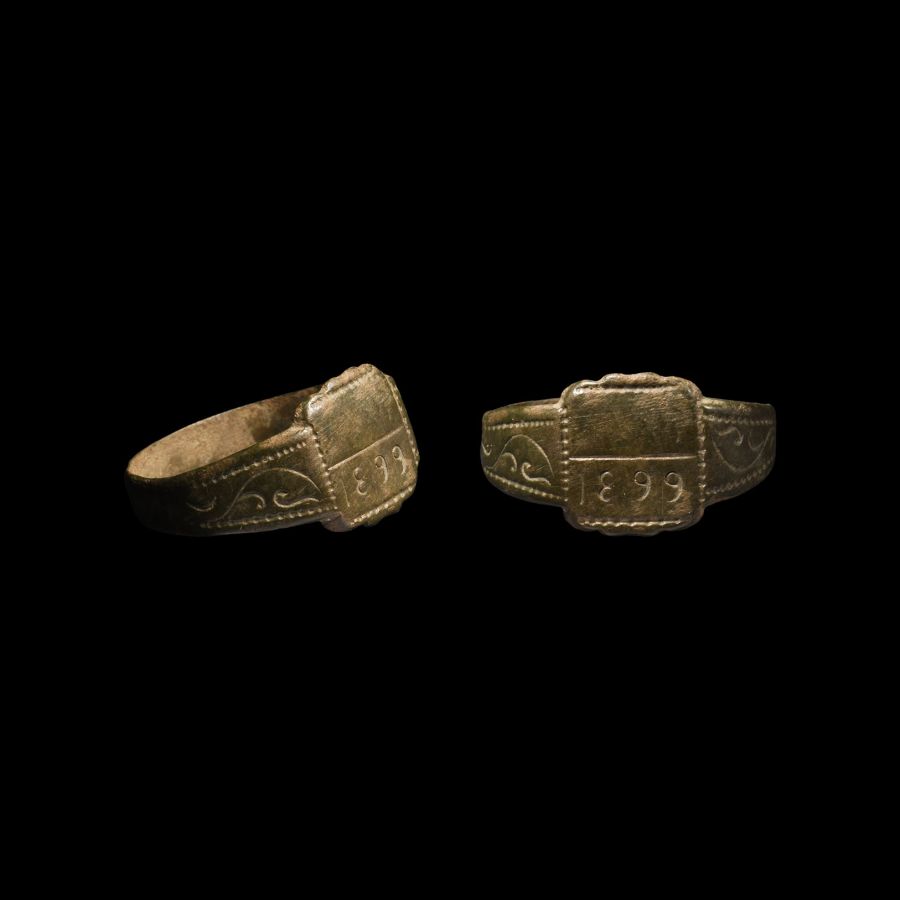
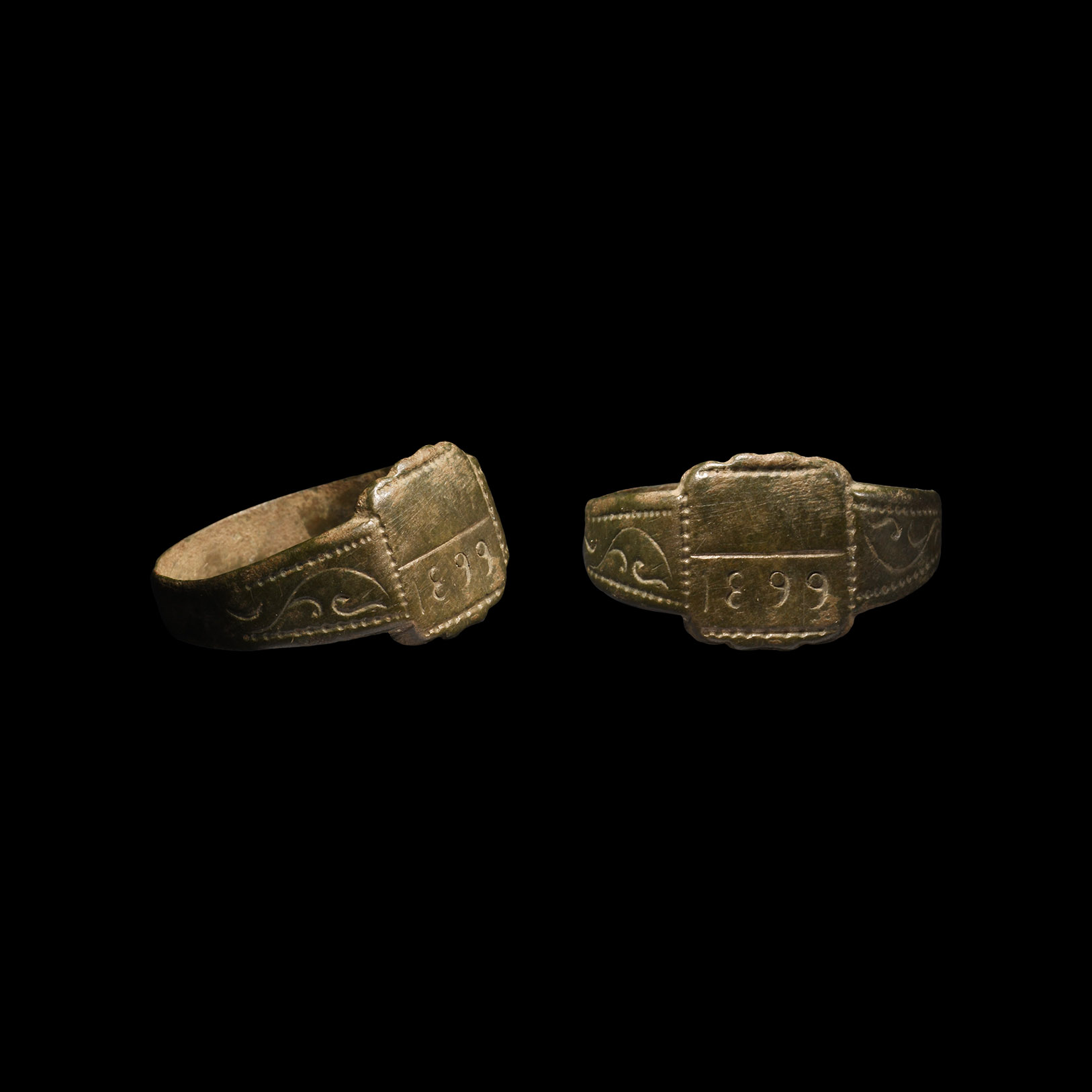
Post Medieval Bronze Ring with Date
LATE 19TH CENTURY A.D.
1 in. (4.63 grams, 25.33 mm overall, 23.29 mm internal diameter (approximate size British Z+1, USA 12 3/4 , Europe 29.99, Japan 28)).
Scroll detailing to the shoulders, shield-shaped bezel with stamped date '1899' in lower panel. [No Reserve]
ProvenanceAcquired on the London art market, 1980s-1990s.
CONDITIONTimeLine Auctions follows a vetting process to ensure the authenticity and legality of all items, reinforcing our commitment to integrity and responsible trading. Each antiquity, antique, and coin lot undergoes thorough examination by a vetting committee of at least ten external specialists, professional trade association members, scientists, and archaeologists: Our Vetting Process
AUCTIONS:
TimeLine is a leading auction house specialising in antiquities, ancient art, collectables, natural history, coins, medals, and books. Our auctions offer museums, collectors, historians, and enthusiasts the opportunity to acquire unique and historically significant pieces.
-
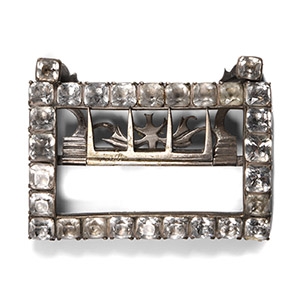
Georgian Jewelled White Metal Shoe Buckle
18th-early 19th century A.D.Sold for (Inc. bp): £13
Comprising a rectangular body, likely silver plate, displaying cut paste. 19.6 grams, 48 mm
Acquired 1960s-1990s. From the late Alison Barker collection, a retired London barrister. -
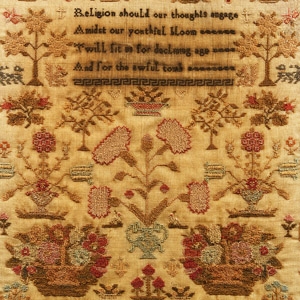
Embroidery Sampler
Dated 1831 A.D.Sold for (Inc. bp): £46
Framed and glazed with wire for suspension to the reverse; the sampler reads: 'Religion should our thoughts engage / Amidst our youthful bloom / Twill fit us for declining age / and for the awful tomb / Frances Todd / Aged 11 years / 1831'. 1.6 kg, 47 x 39 cm
Acquired on the UK art market. East Anglian private collection.
This verse is quoted from 'Religion Is The Chief Concern', from John Fawcett's, Hymns Adapted to the Circumstances of Public Worship and Private Devotion, 1782. -
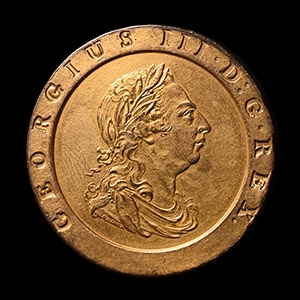
Georgian Gilt Bronze Cartwheel Twopence Patch Box
Dated 1797 A.D.Sold for (Inc. bp): £130
Obv: profile bust right with GEORGIUS III D G REX incuse legend; Rev: Britannia seated left with BRITANNIA 1797 incuse legend; converted into a patch box with obverse gilded. 56.39 grams, 41 mm
Acquired in 2010. From the collection of a North American gentleman.
