
Loading, please wait...
LOT 2020
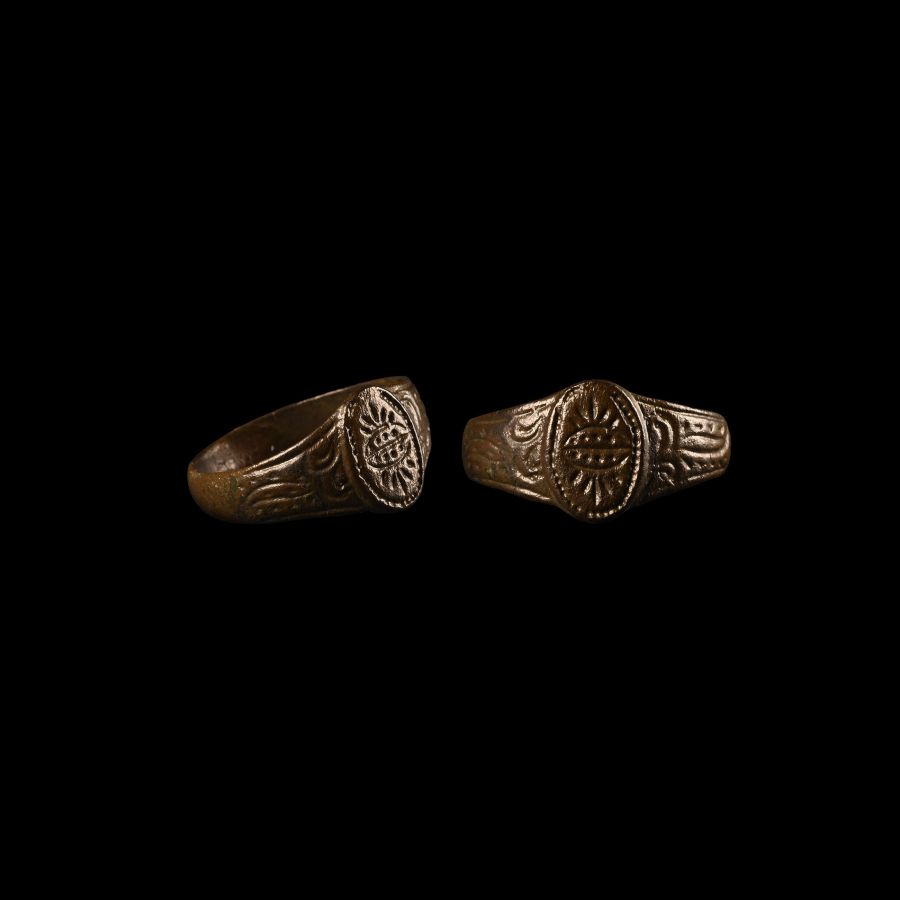
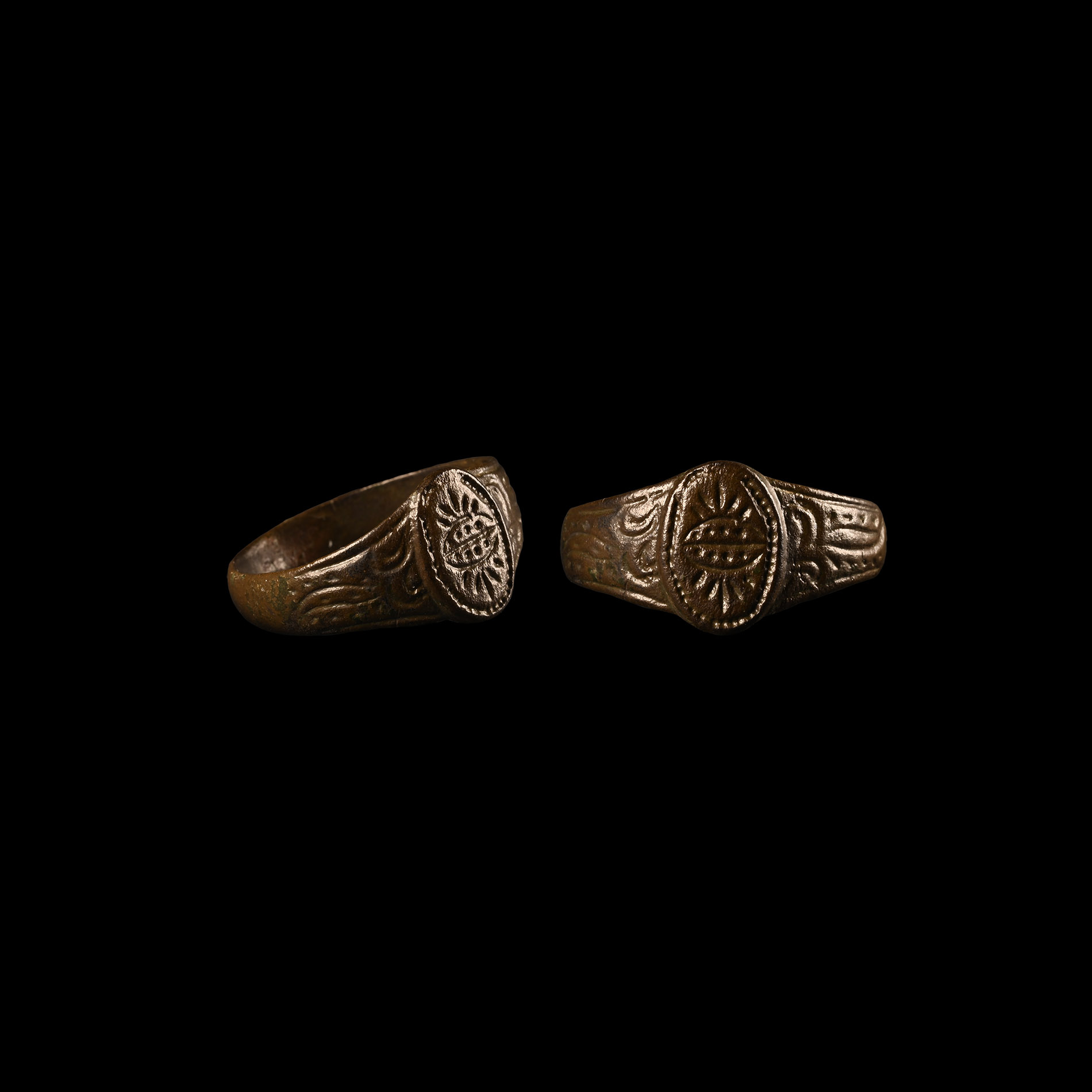
Post Medieval Bronze Ring with Armorial Motif
17TH-18TH CENTURY A.D.
7/8 in. (3.74 grams, 23.65 mm overall, 20.30 mm internal diameter (approximate size British U 1/2, USA 10 1/4, Europe 23.15, Japan 22)).
Incuse tendrils to the shoulders, stylised shield motif to the bezel. [No Reserve]
ProvenancePrivate collection formed since the 1940s.
UK art market.
Property of an Essex gentleman.
TimeLine Auctions follows a vetting process to ensure the authenticity and legality of all items, reinforcing our commitment to integrity and responsible trading. Each antiquity, antique, and coin lot undergoes thorough examination by a vetting committee of at least ten external specialists, professional trade association members, scientists, and archaeologists: Our Vetting Process
AUCTIONS:
TimeLine is a leading auction house specialising in antiquities, ancient art, collectables, natural history, coins, medals, and books. Our auctions offer museums, collectors, historians, and enthusiasts the opportunity to acquire unique and historically significant pieces.
-
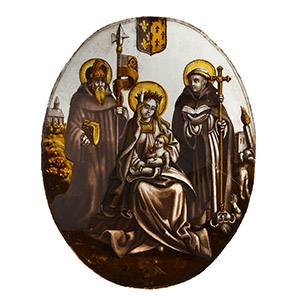
Post Medieval Stained Glass Window Pane
Circa 16th-17th century A.D.Sold for (Inc. bp): £260
Depicting the Virgin Mary with infant Christ at centre, flanked by two nimbate saints with books, one trampling a demon; armorial shield above, church in the background; repaired. 285 grams, 28.5 cm high
Acquired 1990s-early 2000s. East Anglian private collection. -
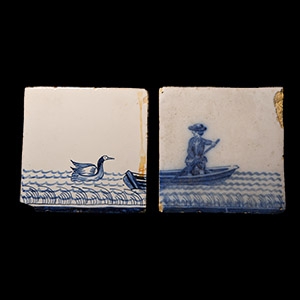
Post Medieval Glazed Ceramic Tile Set with Boating Scene
Circa 18th century A.D.Sold for (Inc. bp): £46
A duck or swan shown on the water; tiles of different thicknesses. 454 grams total, 13 x 13 cm each
Acquired 1990s-early 2000s. East Anglian private collection. -
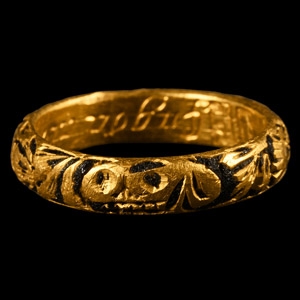
Post Medieval Gold Memento Mori Ring with Inscribed Posy 'In God Alone Wee Two Are One'
1700-1750 A.D.Sold for (Inc. bp): £4,680
Displaying large flower heads, foliage and a skull to the outer face, enhanced with black enamelling; interior inscribed in a cursive script 'In god alone wee two are one', together with possible maker's stamps 'D' and 'F' in two rectangular cartouches. 4.68 grams, 19.21 mm overall, 15.66 mm internal diameter (approximate size British J 1/2, USA 5, Europe 9.32, Japan 9)
Found whilst searching with a metal detector on 11th June 2021 by Mr Graham Higgins, near Hatford, Oxfordshire, UK. Accompanied by a copy of the report for HM Coroner by the Finds Liason Officer (FLO) for the British Museum's Portable Antiquities Scheme (PAS) for Oxfordshire under Treasure reference number OXON-FBF56A. Accompanied by a copy of the letter from HM Senior Coroner for Oxfordshire disclaiming the Crown's interest in the find.
