
Loading, please wait...
LOT 2066
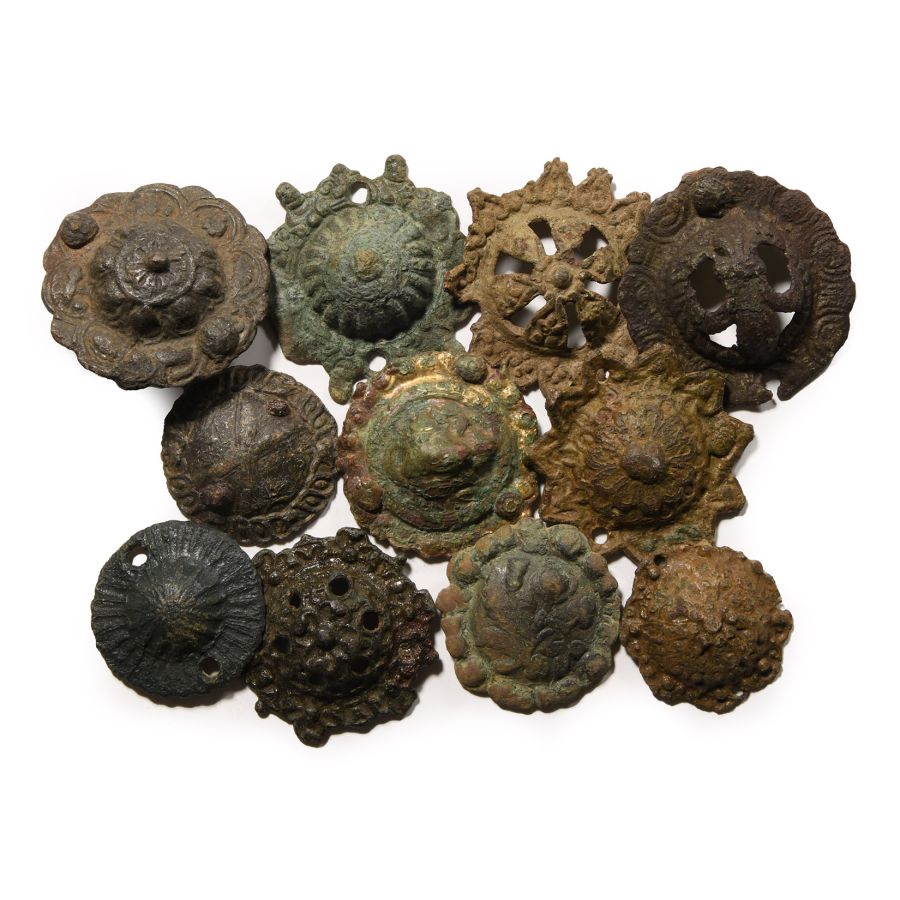
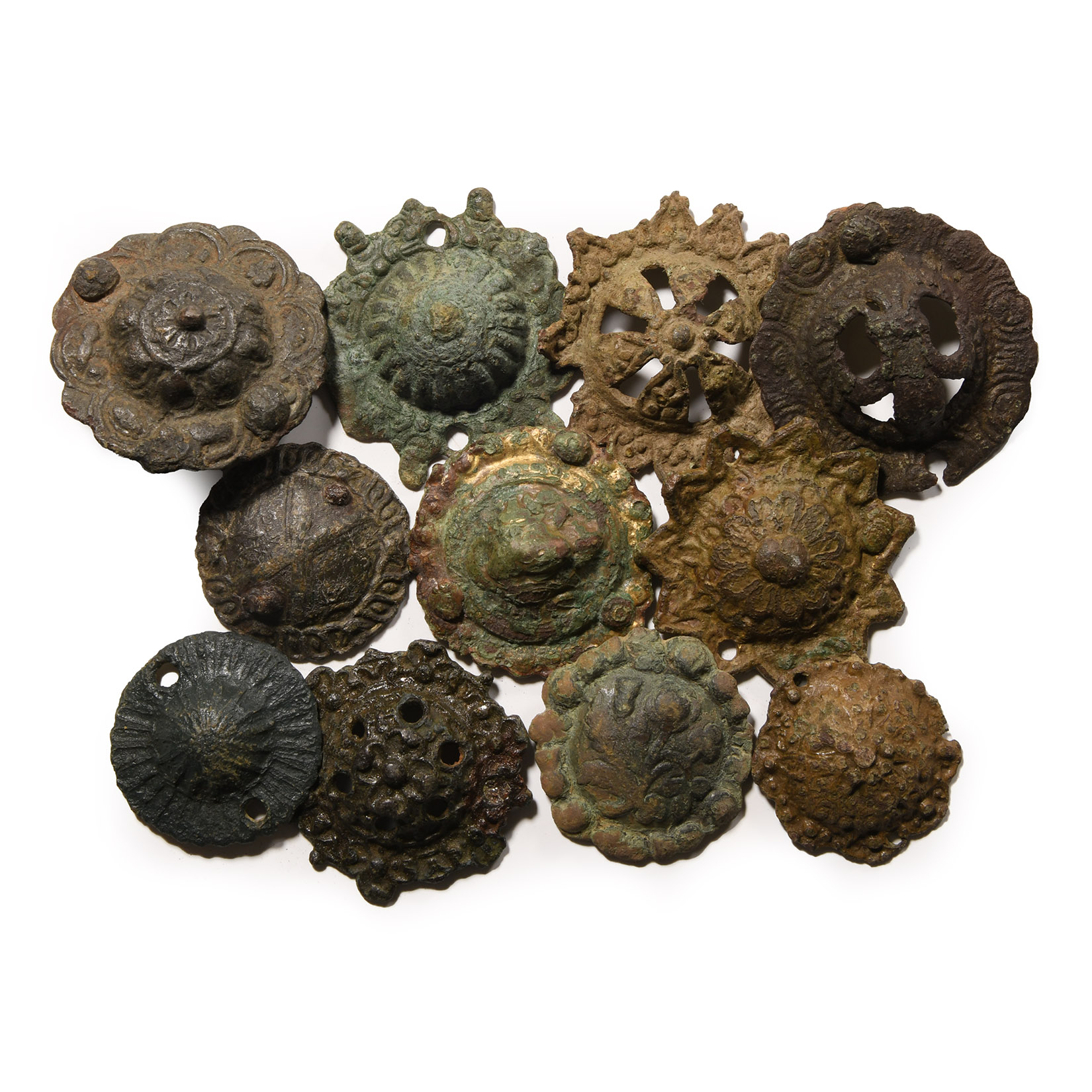
Post Medieval Bronze Horse Harness Mount Collection
16TH-19TH CENTURY A.D.
1 5/8 - 2 3/8 in. (407 grams total, 43-62 mm).
Including rosette and floral types; many of these objects are published in the Detector Finds book series. [11, No Reserve]
ProvenanceFrom the collection of the famous author, writer and speaker, Gordon Bailey, Essex, UK; formed since 1968.
CONDITIONTimeLine Auctions follows a vetting process to ensure the authenticity and legality of all items, reinforcing our commitment to integrity and responsible trading. Each antiquity, antique, and coin lot undergoes thorough examination by a vetting committee of at least ten external specialists, professional trade association members, scientists, and archaeologists: Our Vetting Process
AUCTIONS:
TimeLine is a leading auction house specialising in antiquities, ancient art, collectables, natural history, coins, medals, and books. Our auctions offer museums, collectors, historians, and enthusiasts the opportunity to acquire unique and historically significant pieces.
-
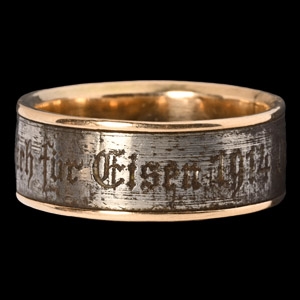
Gold and Iron 'I Gave Gold for Iron' World War I Ring
Germany, 1914 A.D.Sold for (Inc. bp): £403
Finger ring with gold core and median iron band inscribed 'Gold gab ich für Eisen 1914. Oe.S.K.'. 4.67 grams, 20.20 mm overall, 17.12 mm internal diameter (approximate size British N, USA 6 1/2, Europe 13.72, Japan 13)
Acquired on the UK art market. Property of an Essex, UK, gentleman. -
.jpg)
Framed Watercolour Painting
India, 19th century A.D.Sold for (Inc. bp): £26
A textual panel with a figural scene in watercolour at the centre, polychrome floral border; mounted in a reveal and a glazed wooden frame. 1.14 kg, 42.2 x 30.2 cm
Fine condition.
Acquired on the UK art market, 1980s-1990s. The Woodbridge collection of Indo-Persian art. -
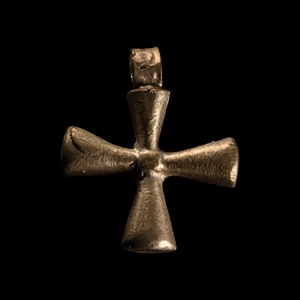
Byzantine Style Bronze Cross Pendant
19th-20th century A.D.Sold for (Inc. bp): £72
Comprising four expanding round-section arms and a broad bale. 13.2 grams, 32 mm
From a collection acquired on the UK art market from various auction houses and collections mostly before 2000. From an important Cambridgeshire estate; thence by descent.
