
Loading, please wait...

LOT 2168
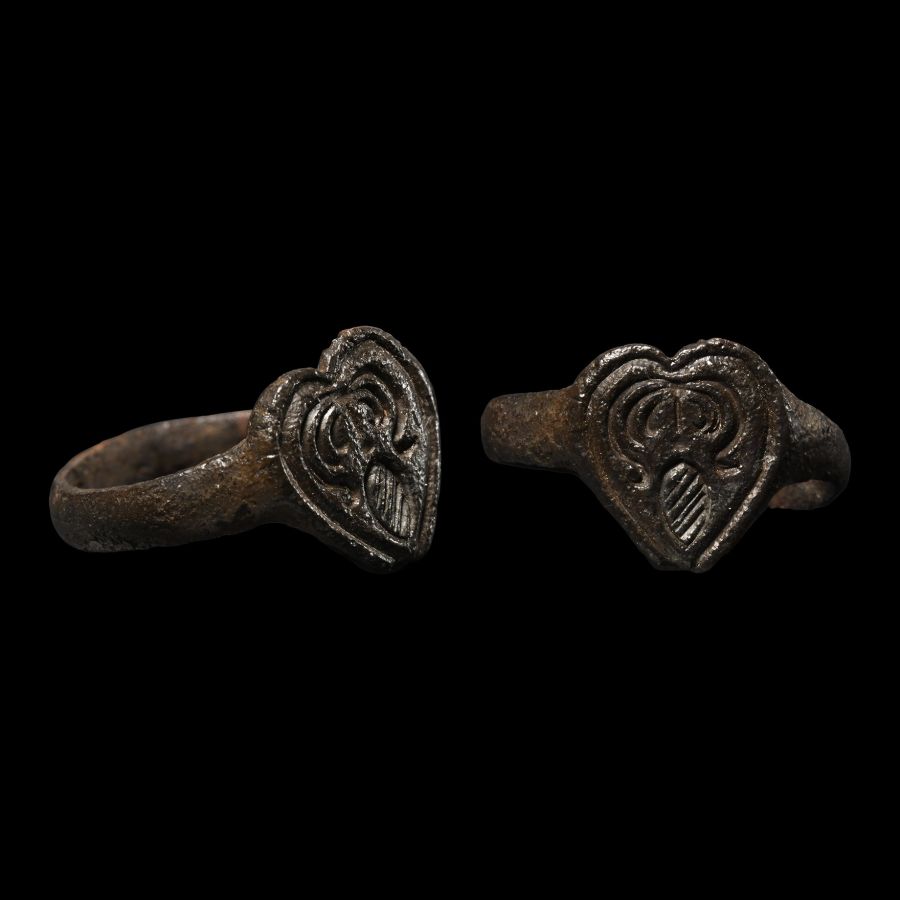
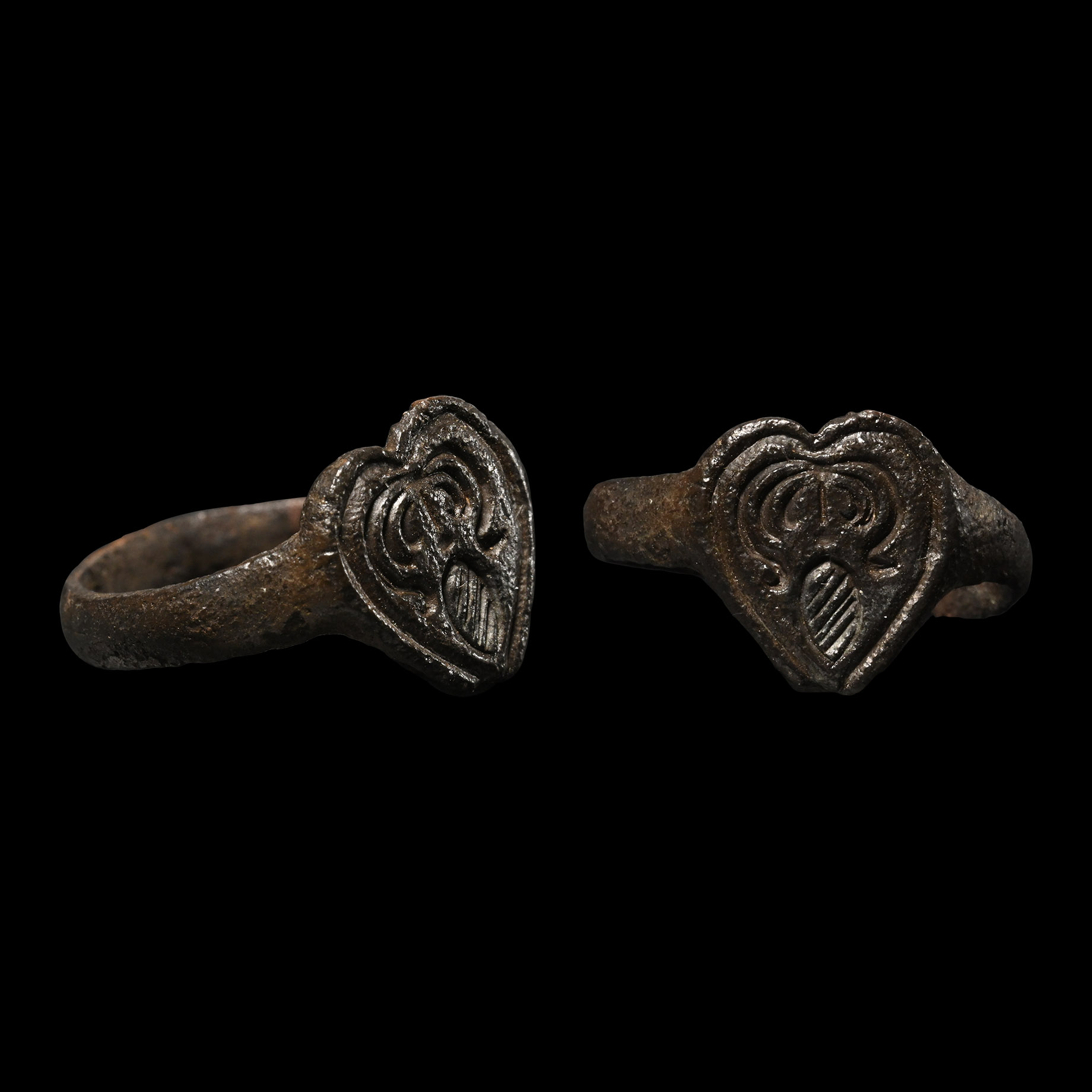
Post Medieval Bronze Heart-Shaped Ring with Pinecone
CIRCA 16TH CENTURY A.D.
3/4 in. (2.73 grams, 20.01 mm overall, 16.51 mm internal diameter (approximate size British L, USA 5 3/4, Europe 11.24, Japan 10)).
With a D-section hoop supporting a heart-shaped bezel displaying a pinecone with foliage above. [No Reserve]
ProvenancePrivate collection formed since the 1940s.
UK art market.
Property of an Essex, UK, gentleman.
TimeLine Auctions follows a vetting process to ensure the authenticity and legality of all items, reinforcing our commitment to integrity and responsible trading. Each antiquity, antique, and coin lot undergoes thorough examination by a vetting committee of at least ten external specialists, professional trade association members, scientists, and archaeologists: Our Vetting Process
AUCTIONS:
TimeLine is a leading auction house specialising in antiquities, ancient art, collectables, natural history, coins, medals, and books. Our auctions offer museums, collectors, historians, and enthusiasts the opportunity to acquire unique and historically significant pieces.
-
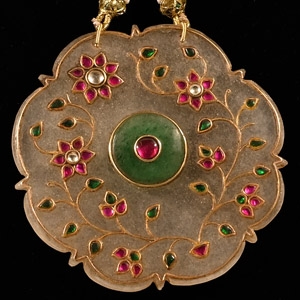
Jadeite Pendant Necklace with 'Rubies' and Other Cabochons
Late 19th-early 20th century A.D.Sold for (Inc. bp): £111
Plaque with floral design comprising inset glass cabochons, synthetic rubies and gold-coloured wire frond detailing. 65 grams, pendant height: 78 mm
Property of a South West London gentleman. -
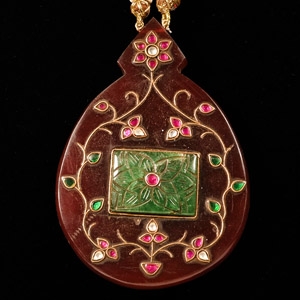
Jadeite Pendant Necklace with 'Rubies' and Other Cabochons
Late 19th-early 20th century A.D.Sold for (Inc. bp): £130
Plaque with floral design comprising inset glass cabochons, synthetic rubies and gold-coloured wire detailing, central floral plaque. 100 grams, pendant height: 98 mm
Property of a South West London gentleman. -
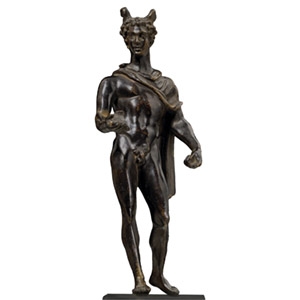
Bronze Statuette of Mercury
17th-18th century A.D.Estimate: £1,200 - 1,700 (+bp*)
Opening Bid: £600
Modelled standing nude in contrapposto stance, wearing a mantle draped to the left shoulder and secured at the right, small wings embedded in the curly hair, left hand extended in gripping attitude, right hand thrust forward holding a small coin-purse; mounted on a custom-made stand. 1.23 kg total, 24.7 cm including stand
Private collection, England.
