
Loading, please wait...

LOT 1794
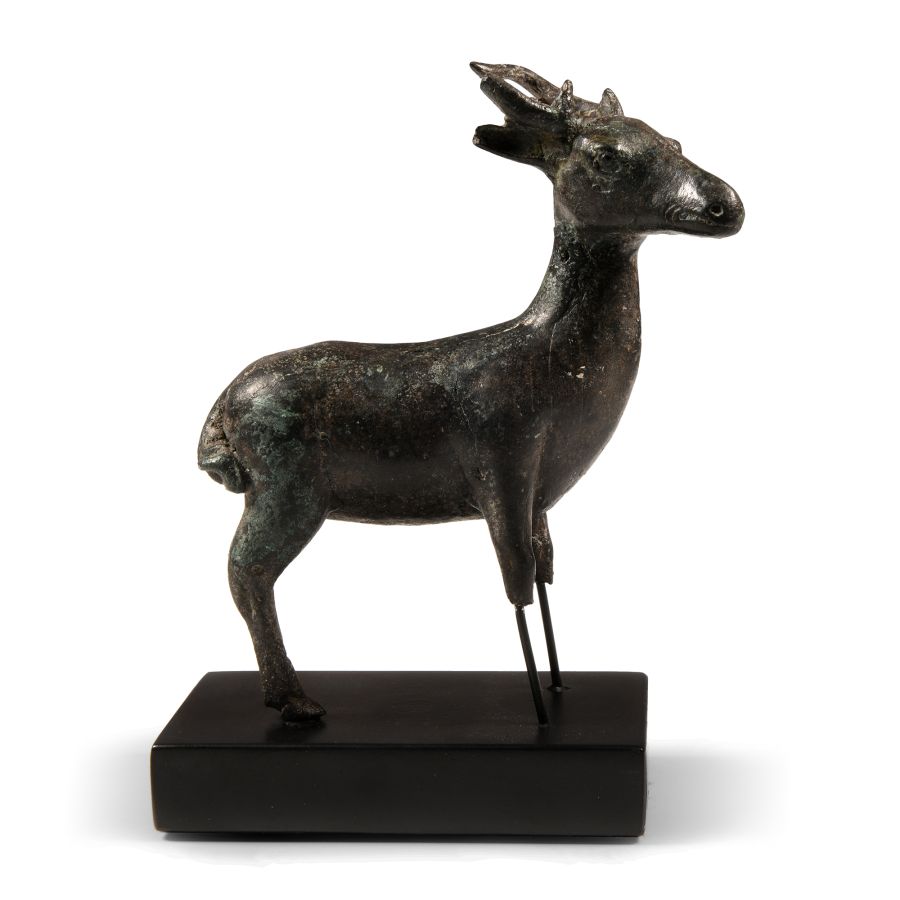
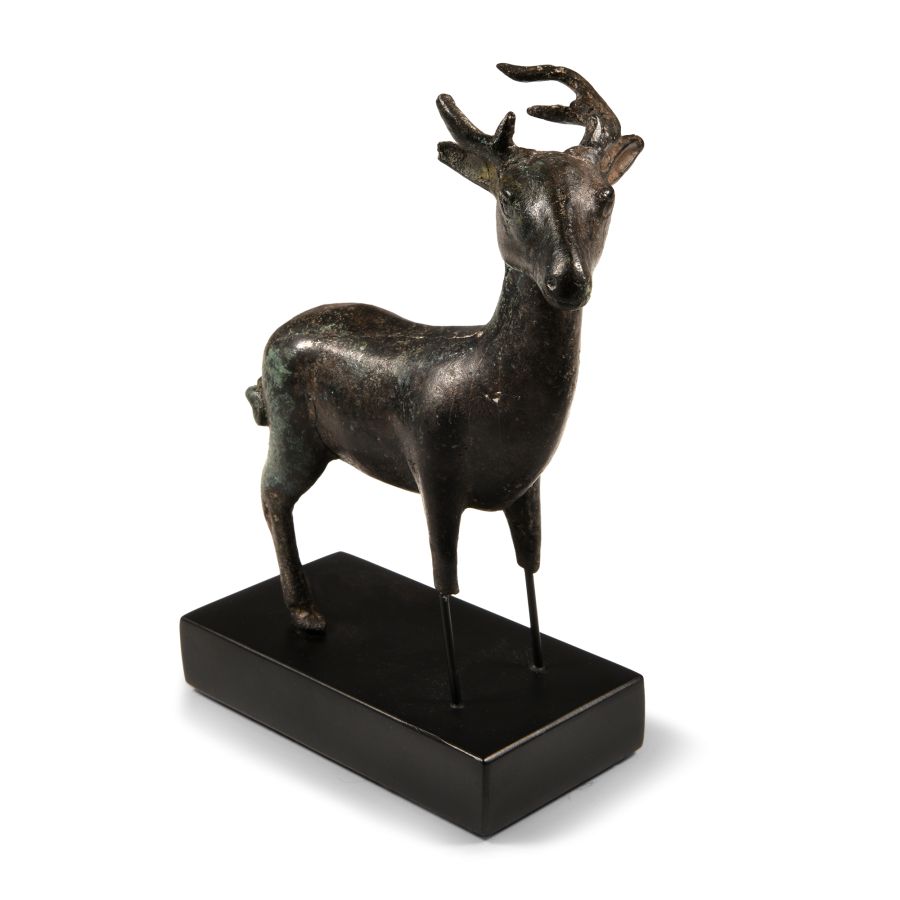
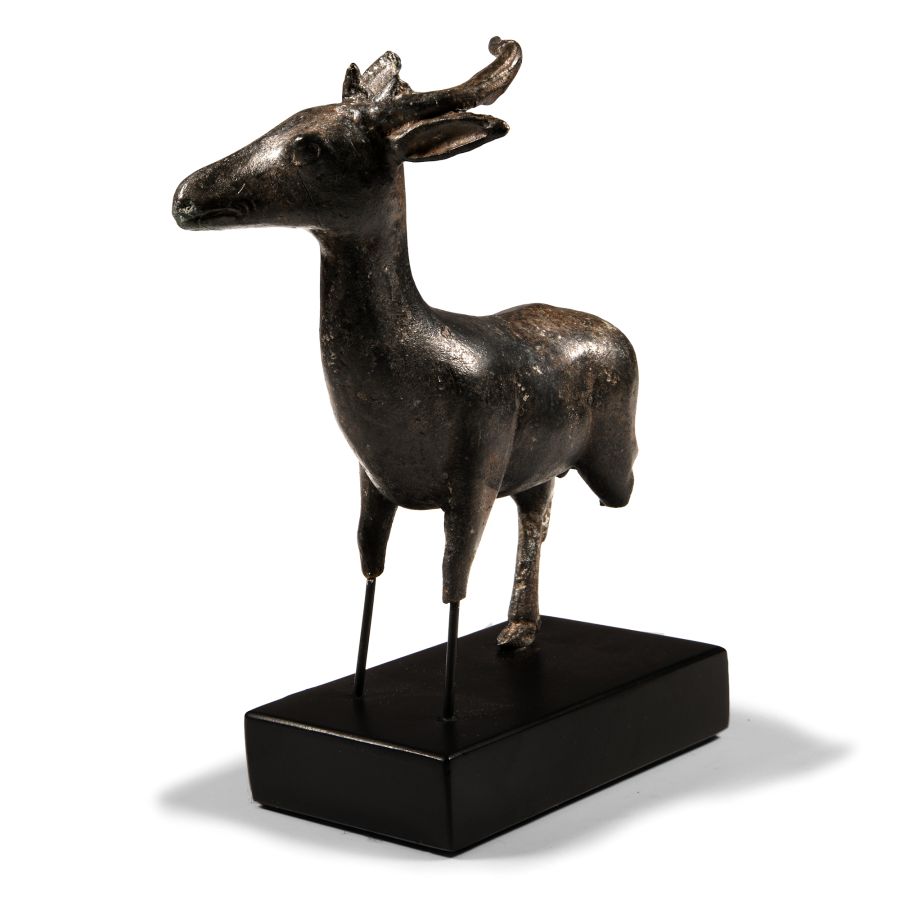
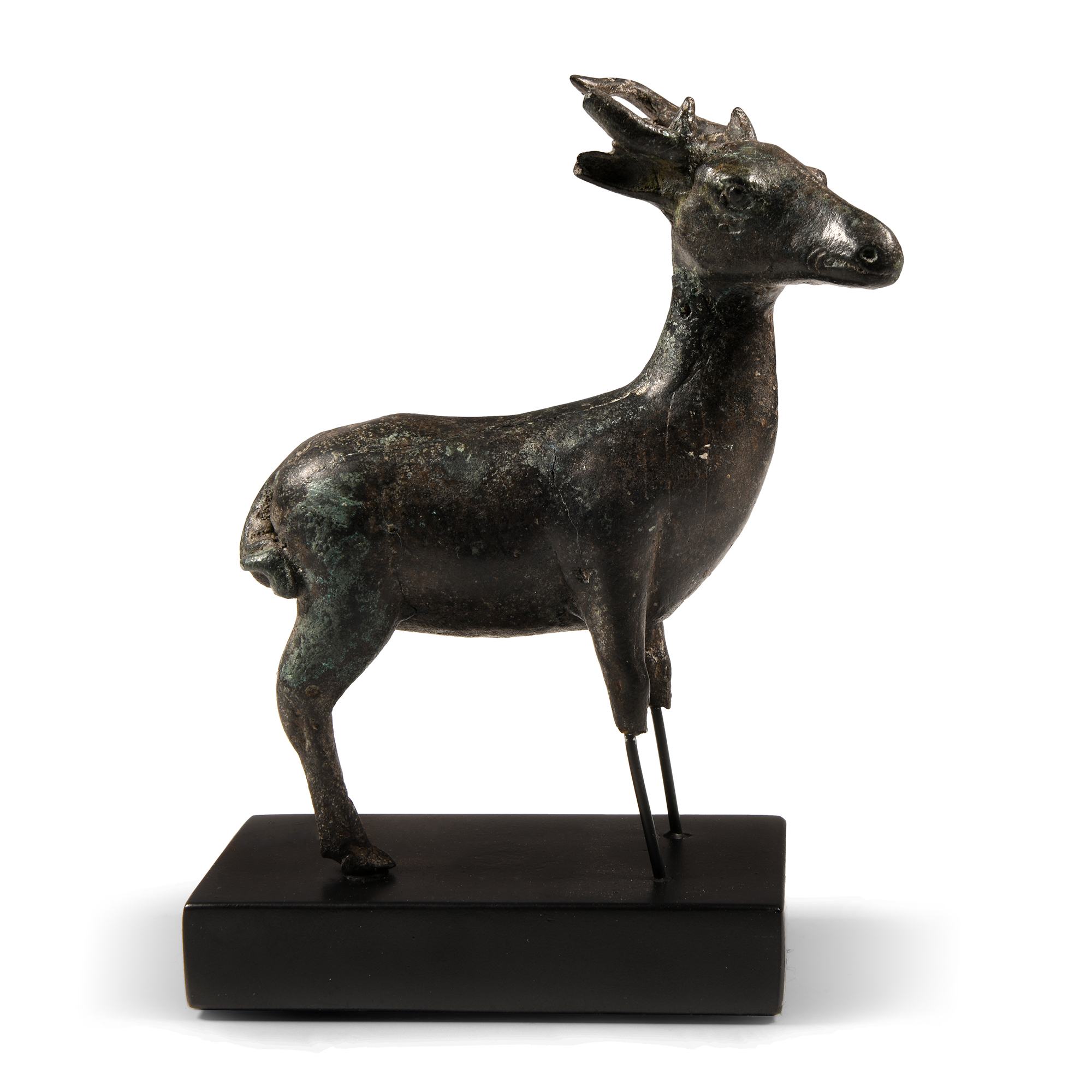
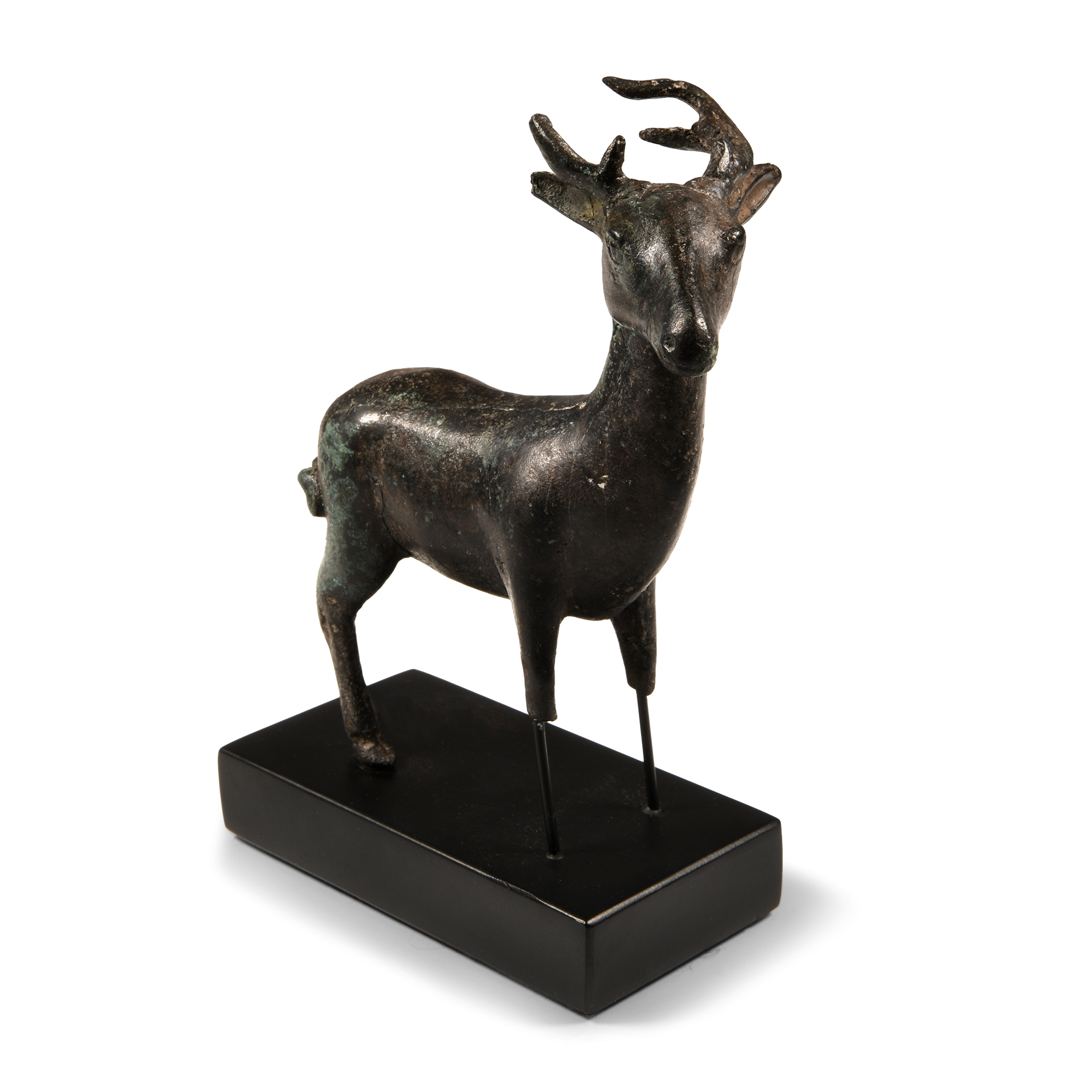
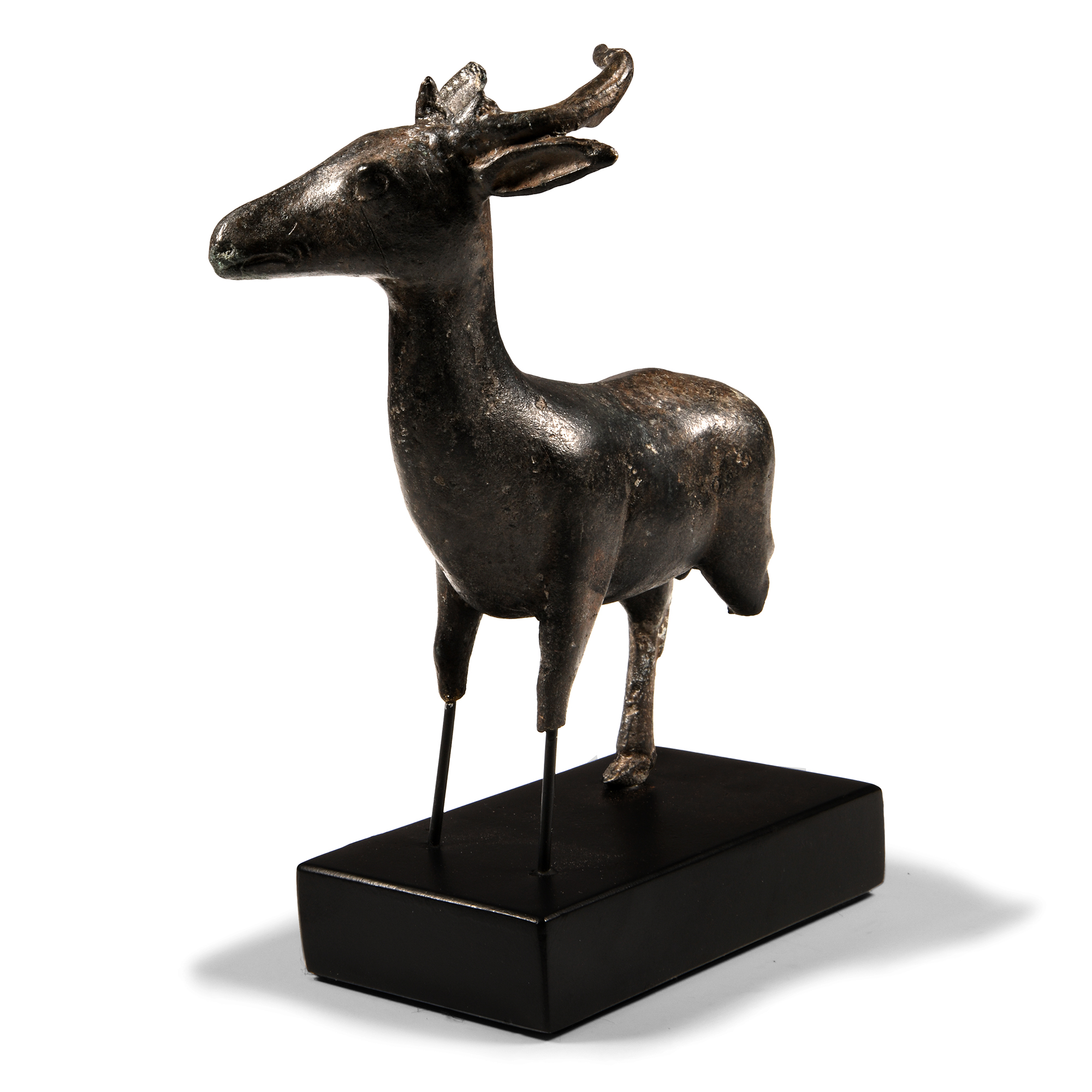
Post Medieval Bronze Deer Statuette
19TH CENTURY A.D.
6 1/8 in. (610 grams total, 15.5 cm including stand).
Modelled standing with head slightly turned, with long ears and small antlers; tail curled against the rump; mounted on a custom-made display stand. [No Reserve]
ProvenanceFrom a collection acquired on the UK art market from various auction houses and collections mostly before 2000.
From an important Cambridgeshire estate; thence by descent.
Cf. Boucher, S. & Tassinari, S., Musée de la Civilisation Gallo-Romaine a Lyon: Bronzes Antiques I. Inscriptions, Statuaire, Vaisselle Lyon, 1976, item 96, for type; see also a similar statuette in Louvre, inventory no.214498, in Boucher, S., Recherches sur les bronzes figurés de Gaule pré-Romaine et Romaine, Rome, Ecole Française de Rome, ( Bibliothèque des écoles Françaises d'Athènes et de Rome, 228), 1976, p.40, no. 380.
FootnotesMany deposits of Gallo-Roman statuettes contain votive statuettes not particularly linked to the classical artistic style. The temple deposits in which these animalistic statuettes (series of stags or boars) were discovered were certainly Roman, but the animals could have belonged to cults of Celtic origin.
CONDITIONTimeLine Auctions follows a vetting process to ensure the authenticity and legality of all items, reinforcing our commitment to integrity and responsible trading. Each antiquity, antique, and coin lot undergoes thorough examination by a vetting committee of at least ten external specialists, professional trade association members, scientists, and archaeologists: Our Vetting Process
AUCTIONS:
TimeLine is a leading auction house specialising in antiquities, ancient art, collectables, natural history, coins, medals, and books. Our auctions offer museums, collectors, historians, and enthusiasts the opportunity to acquire unique and historically significant pieces.
-
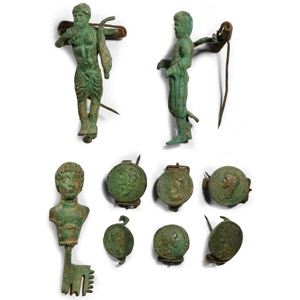
Bronze Brooch Group
20th century A.D.Sold for (Inc. bp): £65
Comprising: plate brooches with Roman coin designs; bow brooches with large bronze figures forming the bow. 912 grams total, 4-12.3 cm
Property of a European gentleman. -
.jpg)
Post Medieval Gold Ring with Cabochon Garnet
17th century A.D.Estimate: £1,200 - 1,700 (+bp*)
Opening Bid: £600
With flat shoulders, rosette bezel with inset garnet cabochon. 2.76 grams, 23.72 mm overall, 19.94 x 16.02 mm internal diameter (approximate size British N, USA 6 1/2, Europe 13.72, Japan 13)
Ex property of a late Japanese collector, 1970s. -
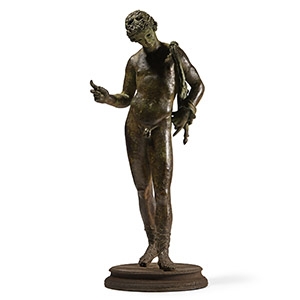
Naked Statue of Narcissus
Naples, late 19th-early 20th century A.D.Sold for (Inc. bp): £1,105
A metal statue of Narcissus standing nude looking down, with goatskin mantle draped on the left shoulder, cothumus sandals laced to the feet, wreath of berries in the hair, left hand with thumb and finger on hip and right hand with thumb and forefinger extended; stepped discoid base with leaf patterning. 3.66 kg total, 40 cm including stand
Acquired from Sworders, Stansted Mountfitchet, 14 July 2010, lot 1352. From an important Cambridgeshire estate; thence by descent.
In Greek mythology, Narcissus was a hunter from Thespiae in Boeotia who was known for his beauty. He was proud, in that he disdained those who loved him, causing some to commit suicide in order to prove their unrelenting devotion to his striking beauty.
