
Loading, please wait...
LOT 1439
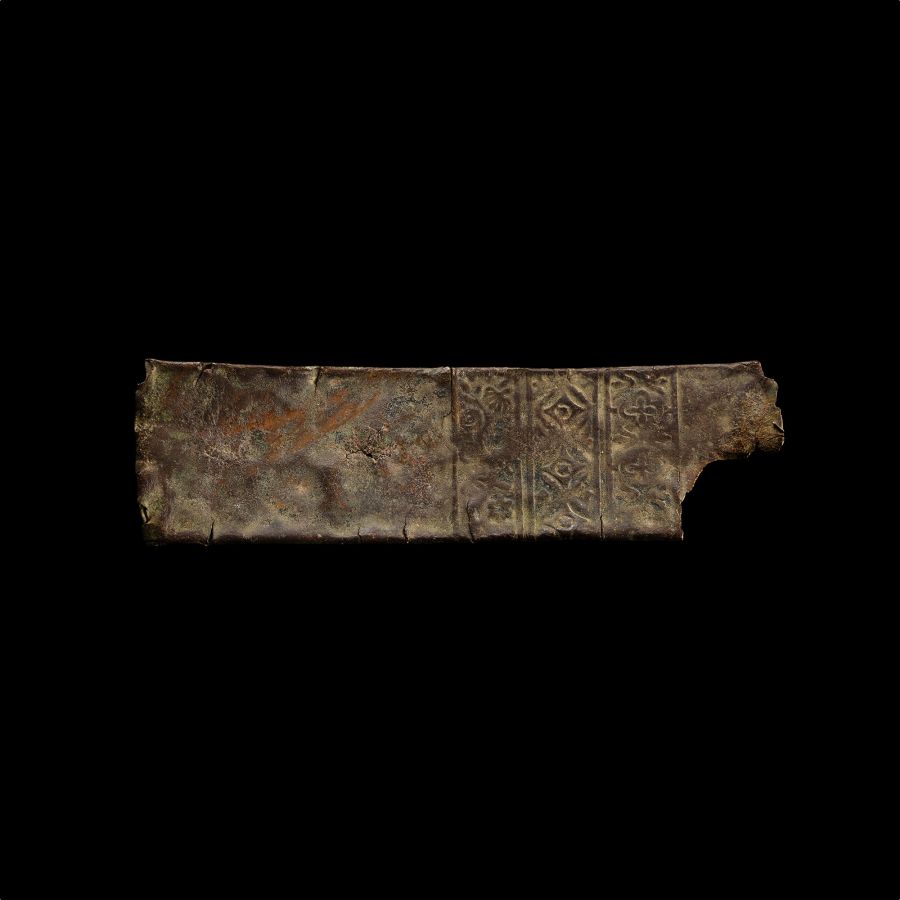
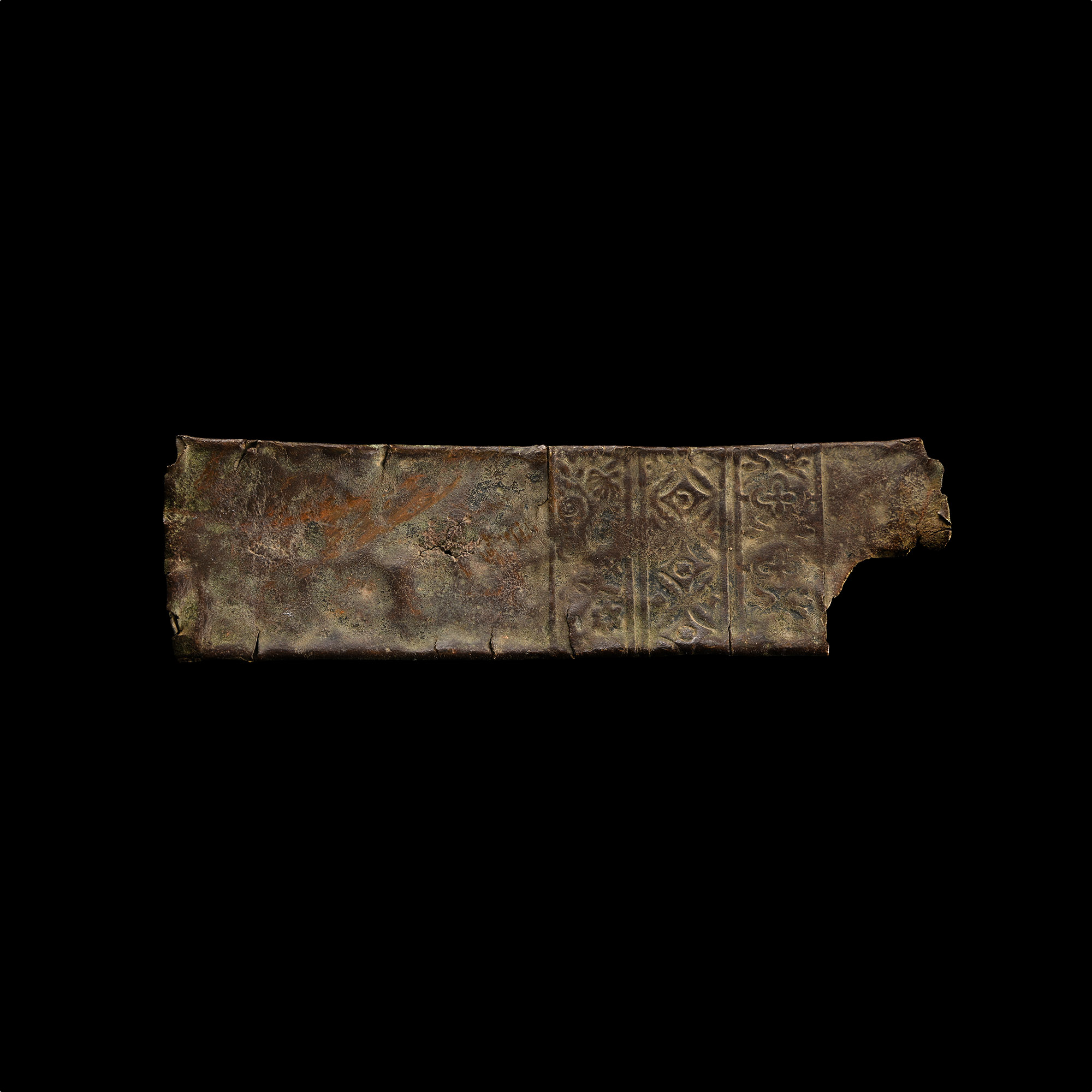
Post Medieval Bronze Decorated Scabbard Section
17TH-19TH CENTURY A.D.
5 1/8 in. (39 grams, 13 cm).
Fragment of scabbard for a narrow two-edged sword; with three transverse bands of impressed crosses, lozenges and rosettes; edges butted to reverse. [No Reserve]
ProvenanceFrom the collection of a Buckinghamshire, UK, collector established from the earlier 1960s.
CONDITIONTimeLine Auctions follows a vetting process to ensure the authenticity and legality of all items, reinforcing our commitment to integrity and responsible trading. Each antiquity, antique, and coin lot undergoes thorough examination by a vetting committee of at least ten external specialists, professional trade association members, scientists, and archaeologists: Our Vetting Process
AUCTIONS:
TimeLine is a leading auction house specialising in antiquities, ancient art, collectables, natural history, coins, medals, and books. Our auctions offer museums, collectors, historians, and enthusiasts the opportunity to acquire unique and historically significant pieces.
-
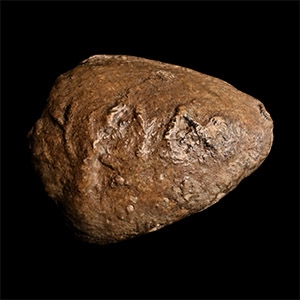
Greek Macedonian Inscribed Impacted Lead Slingshot
3rd-1st century B.C.Sold for (Inc. bp): £98
Biconical in profile with casting seam and reserved legend 'ΥΔΑ'. 40.5 grams, 25 mm
Ex German art market, 2000s. Acquired from an EU collector living in London. From the collection of a Surrey, UK, gentleman.
The leaden bullets, which were thrown from slings, were called in Greek Molivdainai (μολύβδαιναι), and in Latin glandes; the former indicating the material ‘lead’, the latter the shape ‘acorns’. These bullets, were cast in a mould and bore letters or devices, or both, on two sides or on only one. In form they were more like an almond than an acorn, but many are pointed at both ends; in size, they are generally about one inch and a half in maximum length, and under one inch in maximum width. -
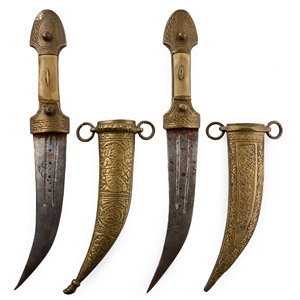
Western Asiatic Style Dagger Pair
20th century A.D.Sold for (Inc. bp): £65
Each a curved steel blade with two fullers, stamped 'SYRIE'; waisted bronze grip with applied bone panels, tendril ornament and 'SYRIA' legend to reverse; cast scabbard with suspension rings, guilloche decoration and 'SYRIA' legend. 655 grams total, 26.5-27 cm
Acquired during the 1960s. From an old North London oriental and ethnographical collection. From the property of a late Lincolnshire, UK, gentleman. -
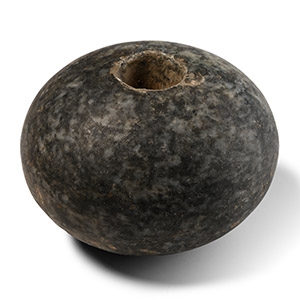
Mesopotamian Mottled Grey Stone Macehead
3rd-2nd millennium B.C.Sold for (Inc. bp): £117
With squat oblate body and central mounting hole. 434 grams, 73 mm
Ex 1990s collection and with a central London gallery.
