Loading, please wait...

Post Medieval Bronze Censer Post Medieval Bronze Censer Post Medieval Bronze Censer Post Medieval Bronze Censer Post Medieval Bronze Censer Post Medieval Bronze Censer
Use mousewheel to zoom in and out, click to enlarge
Details

LOT 1889

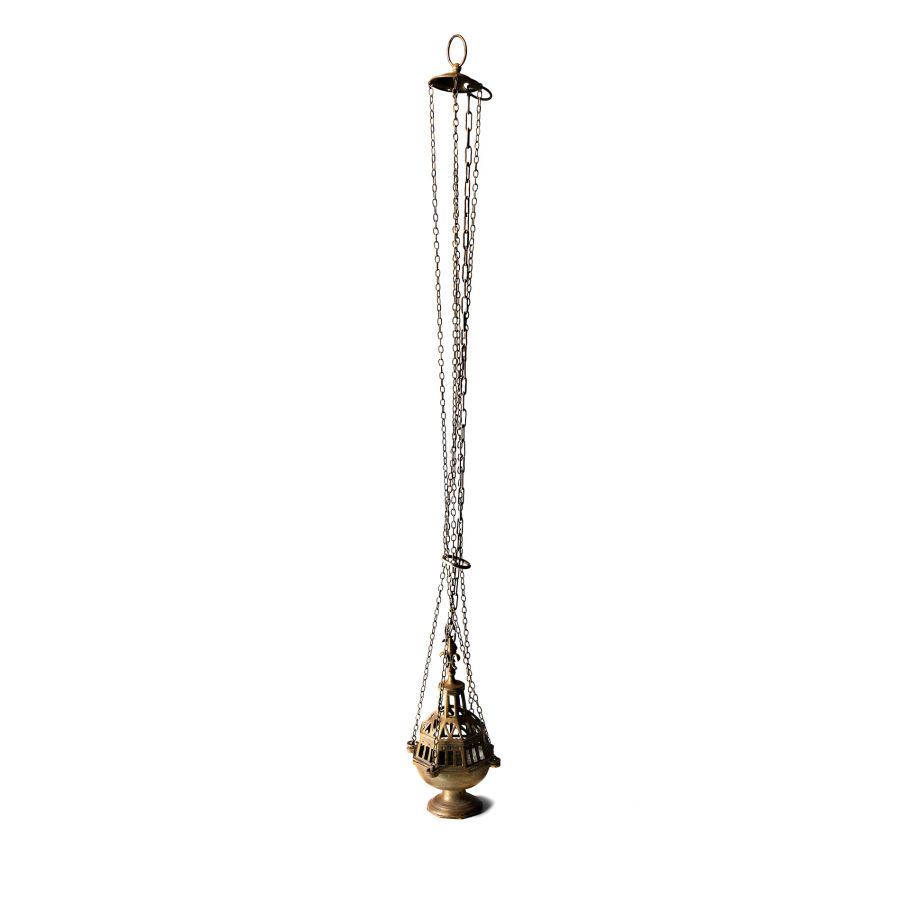
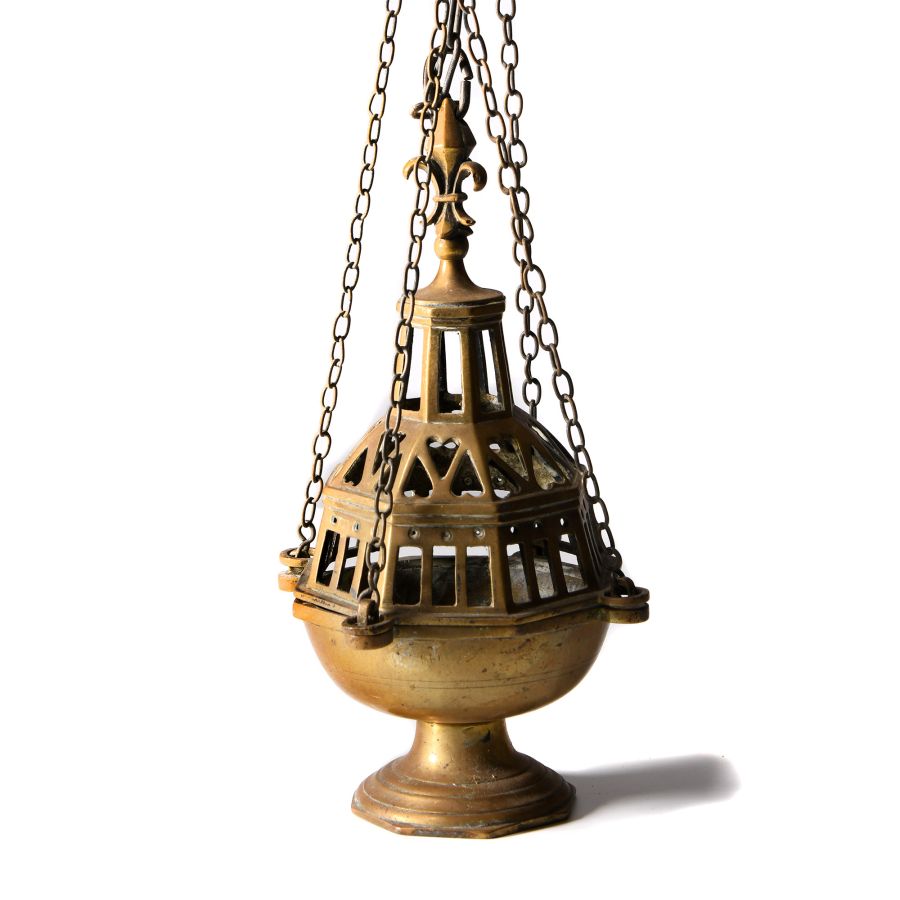
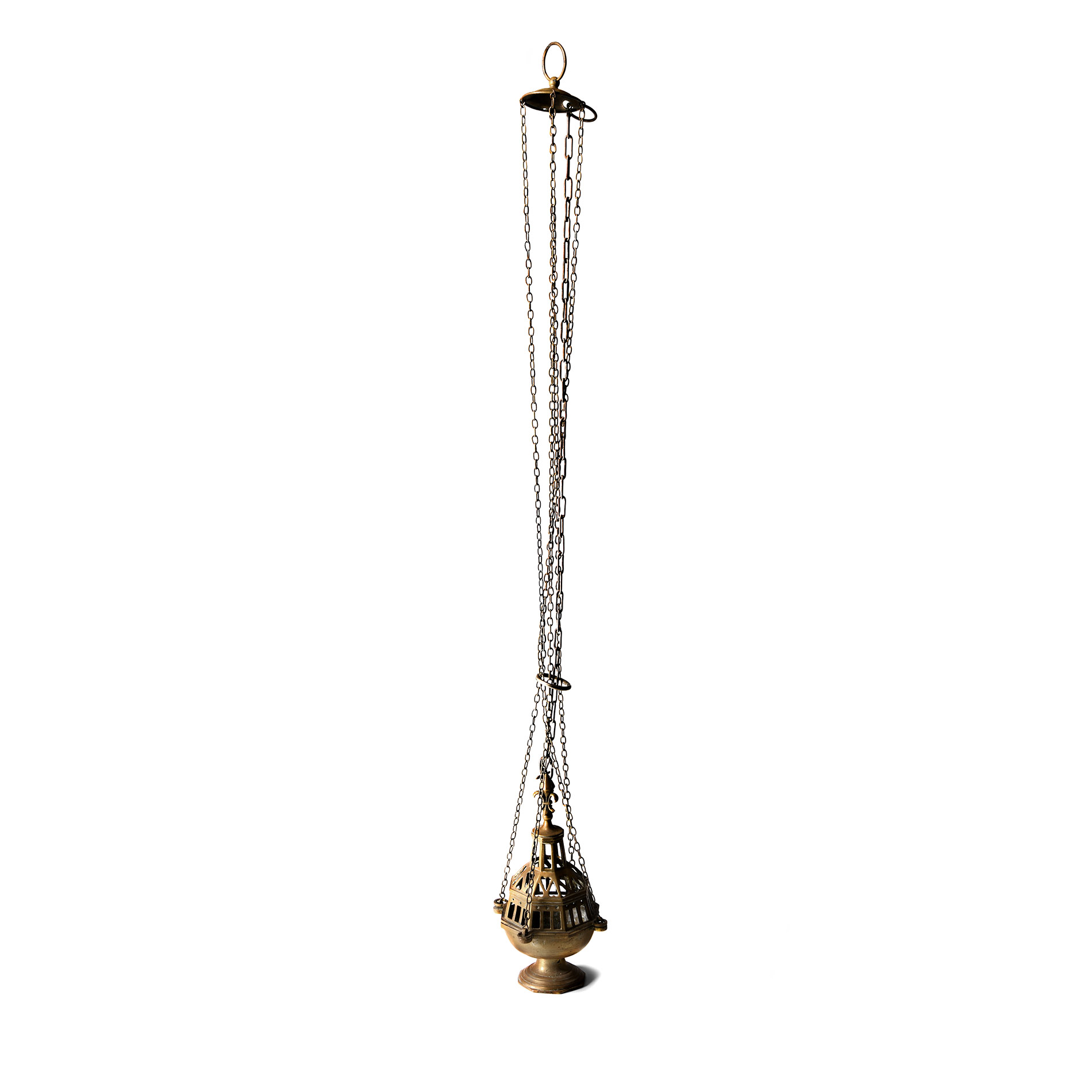
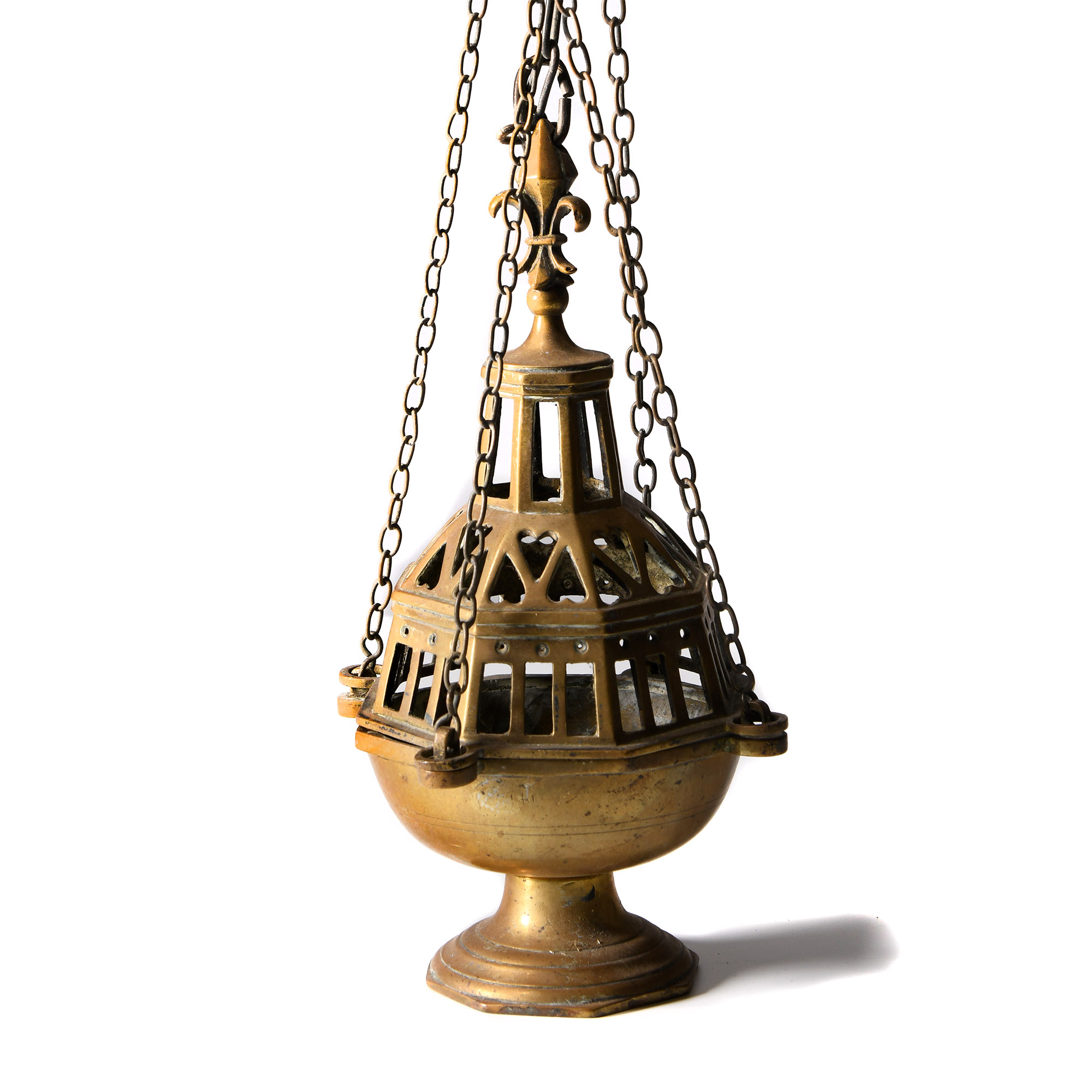
Post Medieval Bronze Censer

20TH CENTURY A.D.

33 1/2 in. (930 grams, 85 cm high).

In Renaissance style, composed of a hemispherical bowl with four fixing lobes, foot and upper body octagonal with pierced geometric design, ornamental finial and chain for suspension. [No Reserve]

Provenance

Acquired 1990s-early 2000s.
East Anglian private collection.

CONDITION
VETTING:

TimeLine Auctions follows a vetting process to ensure the authenticity and legality of all items, reinforcing our commitment to integrity and responsible trading. Each antiquity, antique, and coin lot undergoes thorough examination by a vetting committee of at least ten external specialists, professional trade association members, scientists, and archaeologists: Our Vetting Process


AUCTIONS:

TimeLine is a leading auction house specialising in antiquities, ancient art, collectables, natural history, coins, medals, and books. Our auctions offer museums, collectors, historians, and enthusiasts the opportunity to acquire unique and historically significant pieces.

LOT 1889

Post Medieval Bronze Censer

Sold for (Inc. bp): £20

Print page

RELATED LOTS
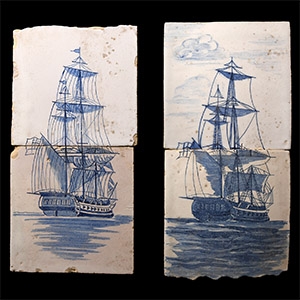
  • Post Medieval Dutch Glazed Ceramic Tile Group
    Post Medieval Dutch Glazed Ceramic Tile Group
    Circa 17th-18th century A.D.

    Sold for (Inc. bp): £33

    Displaying polychrome glazes and designs including figures, flowers, animals and scenes showing sailing vessels in ports. 1.8 kg total, 13 x 13 cm each


    Acquired 1990s-early 2000s. East Anglian private collection.

    Lot Details

  • German Gilt Wooden Transfiguration Icon
    German Gilt Wooden Transfiguration Icon
    19th-20th century A.D.

    Estimate: £800 - 1,000 (+bp*)

    Opening Bid: £444

    In 13th century A.D. style, Jesus represented in the centre in blue and white light, with shining clothes; to his right Moses, to his left Elijah; the mountain of Tabor represented in rocky fragments below, the disciples John, his brother James and Saint Peter in awe and terrified by the divine event; remains of a wax seal impression to reverse, together with a loop for suspension. 783 grams, 30 cm


    Ex French gallery, Paris.

    The icon was realised following the tradition of the Novgorod school of 13th century A.D. A mandorla of blue and white light was usually used in most oriental icons. Not all icons of Christ have mandorlas and they are often used when representing divine light. The mandorla thus represents the ‘uncreated light’ that shines on the three disciples in the icons of Transfiguration. During the Feast of Transfiguration, the Orthodox sing a troparion which states that the disciples 'beheld the light as far as they were able to see it' signifying the different levels of their spiritual progress. Sometimes a star is superimposed on the mandorla, but here the stars are are impressed all around the edge. The mandorla represents the 'luminous cloud' and is another symbol of light. The luminous cloud, a sign of the Holy Spirit, descended on the mountain at the moment of the Transfiguration.

    Lot Details

  • Post Medieval Stained Glass Window Pane
    Post Medieval Stained Glass Window Pane
    Circa 16th-17th century A.D.

    Sold for (Inc. bp): £91

    With lead cames, depicting a scene with John the Baptist baptising Christ. 249 grams, 20.3 cm high


    Acquired 1990s-early 2000s. East Anglian private collection.

    Lot Details

Stay up-to-date with the latest from TimeLine Auctions by joining our mailing list