
Loading, please wait...
LOT 1866
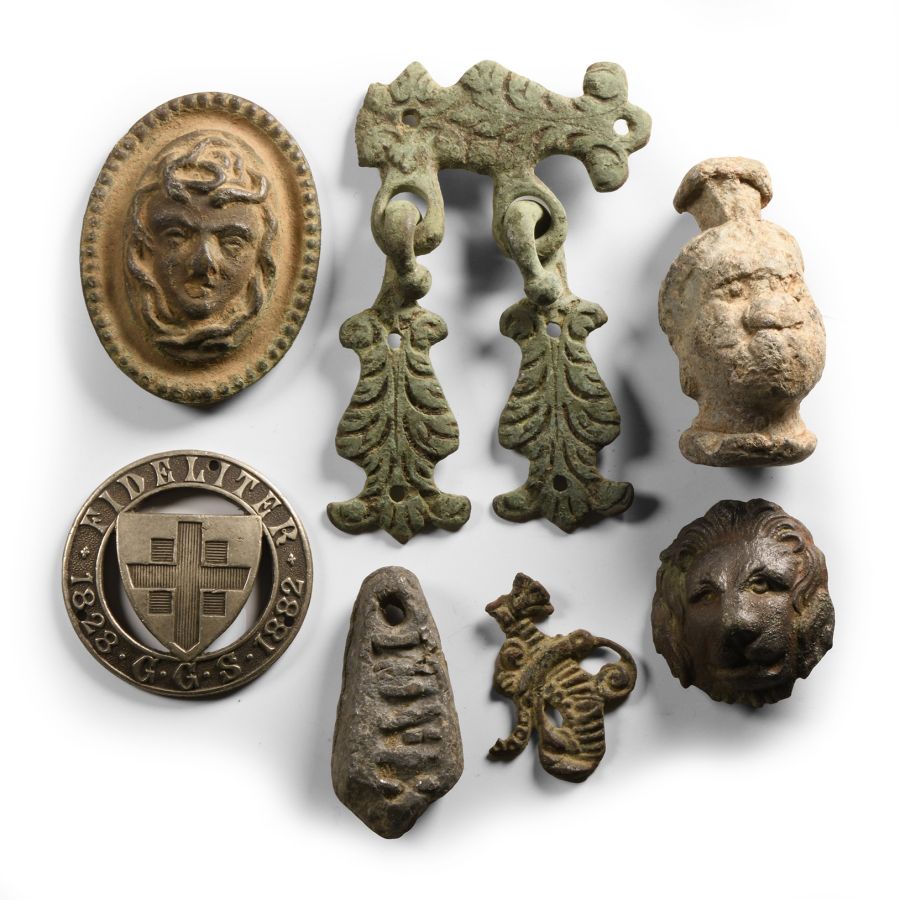
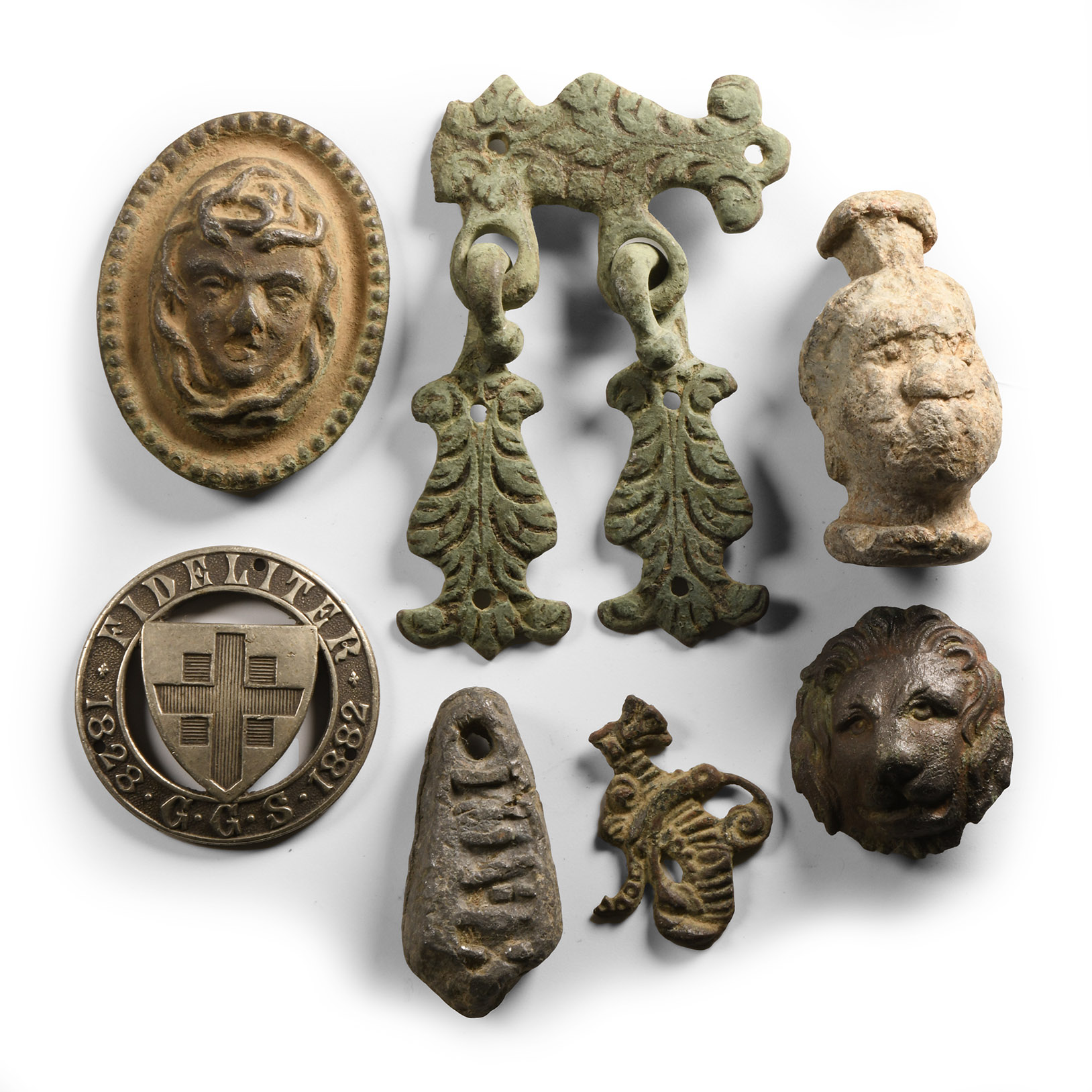
Post Medieval Bronze and Silver Artefact Group
16TH-19TH CENTURY A.D.
1 1/8 - 2 3/4 in. (219 grams total, 30-70 mm).
Including a lion-mask appliqué, school badge dated 1882, plaque with gorgoneion and other items. [7, No Reserve]
ProvenanceFound various sites in Essex, UK.
Property of an Essex collector.
TimeLine Auctions follows a vetting process to ensure the authenticity and legality of all items, reinforcing our commitment to integrity and responsible trading. Each antiquity, antique, and coin lot undergoes thorough examination by a vetting committee of at least ten external specialists, professional trade association members, scientists, and archaeologists: Our Vetting Process
AUCTIONS:
TimeLine is a leading auction house specialising in antiquities, ancient art, collectables, natural history, coins, medals, and books. Our auctions offer museums, collectors, historians, and enthusiasts the opportunity to acquire unique and historically significant pieces.
-
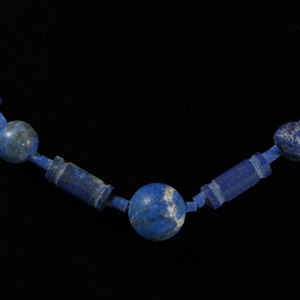
Bactrian Style Lapis Lazuli Bead Necklace
20th century A.D.Sold for (Inc. bp): £26
Restrung designer necklace with large cylindrical and spherical beads and interstitial groups of annular beads. 35.9 grams, 44 cm
Acquired on the London, UK, art market in the 1990s. Ex London, UK, gallery. -
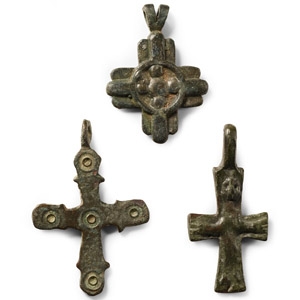
Post Medieval Bronze Cross Pendant Group
17th-18th century A.D.Sold for (Inc. bp): £156
Including figural and other types. 17.1 grams total, 34-42 mm
Ex German art market, 2000s. Acquired from an EU collector living in London. From the collection of Surrey, UK, gentleman. -
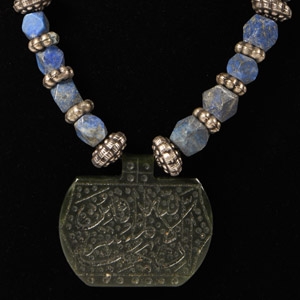
Bead Necklace with Calligraphic Pendant
19th-20th century A.D.Estimate: £150 - 200 (+bp*)
Opening Bid: £75
Restrung graduated group of polyhedral lapis lazuli beads with modern beaded and rosette spacers; pelta-shaped pendant with calligraphic script on a textured surface 142 grams, 64 cm
From the private collection of a North West London, UK, gentleman.
