
Loading, please wait...
LOT 2075
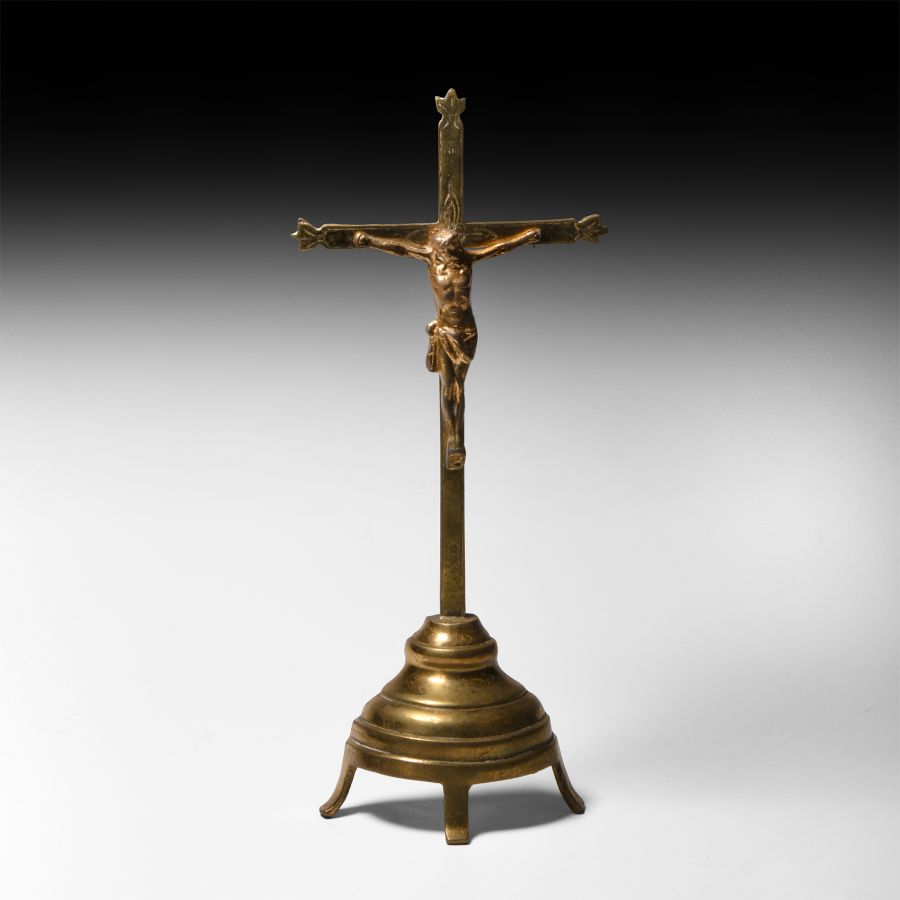
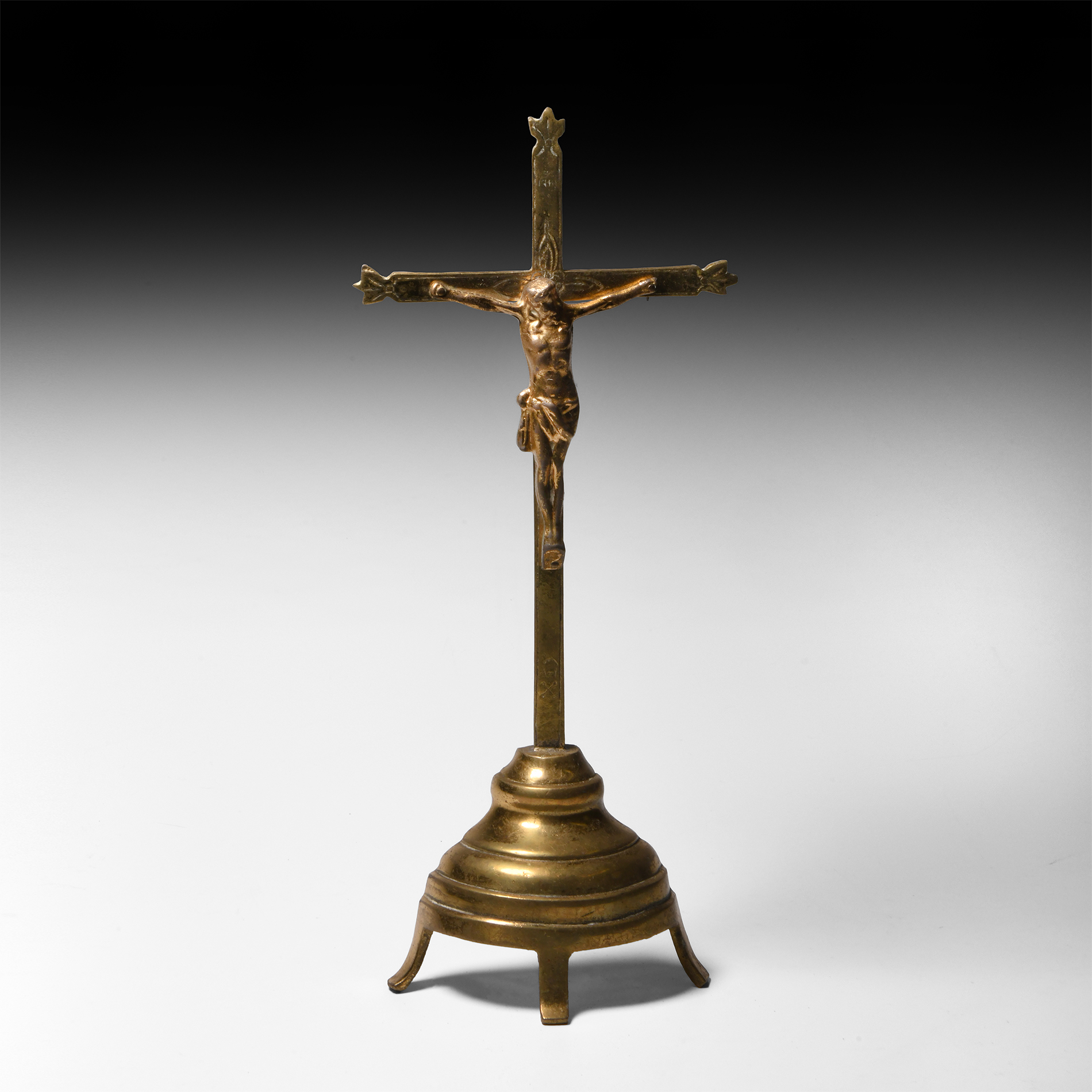
Post Medieval Brass Crucifix
19TH CENTURY A.D.
12 3/8 in. (392 grams, 31.5 cm high).
Set on a free-standing base with hollow reverse, skull and crossed bone and floral detailing to the cross and worn INRI lettering. [No Reserve]
ProvenanceAcquired 1960s-1990s.
Late Alison Barker collection, a retired London barrister.
TimeLine Auctions follows a vetting process to ensure the authenticity and legality of all items, reinforcing our commitment to integrity and responsible trading. Each antiquity, antique, and coin lot undergoes thorough examination by a vetting committee of at least ten external specialists, professional trade association members, scientists, and archaeologists: Our Vetting Process
AUCTIONS:
TimeLine is a leading auction house specialising in antiquities, ancient art, collectables, natural history, coins, medals, and books. Our auctions offer museums, collectors, historians, and enthusiasts the opportunity to acquire unique and historically significant pieces.
-
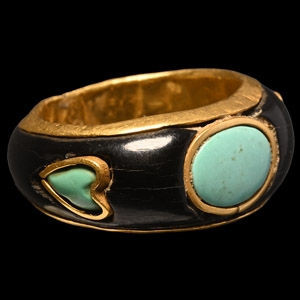
Bactrian Gold Love Ring with Turquoise Hearts
Late 19th-early 20th century A.D. or earlierSold for (Inc. bp): £618
Composed of a gold centre with expanding bezel, central oval turquoise cabochon flanked by heart-shaped stones, all with gold settings against a horn or lignum vitae field. 3.40 grams, 20.99 mm overall, 14.89 mm internal diameter (approximate size British G 1/2, USA 3 1/2, Europe 5.55, Japan 5)
Swiss art market, 1996. -
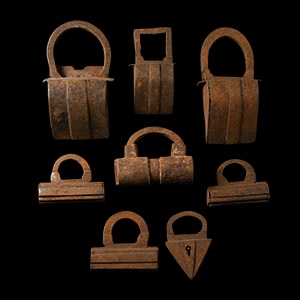
Tudor Period and Later Iron Padlock Collection
Circa 16th-17th century A.D.Sold for (Inc. bp): £143
Comprising a variety of types of padlocks, most retaining their arm and ceased in the locked position. 431 grams total, 50-89 mm
Acquired 1990s-early 2000s. East Anglian private collection. -
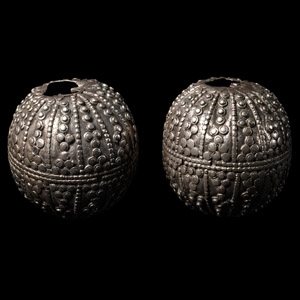
Large Post Medieval Silver Bead Pair
Circa 17th-18th century A.D.Sold for (Inc. bp): £26
Ovoid in form and decorated with pellets arranged in vertical segments above and below a medial band; hollow-form, possibly from the Middle East. 53 grams total, 3.6-4 cm
UK private collection formed before 2000. Ex North London, UK, gallery.
