
Loading, please wait...
LOT 1941
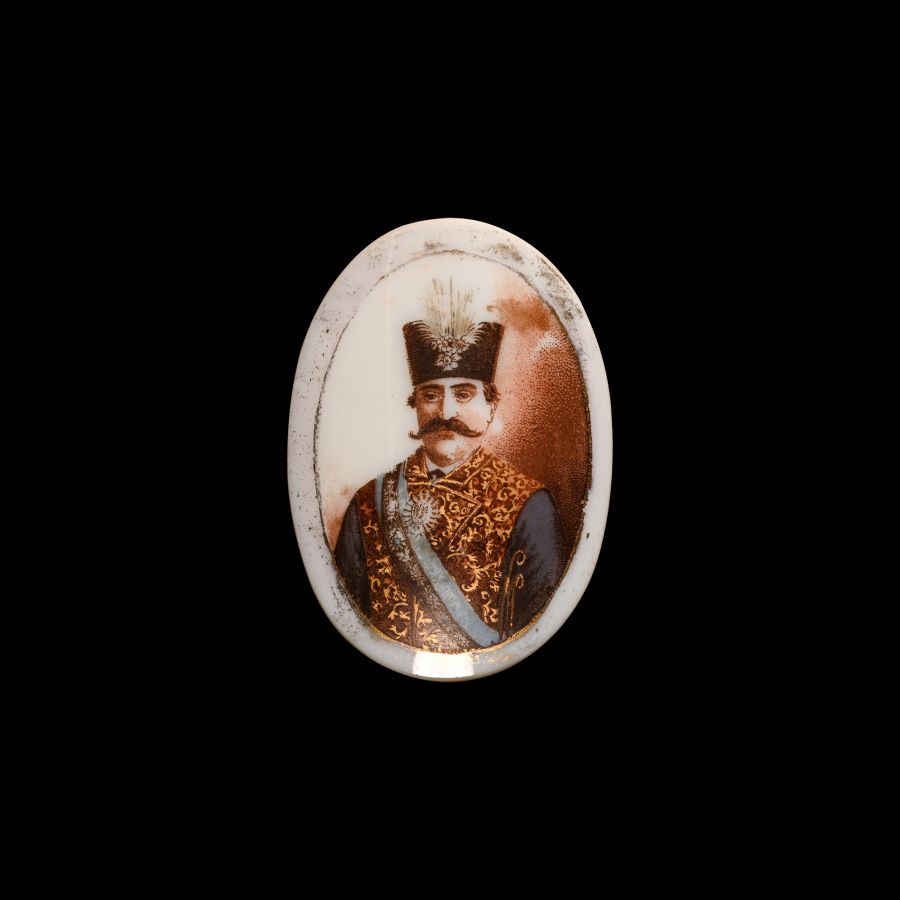
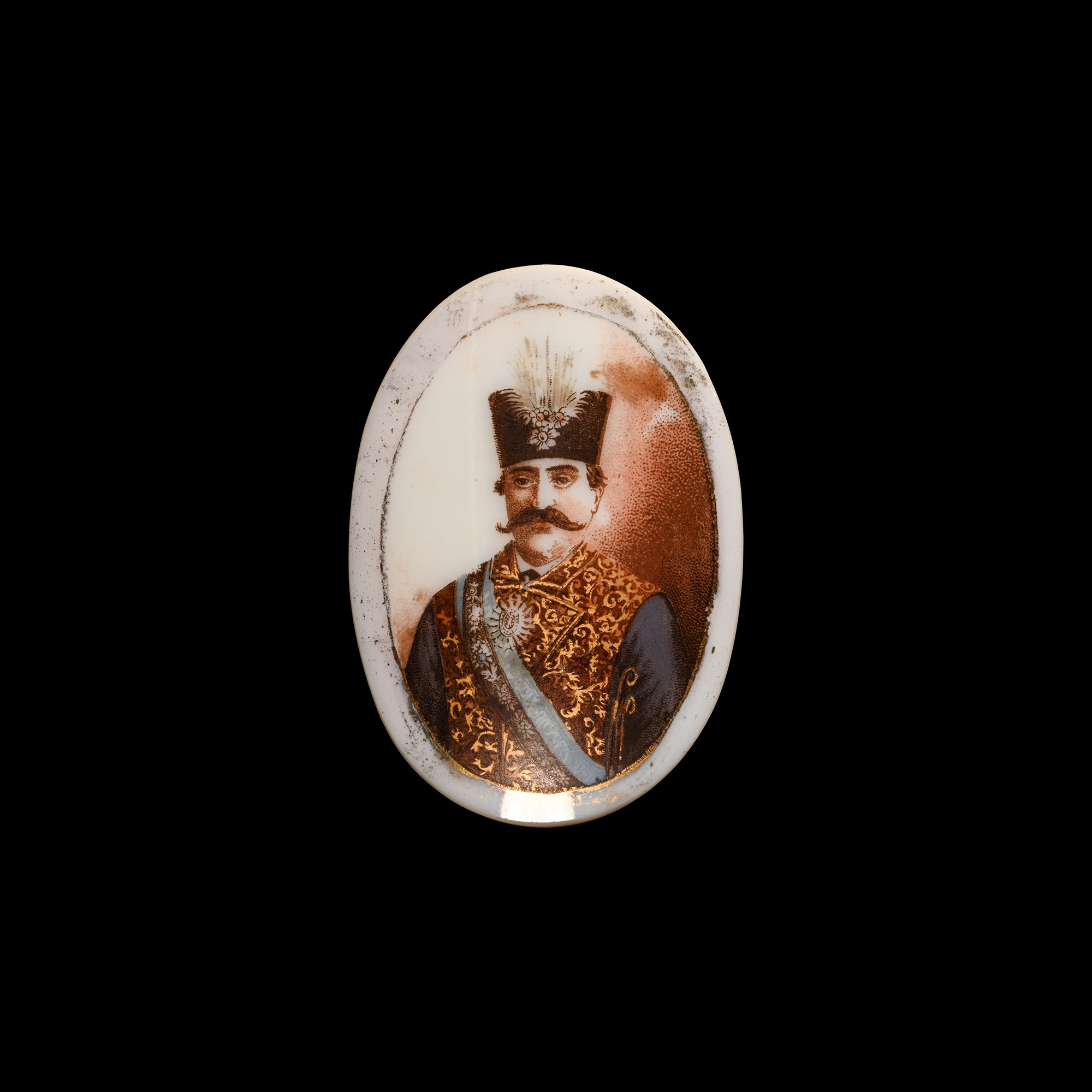
Post Medieval Bone China Portrait of Naser al-Din Shah Qajar
20TH CENTURY A.D.
2 1/2 in. (3 1/4 x 3 1/4 in.) (27 grams total, 64 mm high (82 x 82 mm including box)).
Painted onto bone china in polychrome and gilt, showing the ruler facing, dressed in royal attire.
ProvenanceAcquired by the vendor's father on the UK art market, before 1990.
FootnotesNaser al-Din Shah Qajar was the fourth Shah of Qajar, and the third longest reigning ruler in Iranian history. He was assassinated in Tehran on 1st May 1896. He is known for being the first modern Persian monarch to have formally visited Europe and to have written about his travels in his memoirs.
CONDITIONTimeLine Auctions follows a vetting process to ensure the authenticity and legality of all items, reinforcing our commitment to integrity and responsible trading. Each antiquity, antique, and coin lot undergoes thorough examination by a vetting committee of at least ten external specialists, professional trade association members, scientists, and archaeologists: Our Vetting Process
AUCTIONS:
TimeLine is a leading auction house specialising in antiquities, ancient art, collectables, natural history, coins, medals, and books. Our auctions offer museums, collectors, historians, and enthusiasts the opportunity to acquire unique and historically significant pieces.
LOT 1941
Post Medieval Bone China Portrait of Naser al-Din Shah Qajar
Estimate £200 - 300€230 - 350 (for guidance only)$270 - 410 (for guidance only)
-

Indus Valley Style Terracotta Bull Figure
20th century A.D.Sold for (Inc. bp): £117
Model zebu with applied black linear ornament. 350 grams, 16 cm
From the property of the late Mr SM, London, UK, 1969-1999. -

Tudor Period Bronze Ring with Heraldic Heart Motif
16th-17th century A.D.Sold for (Inc. bp): £104
With discoid bezel, incuse heart motif surrounded by scrolled foliage. 4.12 grams, 22.88 mm overall, 19.85 mm internal diameter (approximate size British S, USA 9, Europe 20, Japan 19)
Private collection formed since the 1940s. UK art market. Property of an Essex gentleman.
The heart motif and foliage surround suggest that this was intended to be a love token (Chadour, item 608) possibly of Italian origin. -

Cretan School Wooden Pedestal Cross Base with 'Descent from the Cross' Gilt Painted Scene
Circa 17th century A.D.Sold for (Inc. bp): £13,000
Hollow-constructed stepped pedestal with socket to accept a devotional cross; gesso surface with moulded edging and gilt finish; painted scene of the 'descent from the cross' and 'lamentation of the Christ' with Christ laid out on the Holy Shroud surrounded by sorrowful Mary Magdalene, Virgin Mary, Mary of Clopas, St John the Evangelist, St Joseph of Arimathea and Nicodemus holding a ladder in the background; coffin with open cover to the left, cave of Golgotha to the right with skull, landscape with city of Jerusalem in the background. 8 kg, 104 cm wide
Fine condition.
Ex property of a London lady, part of her family's collection. Accompanied by an academic report by Dr Raffaele D’Amato. This lot has been checked against the Interpol Database of stolen works of art and is accompanied by search certificate no. 11542-196369.
In the Orthodox world, single wooden crosses representing the Stavrosis (Crucifixion) were positioned as icons in their own right, with candles placed in front of them as offering for the dead. It is a tradition that dates back to Byzantium, and was continued in the Slavic Orthodox world with the creation of splendid painted wooden crucifixes placed on equally beautifully painted pedestals. In this case the complex representation includes all the elements of the Gospel that recall the passion, death and resurrection of Christ. Christ has been taken down from the cross and is surrounded by his loved ones. His muscular body highlights the wound in his right side procured by Longinus' spear. The pain of the mother, the piety of Mary, is expressed here with the mute silence of the Madonna, who holds her son's head, which contrasts with the pain manifested by the other bystanders. Saint Joseph of Arimathea, who procured the tomb and the sacred sheet, devoutly holds the feet of Christ. The right side of the scene shows the Golgotha, symbol of the human death of Christ. The left of the scene shows the open tomb, symbol of the human and divine Resurrection of Christ. The sacred sheet, loose inside the sepulchre with open lid, appears as a symbol of the saving grace of the Resurrection. The city in the background represents ancient Jerusalem transformed into its heavenly equivalent through the Resurrection of Christ.
