
Loading, please wait...
LOT 1962
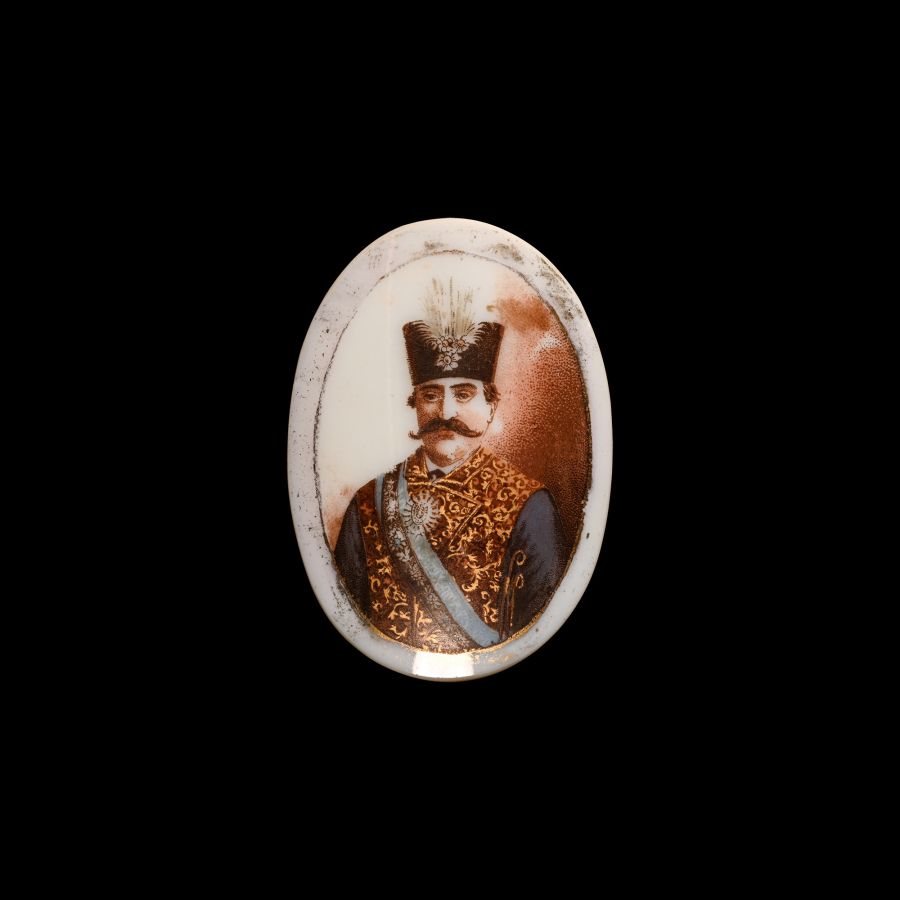
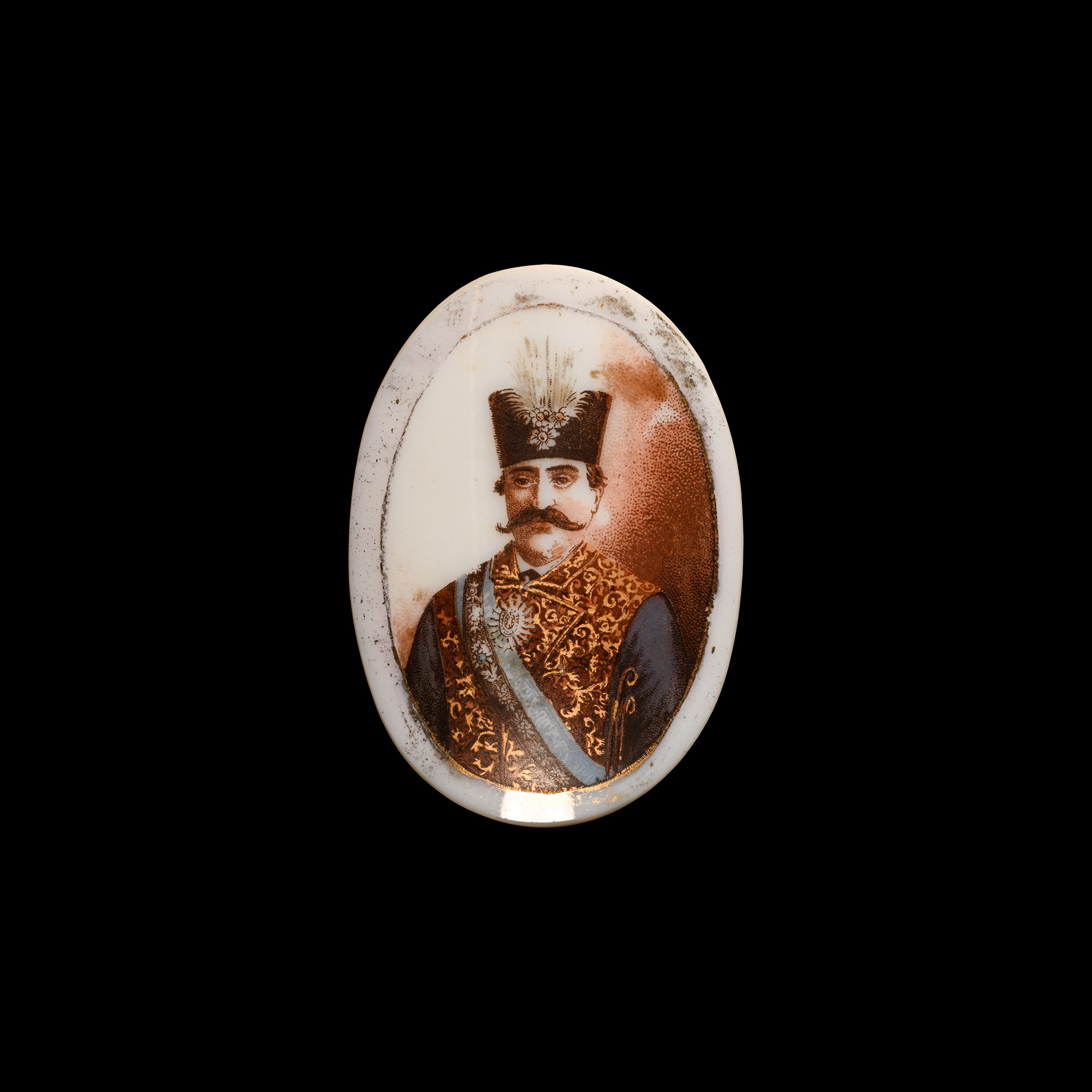
Post Medieval Bone China Portrait of Naser al-Din Shah Qajar
20TH CENTURY A.D.
2 1/2 in. (3 1/4 x 3 1/4 in.) (27 grams total, 64 mm high (82 x 82 mm including box)).
Painted onto bone china in polychrome and gilt, showing the ruler facing, dressed in royal attire.
ProvenanceAcquired by the vendor's father on the UK art market, before 1990.
FootnotesNaser al-Din Shah Qajar was the fourth Shah of Qajar, and the third longest reigning ruler in Iranian history. He was assassinated in Tehran on 1st May 1896. He is known for being the first modern Persian monarch to have formally visited Europe and to have written about his travels in his memoirs.
CONDITIONTimeLine Auctions follows a vetting process to ensure the authenticity and legality of all items, reinforcing our commitment to integrity and responsible trading. Each antiquity, antique, and coin lot undergoes thorough examination by a vetting committee of at least ten external specialists, professional trade association members, scientists, and archaeologists: Our Vetting Process
AUCTIONS:
TimeLine is a leading auction house specialising in antiquities, ancient art, collectables, natural history, coins, medals, and books. Our auctions offer museums, collectors, historians, and enthusiasts the opportunity to acquire unique and historically significant pieces.
LOT 1962
Post Medieval Bone China Portrait of Naser al-Din Shah Qajar
Estimate £300 - 400€350 - 460 (for guidance only)$410 - 540 (for guidance only)
-
.jpg)
Eastern Greek Style Lapis Lazuli and Gold Bead Necklace
20th century A.D.Sold for (Inc. bp): £780
Composed of graduated mainly tubular lapis lazuli beads with later gold openwork spacer beads, gold biconvex and waisted cage beads; restrung. 28.68 grams, 42 cm long
Fine condition.
Acquired in the late 1980s-early 1990s. Property of a West London gentleman. Ex private collection on Dr H.B., Sussex, UK. -
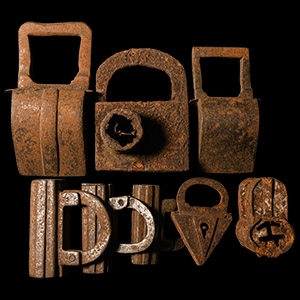
Tudor Period and Later Iron Padlock Collection
Circa 16th-17th century A.D.Estimate: £100 - 140 (+bp*)
Opening Bid: £40
Comprising a variety of types of padlocks, most retaining their arm and ceased in the locked position. 390 grams total, 45-80 mm
Acquired 1990s-early 2000s. East Anglian private collection. -
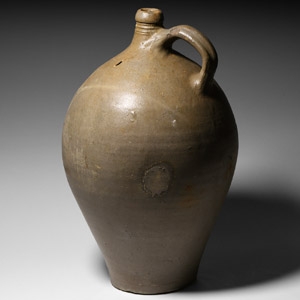
Large Post Medieval Glazed Ceramic Vessel
18th-19th century A.D.Sold for (Inc. bp): £20
Of piriform shape, with narrow neck and integral handle; chipped. 4.6 kg, 45 cm high
Acquired 1990s-early 2000s. East Anglian private collection.
