
Loading, please wait...
LOT 2076
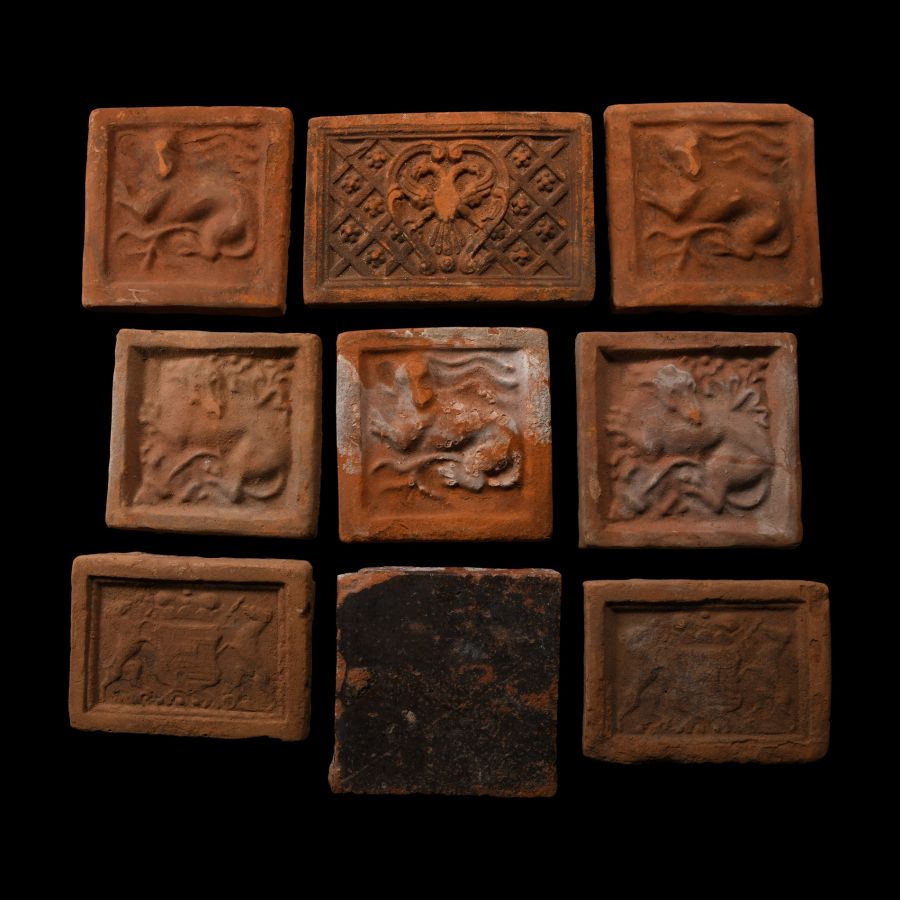
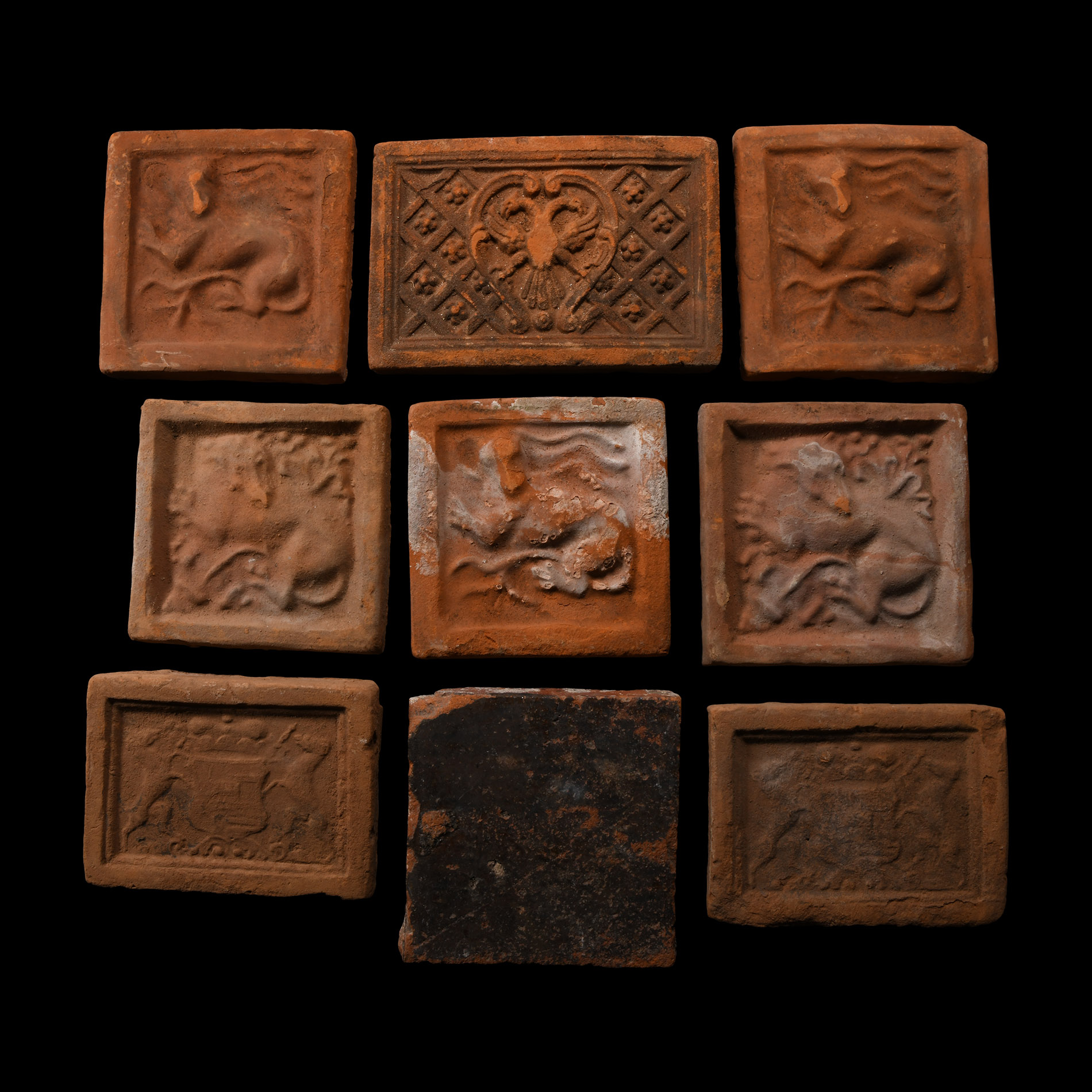
Post Medieval Armorial Ceramic Tile Collection
CIRCA 17TH CENTURY A.D.
3 1/2 - 5 x 4 x 6 in. (3.21 grams total, 9 x 12.5 - 10.3 x 15.2 cm).
Including tiles displaying the double-headed eagle, crowned shields flanked by heraldic beasts and hounds or other animals; with traces of glaze; some motifs worn. [9]
ProvenanceAcquired 1990s-early 2000s.
East Anglian private collection.
TimeLine Auctions follows a vetting process to ensure the authenticity and legality of all items, reinforcing our commitment to integrity and responsible trading. Each antiquity, antique, and coin lot undergoes thorough examination by a vetting committee of at least ten external specialists, professional trade association members, scientists, and archaeologists: Our Vetting Process
AUCTIONS:
TimeLine is a leading auction house specialising in antiquities, ancient art, collectables, natural history, coins, medals, and books. Our auctions offer museums, collectors, historians, and enthusiasts the opportunity to acquire unique and historically significant pieces.
LOT 2076
Post Medieval Armorial Ceramic Tile Collection
Estimate £100 - 140€120 - 160 (for guidance only)$140 - 190 (for guidance only)
-
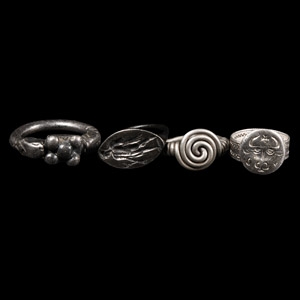
Greek and Other Style Silver Ring Group
20th century A.D. or earlierSold for (Inc. bp): £72
Comprising: one with scaphoid bezel, intaglio figure of Hermes; one wire with spiral bezel; one with serpent heads supporting a rectangular bezel with pellets; one with flat hoop, round bezel with bull mask. 26 grams total, 18-28 mm
Fine condition.
Acquired since the 1970s. Private collection of a gentleman from Vienna, Austria. -
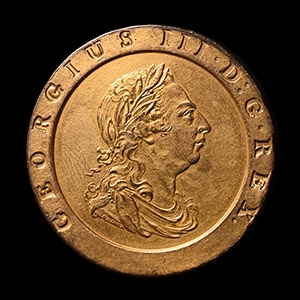
Georgian Gilt Bronze Cartwheel Twopence Patch Box
Dated 1797 A.D.Sold for (Inc. bp): £130
Obv: profile bust right with GEORGIUS III D G REX incuse legend; Rev: Britannia seated left with BRITANNIA 1797 incuse legend; converted into a patch box with obverse gilded. 56.39 grams, 41 mm
Acquired in 2010. From the collection of a North American gentleman. -
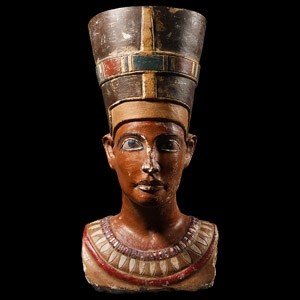
Painted Stone Bust of Queen Nefertiti
20th century A.D.Estimate: £300 - 400 (+bp*)
Opening Bid: £150
Carved in the round with semi-naturalistic features, wearing the iconic 'Nefertiti cap crown' adorned with a golden diadem band, ornamental beaded collar around her neck and shoulders; remains of gilding and polychrome painted pigment; limestone. 28.2 kg, 51 cm high
Ex French gallery, Paris.
Closely modelled on the original held in Neues Museum, Staatliche Museen zu Berlin, created c.1340 B.C.
