
Loading, please wait...

LOT 2110
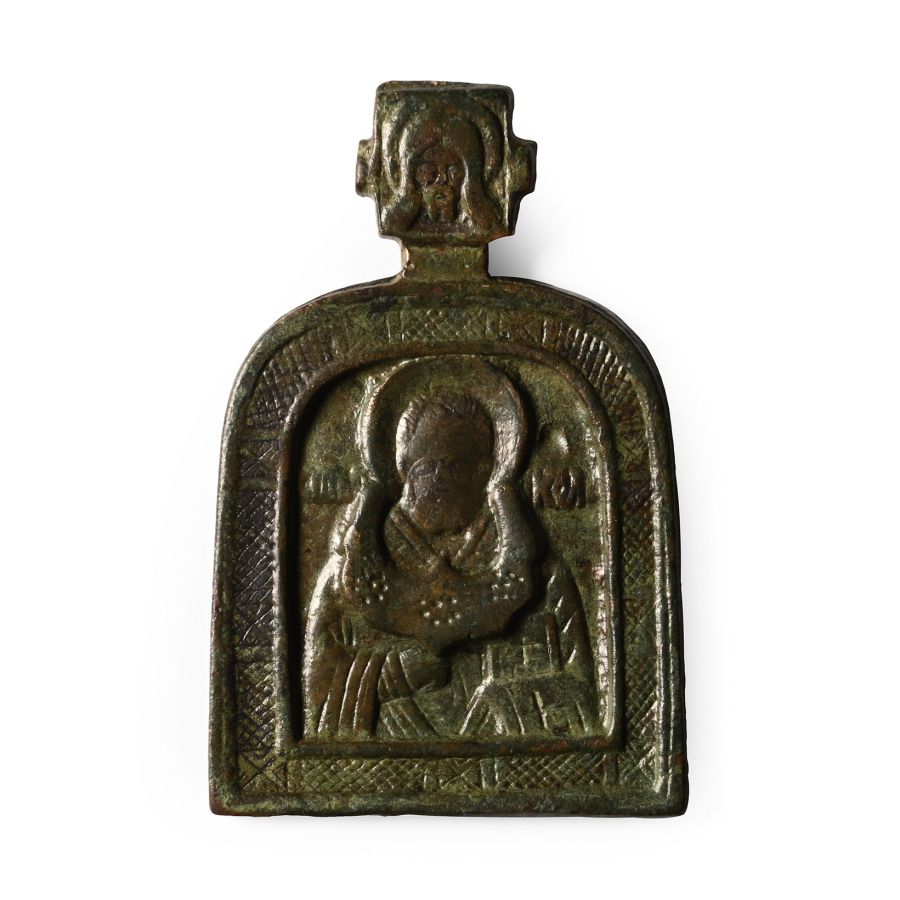
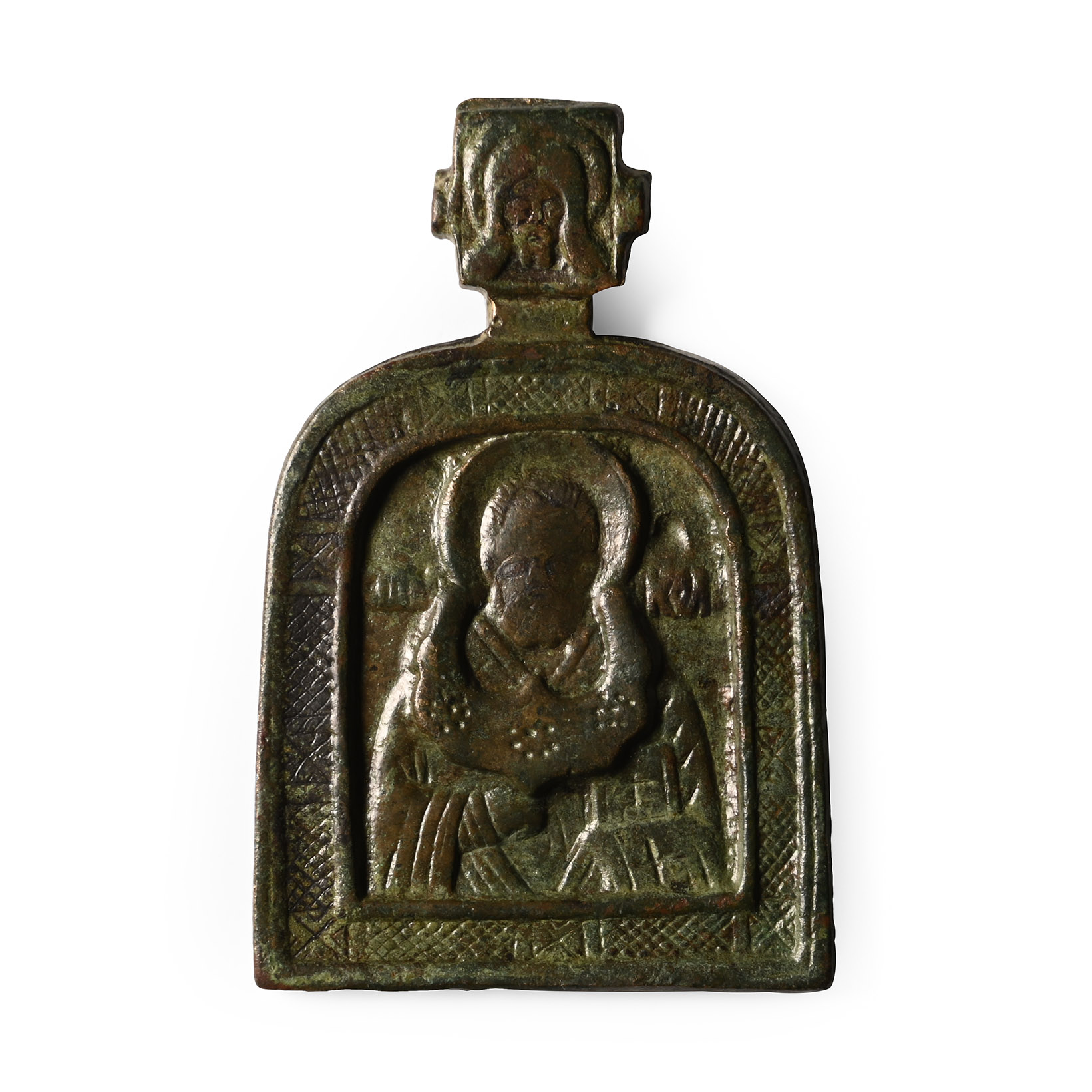
Post Byzantine Bronze Pendant with Saint
CIRCA 17TH CENTURY A.D.
2 1/4 in. (28.9 grams, 58 mm).
Tongue-shaped plaque with hatched border and central facing image of a nimbate patriarch with 'KOA' legend to one side; pierced square lug above.
ProvenanceEx German art market, 2000s.
Acquired from an EU collector living in London.
From the collection of Surrey, UK, gentleman.
TimeLine Auctions follows a vetting process to ensure the authenticity and legality of all items, reinforcing our commitment to integrity and responsible trading. Each antiquity, antique, and coin lot undergoes thorough examination by a vetting committee of at least ten external specialists, professional trade association members, scientists, and archaeologists: Our Vetting Process
AUCTIONS:
TimeLine is a leading auction house specialising in antiquities, ancient art, collectables, natural history, coins, medals, and books. Our auctions offer museums, collectors, historians, and enthusiasts the opportunity to acquire unique and historically significant pieces.
LOT 2110
Post Byzantine Bronze Pendant with Saint
Estimate £100 - 140€120 - 160 (for guidance only)$140 - 190 (for guidance only)
-
Medieval and Later Bronze Artefact Collection
16th-20th century A.D.Sold for (Inc. bp): £13
Including a ceramic figurine, strap end, belt buckle, key handle, sheath chape and other items. 560 grams total, 1.3-12.3 cm
Found various site in the UK. Ex N. Mills. -
.jpg)
Renaissance Stained Glass Panel of a Bearded Man
France, Troyes, circa 1530-1550 A.D.Sold for (Inc. bp): £286
Irregular cordiform angel in lead framing; head of a bearded man with downcast gaze, tousled hair. 80 grams, 14 cm
with Rieunier & Associes, 25 October 2004, no.52. Accompanied by a copy of a two page illustrated catalogue information page. -
.jpg)
Silver Bowl with Animals and Calligraphy
18th-19th century A.D.Sold for (Inc. bp): £244
Decorated with circumferential bands of lozenges, floral vines, calligraphic text, animals processing right amid flowers, second band of floral vines and panel of text to base. 140 grams, 12.2 cm wide
Fine condition.
Acquired on the UK art market, 2000s. Property of a Suffolk gentleman.
