
Loading, please wait...
LOT 1962
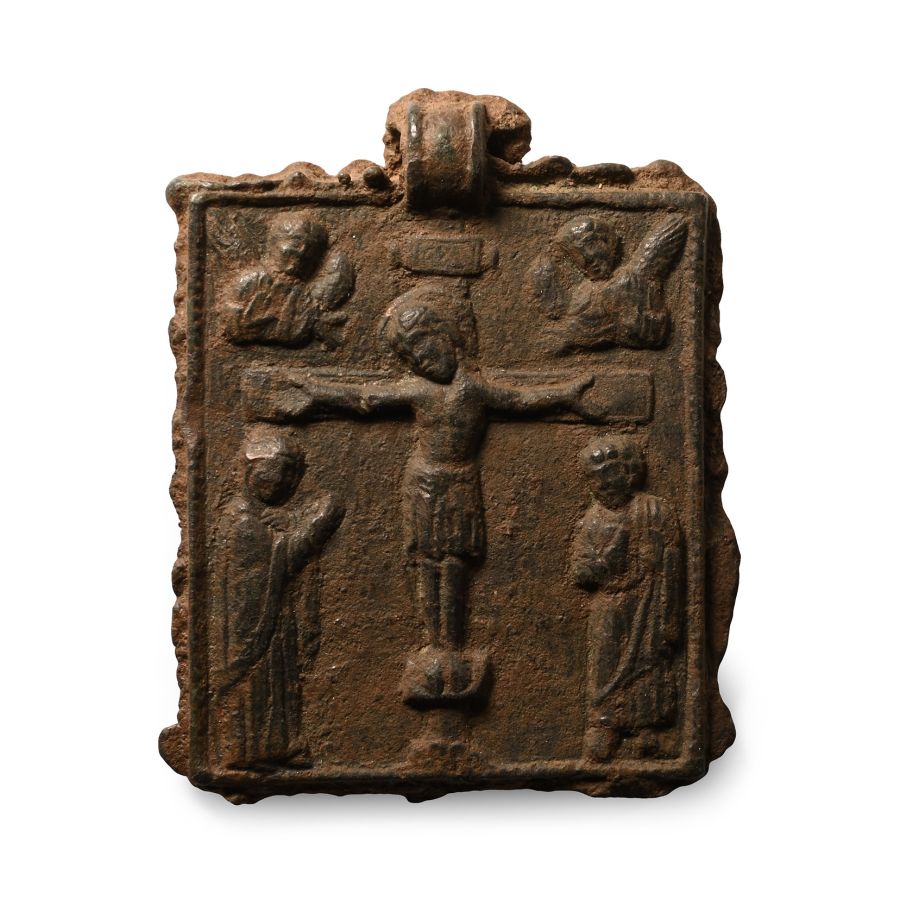
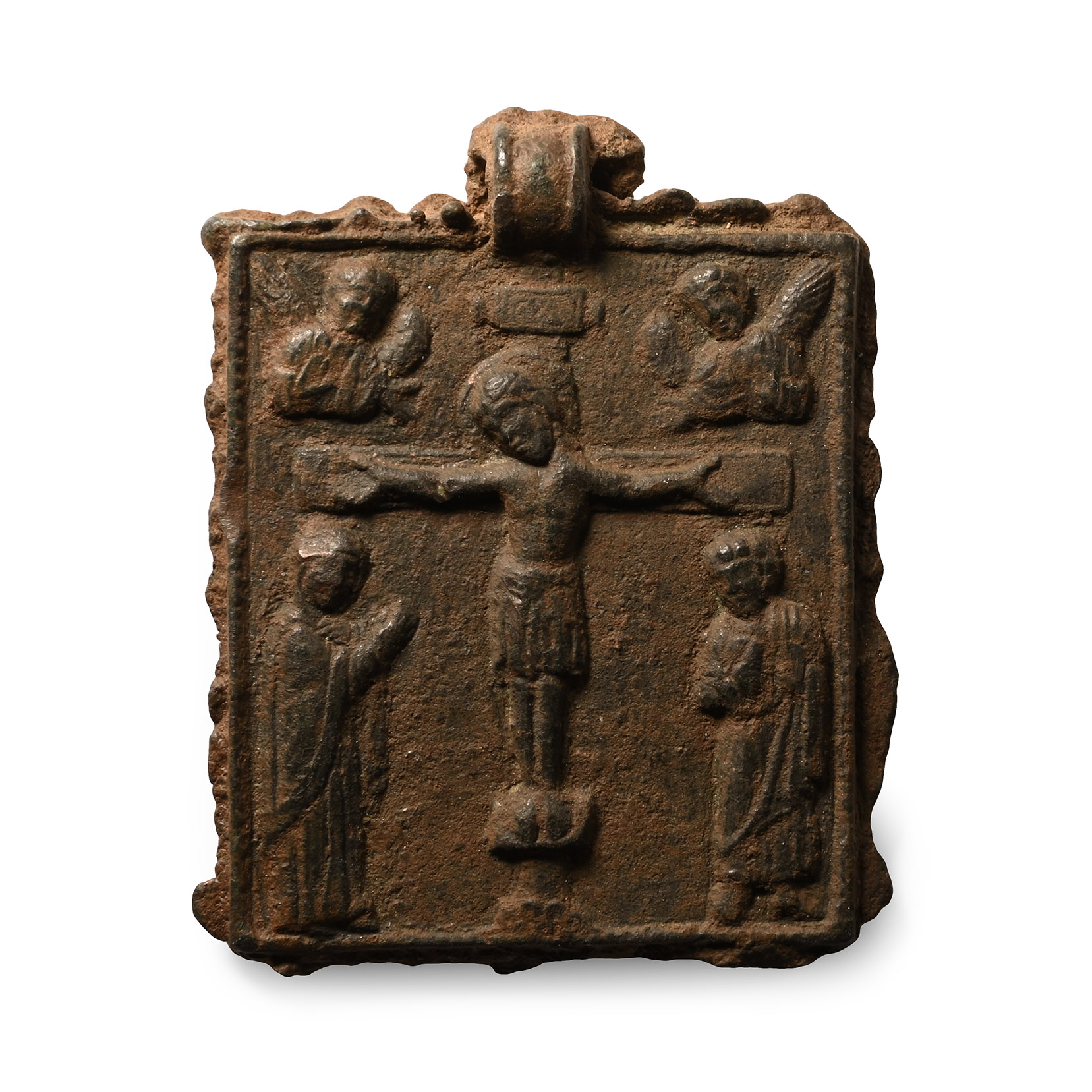
Post Byzantine Bronze Pendant with Crucifixion Scene
15TH-16TH CENTURY A.D.
2 5/8 in. (92 grams, 67 mm).
A portable icon depicting the Crucifixion, Mary and Saint John the Theologian flanking the cross, angels in the upper corners, Golgotha skull under the cross and inscription I.N.R.I. to the upper part of the cross; crenelated frame with hanging loop to the top. [No Reserve]
ProvenanceUK private collection before 2000.
Acquired on the UK art market.
Property of a London gentleman.
Cf. Rinduya, A.V., Small Ancient Russian Art, Moscow, 1978 (in Russian), figs.69,79,80,81, for similar.
FootnotesThe scene corresponds to John's Gospel: 'Here is your son.' 'Here is your mother.' (John 19:25-27). Portable icons of this kind were often carried by soldiers or by the travellers during a war, to assure the Divine protection and journey's safety.
CONDITIONTimeLine Auctions follows a vetting process to ensure the authenticity and legality of all items, reinforcing our commitment to integrity and responsible trading. Each antiquity, antique, and coin lot undergoes thorough examination by a vetting committee of at least ten external specialists, professional trade association members, scientists, and archaeologists: Our Vetting Process
AUCTIONS:
TimeLine is a leading auction house specialising in antiquities, ancient art, collectables, natural history, coins, medals, and books. Our auctions offer museums, collectors, historians, and enthusiasts the opportunity to acquire unique and historically significant pieces.
-
Bone Corpus Christi
17th-18th century A.D.Sold for (Inc. bp): £59
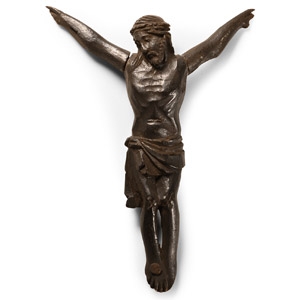
Carved in the half-round with head tilted and separately carved arms extended, crown of thorns to the brow and loincloth gathered at the hip; feet crossed and pierced with a mounting pin. 21.4 grams, 10 cm
From the private collection of the late Victor Brox. -
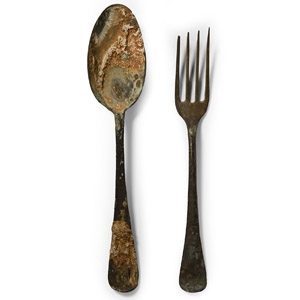
'Nuestra Senora de la Luz' Shipwreck Spoon and Fork Set
Early 18th century A.D.Sold for (Inc. bp): £72
Both with rounded finial curved at the end. 69 grams total, 17-18.5 cm
Salvaged by Ruben Collado Amatriain in 1992. Accompanied by original signed declarations in both English and Spanish from Ms Mariana Faine Collado, daughter of Mr Ruben Collado Amatriain. -
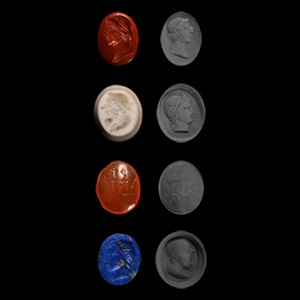
Gemstone Collection
19th-20th century A.D.Estimate: £300 - 400 (+bp*)
Opening Bid: £150
Comprising male busts and a figural group in lapis lazuli, carnelian and other stones; each supplied with a museum-quality impression. 4.41 grams total, 14-15 mm
Private collection, England.
