
Loading, please wait...
LOT 1917
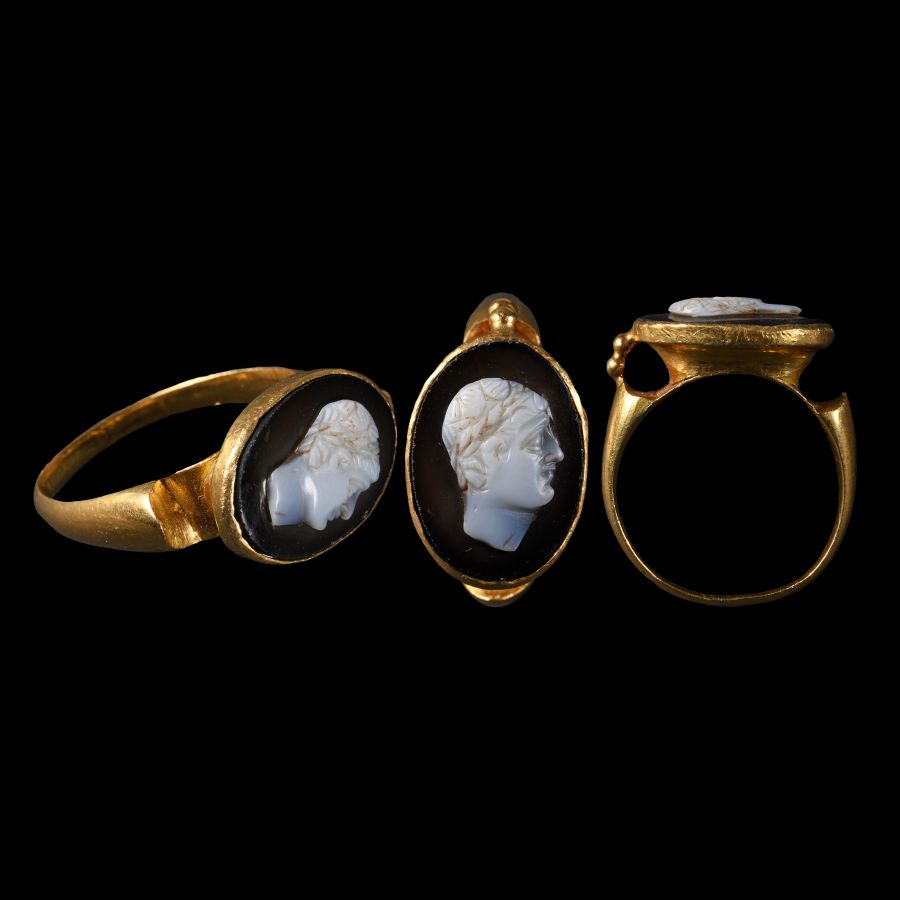
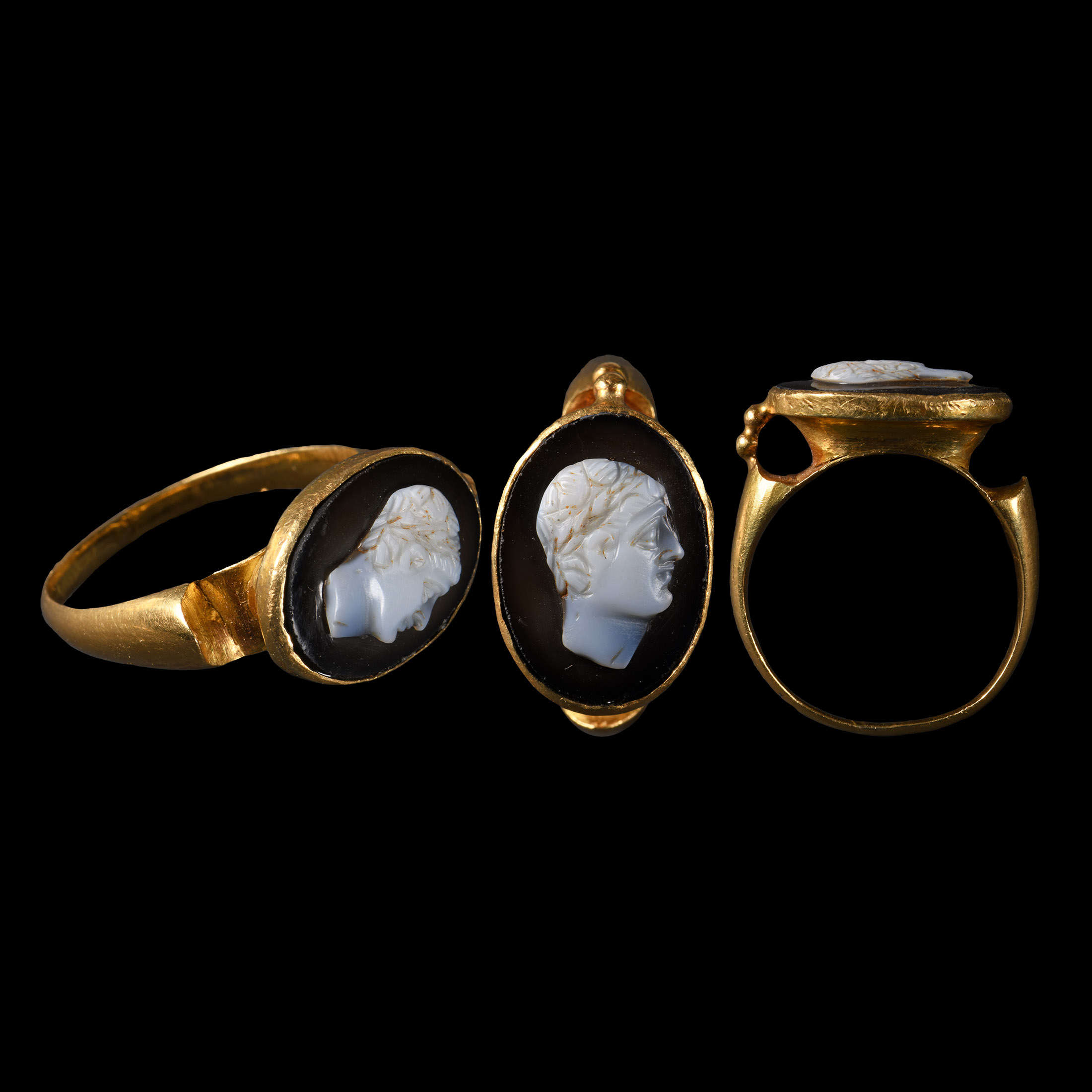
Portrait Cameo Gemstone in Gold Ring
CIRCA 19TH CENTURY A.D.
1 in. (5.48 grams, 26.02 mm overall, 18.54 mm internal diameter (approximate size British Q, USA 8, Europe 17.49, Japan 16)).
The onyx cloison displaying a carved male bust in profile right, set into a later gold ring with scooped shoulders.
ProvenanceEx property of a London gentleman; acquired before 1970.
CONDITIONTimeLine Auctions follows a vetting process to ensure the authenticity and legality of all items, reinforcing our commitment to integrity and responsible trading. Each antiquity, antique, and coin lot undergoes thorough examination by a vetting committee of at least ten external specialists, professional trade association members, scientists, and archaeologists: Our Vetting Process
AUCTIONS:
TimeLine is a leading auction house specialising in antiquities, ancient art, collectables, natural history, coins, medals, and books. Our auctions offer museums, collectors, historians, and enthusiasts the opportunity to acquire unique and historically significant pieces.
-
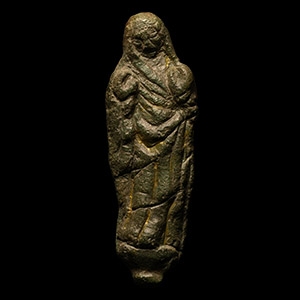
Tudor Period Bronze Figural Mount
16th century A.D.Sold for (Inc. bp): £104
Or finial depicting a well-modelled figure of the Virgin Mary in relief to one face. 19.5 grams, 51 mm
From an old English collection before 2010. From the collection of a North American gentleman. -
.jpg)
Eastern Greek Style Lapis Lazuli and Gold Bead Necklace
20th century A.D.Sold for (Inc. bp): £780
Composed of graduated mainly tubular lapis lazuli beads with later gold openwork spacer beads, gold biconvex and waisted cage beads; restrung. 28.68 grams, 42 cm long
Fine condition.
Acquired in the late 1980s-early 1990s. Property of a West London gentleman. Ex private collection on Dr H.B., Sussex, UK. -
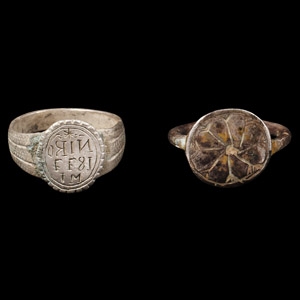
Post Medieval Silver Ring Group
16th-18th century A.D.Sold for (Inc. bp): £156
One with reversed legend 'NIKO / 1877 / MI'; one with served octofoil. 7.13 grams total, 21 mm each
From the collection of an EU gentleman formed in the early 2000s. Acquired on the UK market.
