Loading, please wait...

Pope Sixtus V Bronze Pendant Pope Sixtus V Bronze Pendant Pope Sixtus V Bronze Pendant Pope Sixtus V Bronze Pendant Pope Sixtus V Bronze Pendant Pope Sixtus V Bronze Pendant
Use mousewheel to zoom in and out, click to enlarge
Details

LOT 0345

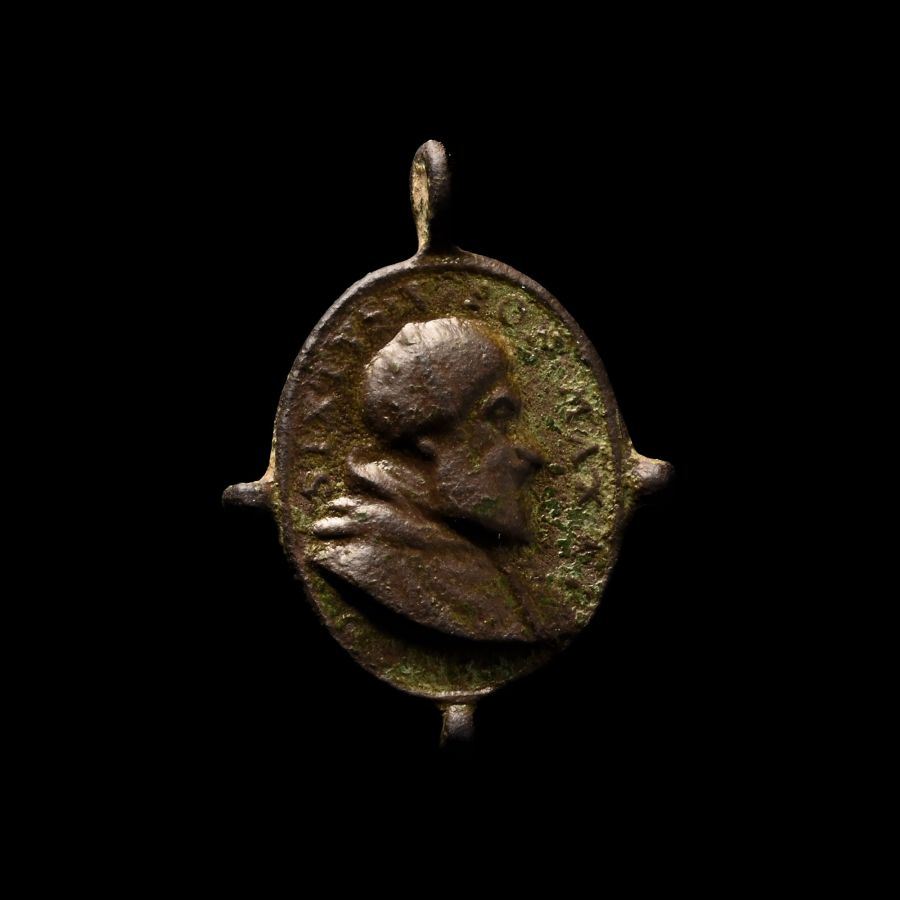
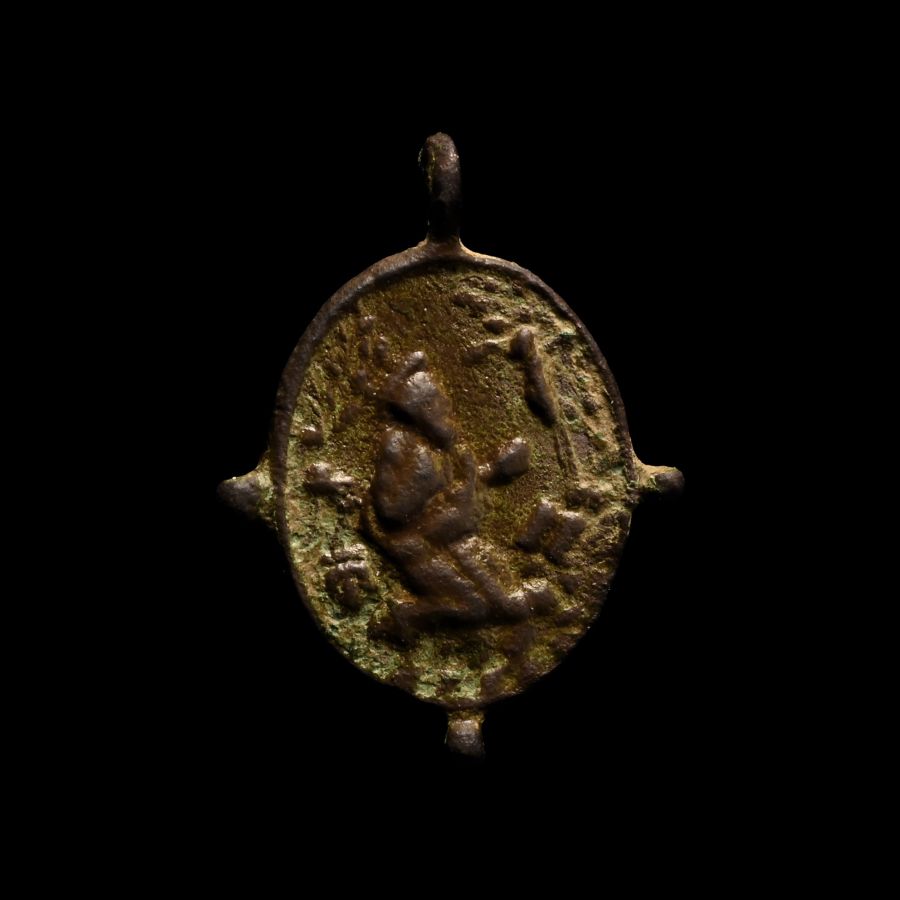
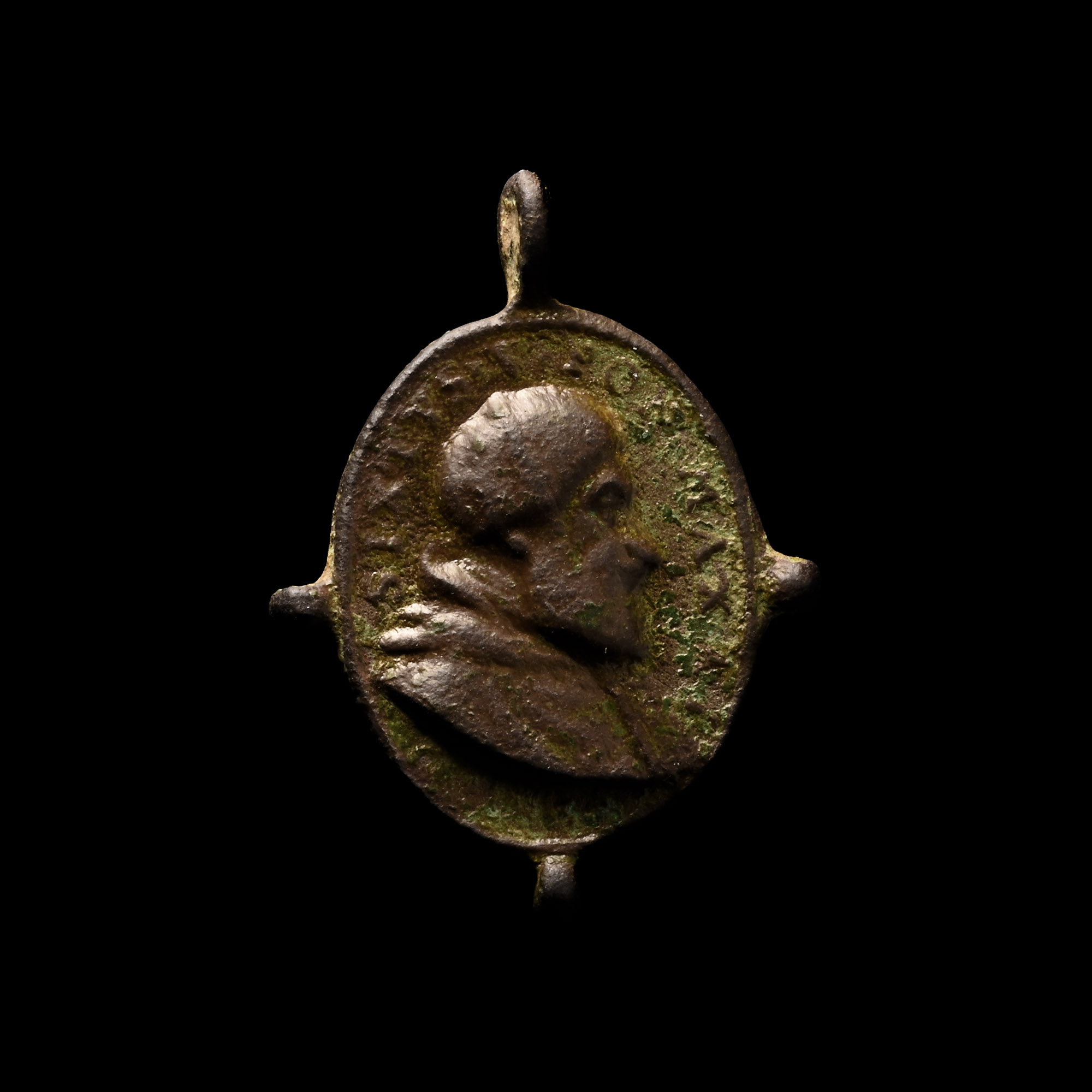
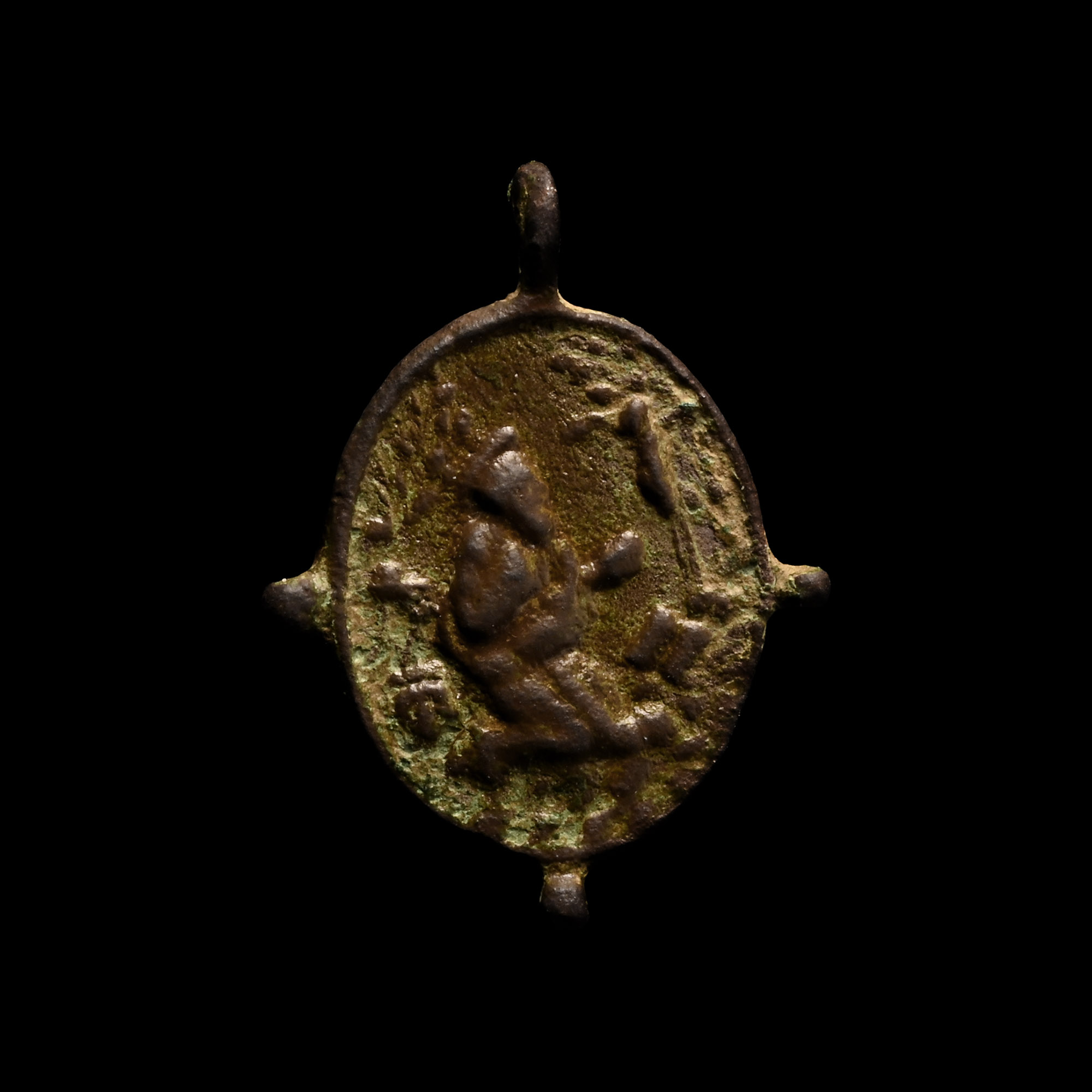
Pope Sixtus V Bronze Pendant

DATED 1585 A.D.

1 1/4 in. (4.7 grams, 30 mm).

Ellipsoid bronze bifacial pendant with three radiating lugs and pierced lug above; reverse with kneeling nimbate figure (St. Jerome) in ankle-length robe, one hand extended and open book below, lion's head to his rear; obverse with profile bust in cassock and camauro (papal cap), legend above 'SIXTVS V PONS MAX A I'.

Provenance

Found Tuesday 1st April 2025 in Claydon, Suffolk, UK.

Accompanied by a copy of the British Museum's Portable Antiquities Scheme (PAS) report no.SF-92A7E3.

Footnotes

This item is a rare example of a Catholic papal emblem made and used during Elizabeth I's reign, when the Protestant cause was dominant. This is only the second known example to be found in England.

CONDITION
VETTING:

TimeLine Auctions follows a vetting process to ensure the authenticity and legality of all items, reinforcing our commitment to integrity and responsible trading. Each antiquity, antique, and coin lot undergoes thorough examination by a vetting committee of at least ten external specialists, professional trade association members, scientists, and archaeologists: Our Vetting Process


AUCTIONS:

TimeLine is a leading auction house specialising in antiquities, ancient art, collectables, natural history, coins, medals, and books. Our auctions offer museums, collectors, historians, and enthusiasts the opportunity to acquire unique and historically significant pieces.

The Second Example Recorded

LOT 0345

Pope Sixtus V Bronze Pendant

Sold for (Inc. bp): £390

Print page

RELATED LOTS
  • Medieval Gold Posy Ring Inscribed With Luck
    Medieval Gold Posy Ring Inscribed 'With Luck'
    14th century A.D.

    Sold for (Inc. bp): £1,690

    D-shaped in section with blackletter legend '+ala ven ture' (a l'aventure, meaning with luck/ perhaps/ if possible) and fronds between. 1.74 grams, 21.27 mm overall, 18.81 mm internal diameter (approximate size British Q, USA 8, Europe 17.49, Japan 16)


    Acquired on the UK art market in the 1980s. From an East Anglian private collection.

    Lot Details

  • Medieval Dutch Pewter Holy Blood Of Wilsnack Pilgrims Badge
    Medieval Dutch Pewter Holy Blood Of Wilsnack Pilgrim's Badge
    14th-15th century A.D.

    Sold for (Inc. bp): £85

    Trilobate in plan with openwork triangle between three roundels with hatched fields, the upper two surmounted by crosses, depicting scenes from Christ's life: the crucifixion, resurrection and Christ at the Column in relief. 3.39 grams, 31 mm


    Ex European collection, 1990s. Ex Cambridgeshire, UK, collection.

    In 1383 AD, after fire in the town of Bad Wilsnack, Germany) three consecrated communion hosts were found undamaged in the ruins of the church. According to the legend, they were sprinkled with the Holy Blood of Christ, which made Bad Wilsnack a famous pilgrimage site. The resultant pilgrim badges were distinctive in shape with three circles arranged in a triangle and painted in red, referring to this miracle. Although the miracle was doubted by Reformation period scholars like John Hus, the final blow came in 1552, when the miraculous communion hosts were publicly burned.

    Lot Details

  • Medieval Gold Ring Brooch with Garnets
    Medieval Gold Ring Brooch with Garnets
    13th-14th century A.D.

    Sold for (Inc. bp): £390

    An annular brooch set with decorative oak leaves, tall collet at the top set with a garnet cabochon, dagger-shaped pin. 1.74 grams, 18 mm


    Private collection, UK.

    In medieval jewellery, garnets were highly prized for their deep red hue and believed mystical properties. Associated with protection, vitality, and divine love, garnets were thought to ward off illness, protect against injury, and illuminate the darkness—both literal and spiritual. Their rich colour made them a symbol of Christ’s sacrifice, and they frequently appeared in religious and funerary jewellery. Garnets were also connected to concepts of faithfulness and truth, making them a popular choice in personal adornment and ecclesiastical pieces throughout the Middle Ages. Oak trees were widely regarded as symbols of strength, stability, and endurance, owing to their longevity and robust nature. In jewellery, oak leaves could represent resilience, fortitude, and the ability to withstand adversity—virtues admired in both secular and religious life. Within Christian art and ornamentation, the oak also carried spiritual significance, evoking the Tree of Life and the strength of faith. It was often interpreted as a symbol of God’s protection, particularly in devotional objects or pieces with sacred motifs.

    Lot Details

Stay up-to-date with the latest from TimeLine Auctions by joining our mailing list