
Loading, please wait...
LOT 2427
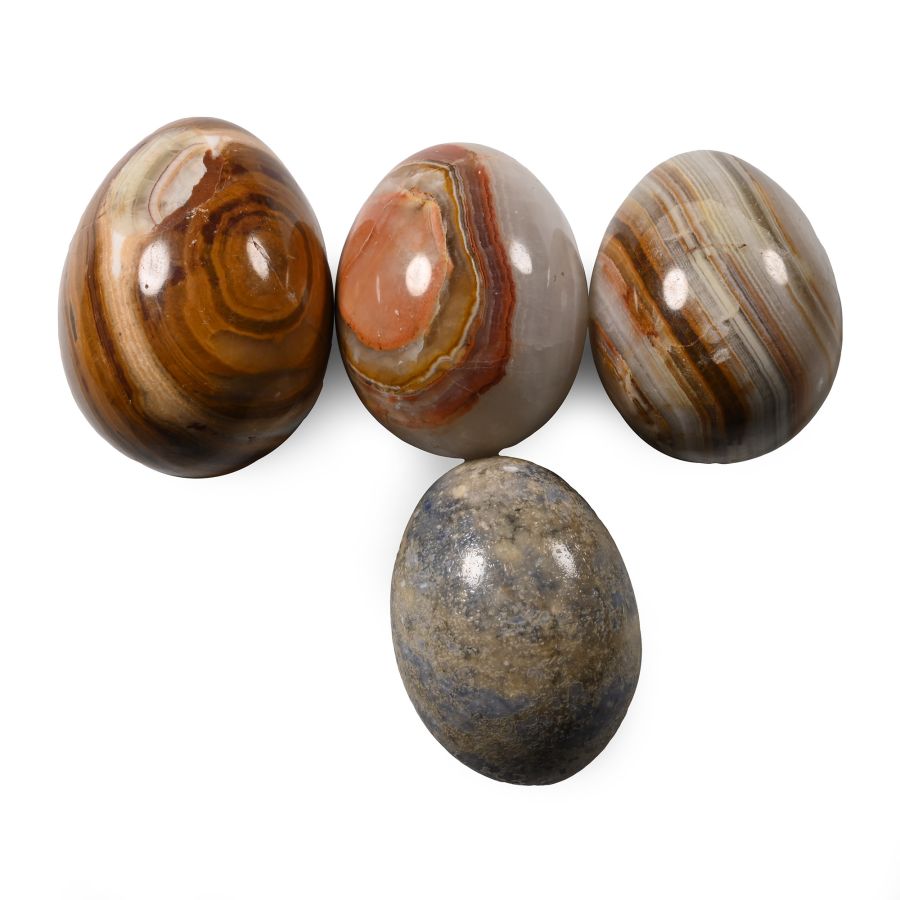
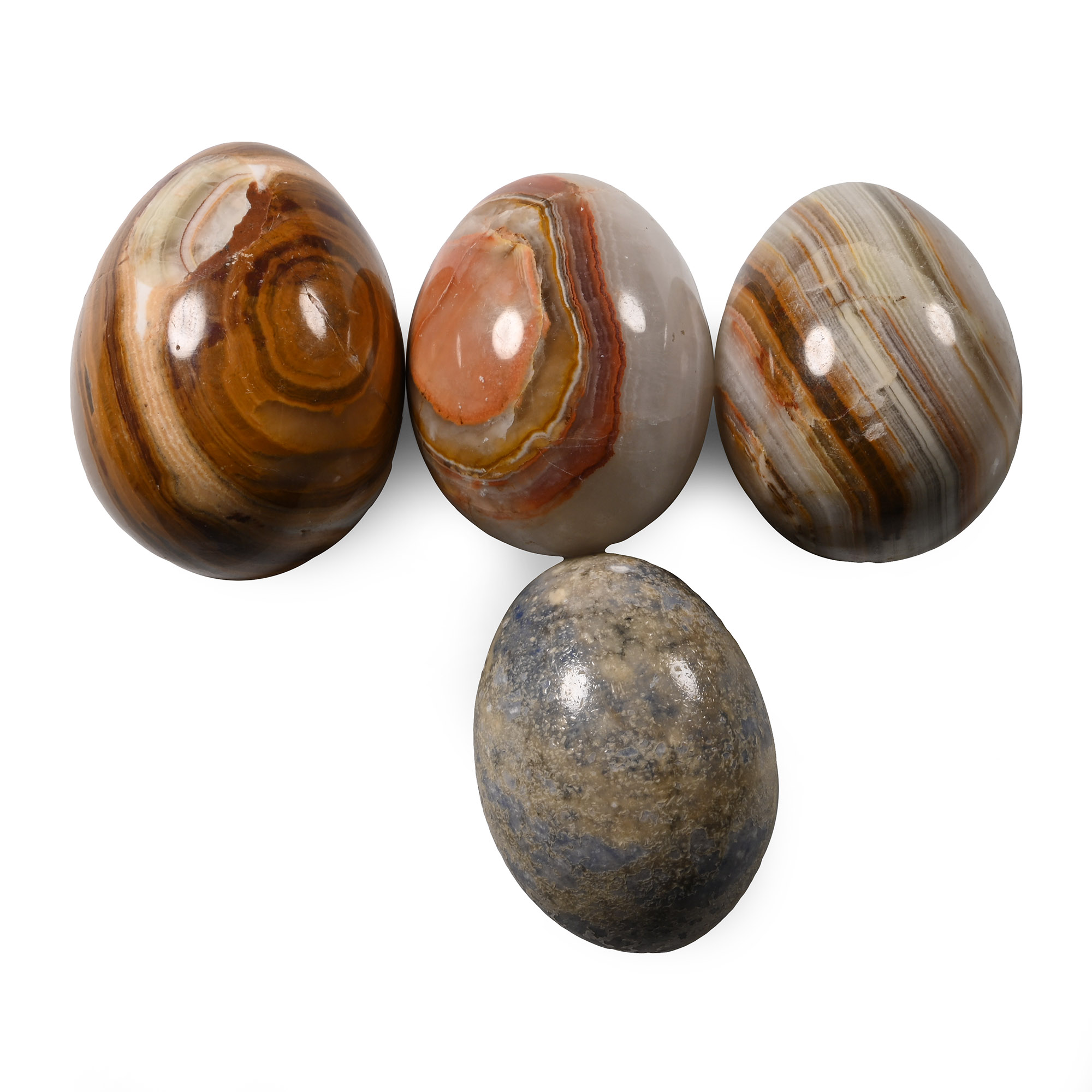
Polished Mineral Specimen Egg Collection
2 3/8 - 2 5/8 in. (780 grams total, 60-68 mm).
Comprising three egg-shaped agate specimens and one in blue calcite(?). [4, No Reserve]
ProvenanceBurwell collection, Cambridgeshire, UK.
CONDITIONTimeLine Auctions follows a vetting process to ensure the authenticity and legality of all items, reinforcing our commitment to integrity and responsible trading. Each antiquity, antique, and coin lot undergoes thorough examination by a vetting committee of at least ten external specialists, professional trade association members, scientists, and archaeologists: Our Vetting Process
AUCTIONS:
TimeLine is a leading auction house specialising in antiquities, ancient art, collectables, natural history, coins, medals, and books. Our auctions offer museums, collectors, historians, and enthusiasts the opportunity to acquire unique and historically significant pieces.
-
![Boxed Quality Crystal Mineral Specimen Collection [3]](https://timelineauctions.com/upload/images/items/small/228180-s.jpg)
Boxed Quality Crystal Mineral Specimen Collection [3]
Sold for (Inc. bp): £46
Each in a labelled box, comprising: quartz from Corinto, Minas Gerais, Brazil; crystalline malachite from D.R. Congo; sphalerite and pyrite from Huanuco, Peru. 620 grams total, 70-71 mm
Ex Mineral Imports, London, UK. Gregory, Bottley & Lloyd (Gregory's), Harwich, UK. -
![Cut and Polished Agate Crystal Geode Half Collection [3]](https://timelineauctions.com/upload/images/items/small/227982-s.jpg)
Cut and Polished Agate Crystal Geode Half Collection [3]
Sold for (Inc. bp): £26
Comprising three rounded geode halves with the internal cavity filled with a blanket of light purple and grey crystals, one with a single 'unicorn horn'-shaped quartz crystal, one with a pyramidal formation of brown calcite, and one with two large clear quartz crystals. 995 grams total, 81-94 mm
From Brazil. Ex Mineral Imports, London, UK. Gregory, Bottley & Lloyd (Gregory's), Harwich, UK. -
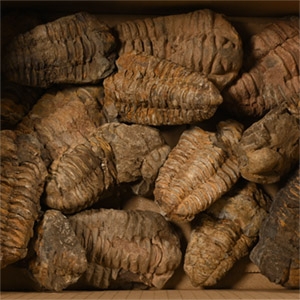
Fossil Flexicalymene Trilobite Group
Ordovician Period, circa 510-445 million years B.P.Sold for (Inc. bp): £52
Mixed group of various sizes, all with preserved scales and tripartite body structure. 983 grams total, 65-85 mm
Acquired on the UK art market before 2000. Property of an Essex, UK, gentleman.
