
Loading, please wait...
LOT 1077
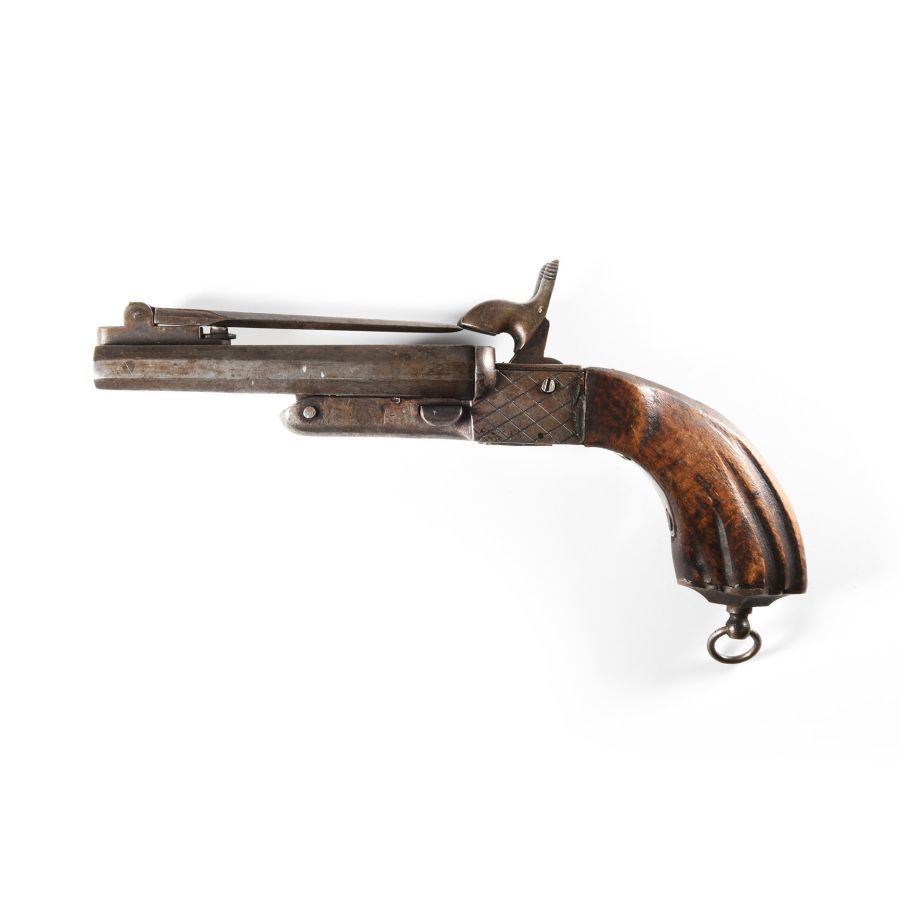
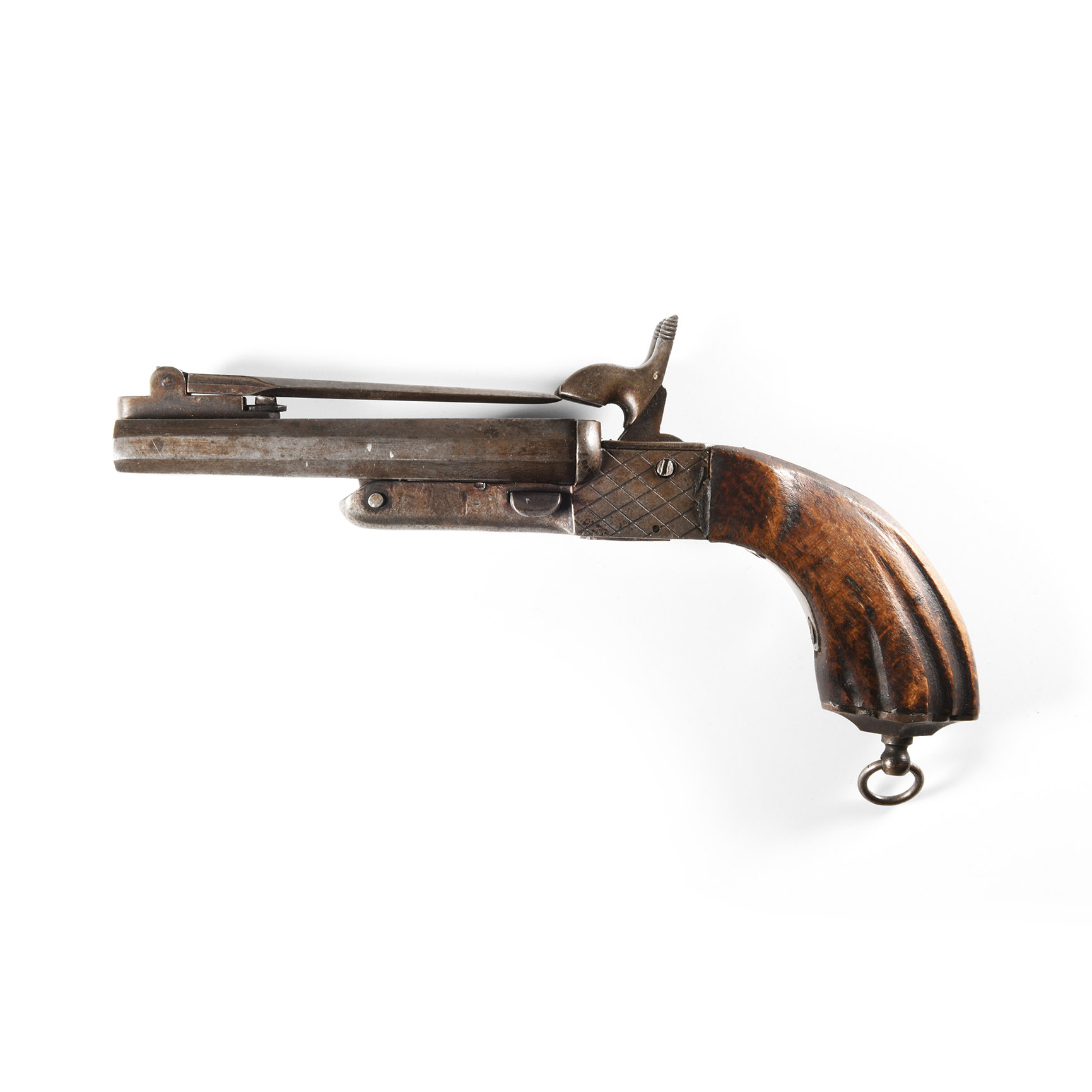
Pinfire Doubled-Barrelled Pistol with Bayonet
19TH CENTURY A.D.
8 7/8 in. (505 grams, 22.5 cm).
With 11cm (4½") side-by-side double barrel hinged for loading/extraction, fitted with hinged bayonet to top, folding triggers, with wood butt and steel but cap with lanyard ring; action working.
ProvenanceAcquired on the UK market.
Property of a Kent collector.
Sold as an exempt item under Section 58 (2) of the Firearms Act, 1968, to be held as a curiosity or ornament. No license required but buyer must be over 18 years of age. Overseas bidders should note that, due to UK regulations governing export of all firearms, overseas buyers will need to make arrangements for shipping this lot out of the UK directly, by air freight, with a specialist company or agent.
CONDITIONTimeLine Auctions follows a vetting process to ensure the authenticity and legality of all items, reinforcing our commitment to integrity and responsible trading. Each antiquity, antique, and coin lot undergoes thorough examination by a vetting committee of at least ten external specialists, professional trade association members, scientists, and archaeologists: Our Vetting Process
AUCTIONS:
TimeLine is a leading auction house specialising in antiquities, ancient art, collectables, natural history, coins, medals, and books. Our auctions offer museums, collectors, historians, and enthusiasts the opportunity to acquire unique and historically significant pieces.
-
.jpg)
German WWII Stick Grenade Group
1914-1945 A.D.Estimate: £200 - 300 (+bp*)
Opening Bid: £94
German practice stick grenade group including: a WWII model 24 Stielhandgranate with pierced red-coloured head; together with a restored relic head of WWI date. 684 grams, 44.5 cm
Acquired from The Lanes Armoury, Brighton, and Graham Currie Militaria. The Kusmirek Collection, UK. Accompanied by copies of the listings.
The brb-code name for Richard Rinker GmbH, was used for training German armed forced during WWII. Its distinctive appearance lead to it being dubbed the stick grenade' or 'potato masher' in British army slang. It used a friction igniter, with a pull cord running through the hollow wooden handle terminating in a porcelain ball. -
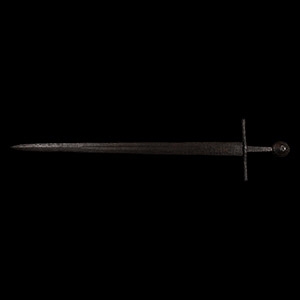
Medieval Iron Single-Handed Sword
Late 13th-early 14th century A.D.Sold for (Inc. bp): £3,640
Of Oakeshott Type XII or XIII with a double-edged, well-balanced tapering blade, shallow fullers and a parallel-sided straight lower guard of cross style 2; medium tang and disc pommel of type K with chamfered sides; the blade with later inlaid markings, one side with Passau wolf, the other side with cross within a circle; cleaned and conserved. 1.39 kg, 95 cm
fine condition, restored.
Acquired 1990s-early 2000s. East Anglian private collection. Accompanied by an academic report by Dr Raffaele D'Amato.
The sword’s blade presents analogies with a sword of type XIIIa (Aleksic, 2007, pl.7,1) sharing the same type of pommel and the same length of the fuller. The sword, found in the Danube near the village Visnjica, is now in the City Museum, Belgrad, and presents a cross and a wolf impressed on the blade and inlaid with a yellow metal. -
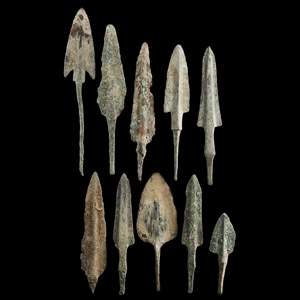
Luristan Bronze Arrowhead Group
2nd-1st millennium B.C.Estimate: £150 - 200 (+bp*)
Opening Bid: £80
Composed of tanged arrowheads of leaf-shaped and barbed types, most with midribs. 182 grams total, 6.4-12 cm
Acquired 1990s. From the collection of a late Japanese weaponry collector.
